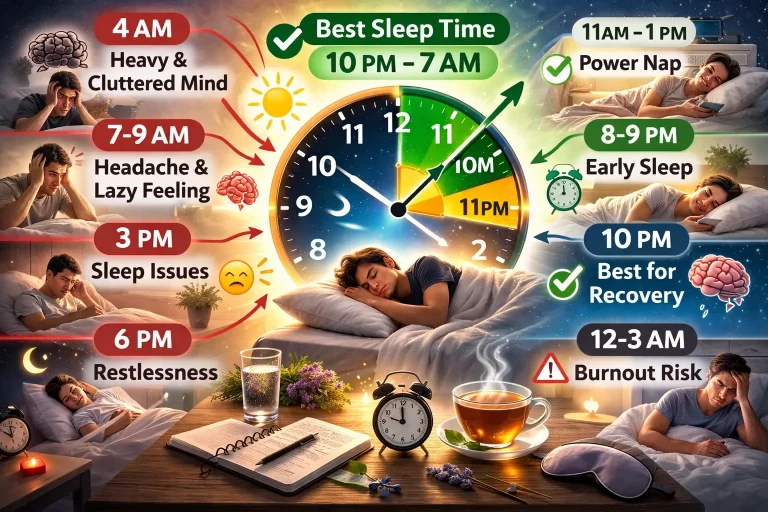
4 Stages of Sleep Cycle: Understanding Your Normal Sleep Architecture
You drift off around 11 PM, and by 7 AM, you’ve theoretically had eight solid hours of sleep. Yet you drag yourself out of bed feeling like you’ve barely gotten any rest at all. Your coffee maker becomes your best friend before you’ve even checked your emails.
Sound familiar?
The problem isn’t that you’re sleeping—it’s that most people don’t actually understand what their sleep is doing for them. Your sleep isn’t just an on-off switch. It’s a dynamic, cyclical process that repeats several times each night, with each cycle serving a distinct purpose for your physical health, mental clarity, and emotional resilience.
Let me explain what’s actually happening when you close your eyes.
What Exactly Is a Sleep Cycle?
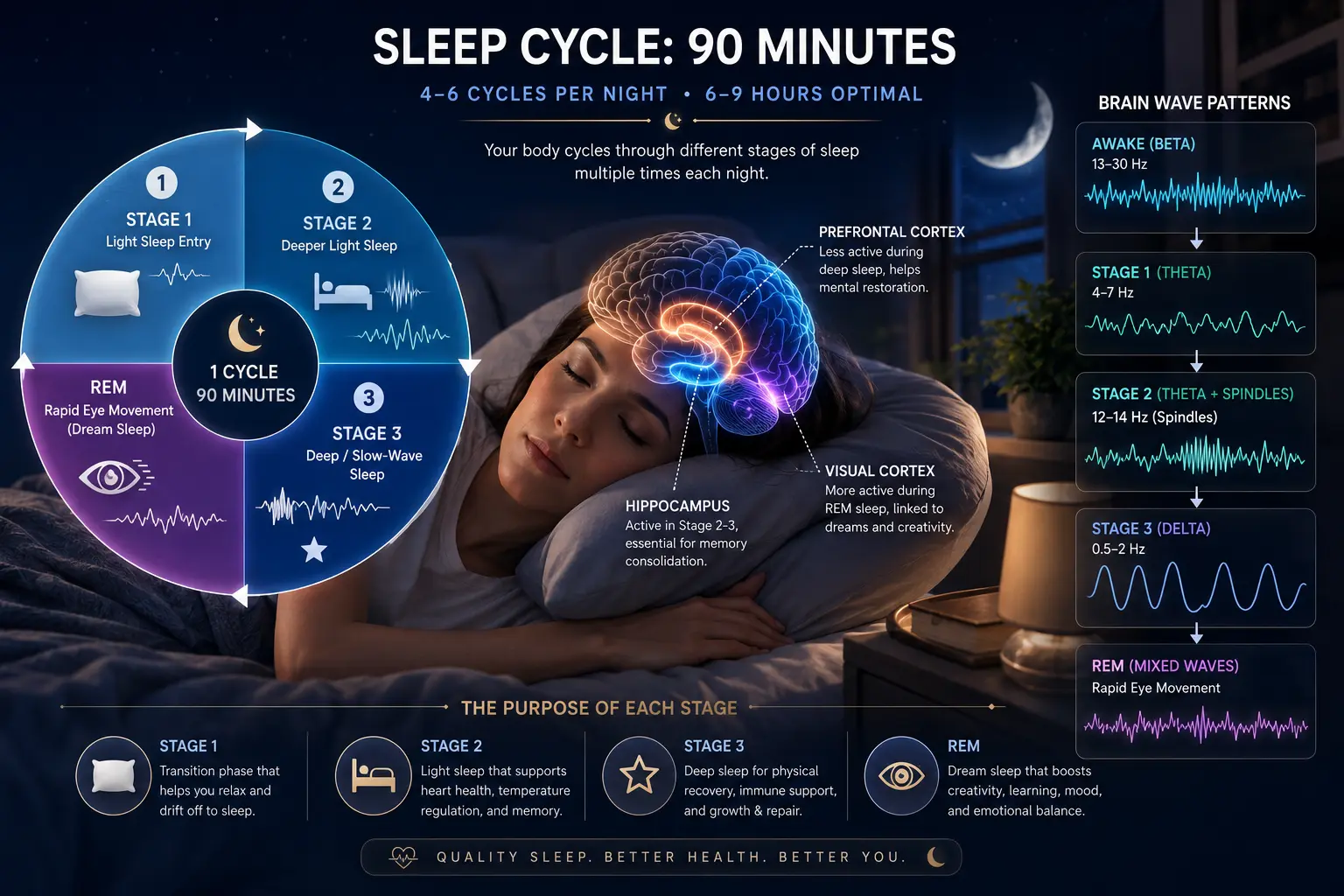
A sleep cycle is a roughly 90-minute journey your brain and body take through different stages of sleep, each with unique characteristics and functions. Most adults move through four to six complete cycles per night, depending on their total sleep duration.
Here’s what most people get wrong: they assume sleep is just sleep. You go to bed, you sleep, you wake up. In reality, your sleep follows a highly structured architecture. Each cycle contains distinct stages—some characterized by light sleep, others by deep restoration, and one featuring rapid eye movement and vivid dreams.
The cycle itself is orchestrated by your circadian rhythm (your body’s internal 24-hour clock) and a neurotransmitter called melatonin. As darkness falls and melatonin levels rise, your brain gradually moves through these stages in a predictable sequence. This isn’t random—it’s your brain’s way of ensuring you get the specific restorative benefits you need across different types of sleep.
Think of it like this: if your night were a musical composition, each sleep cycle would be a movement, and each stage would be a distinct section with its own purpose and character.
The Four Stages of Sleep Explained
Your sleep cycle contains three stages of non-REM (non-Rapid Eye Movement) sleep and one stage of REM (Rapid Eye Movement) sleep. Let’s walk through what happens in each.
Stage 1: Light Sleep (Non-REM Stage 1)
This is the entry point—what researchers call “sleep onset.” Your eyes move slowly under your eyelids, and your muscles begin to relax, though they still respond to stimuli. Your brain wave activity slows from your normal waking state, but you’re still somewhat aware of your surroundings.
This stage typically lasts just 5-10 minutes. If someone nudges you during Stage 1, you’ll likely wake easily and might not even realize you’d fallen asleep. It’s that liminal space between wakefulness and sleep—you know the one where you’re not quite sure if you were actually dozing or just daydreaming.
What’s happening physiologically:
- Heart rate and body temperature begin declining
- Brain waves shift toward theta waves (slower than waking, but not the slow waves of deep sleep)
- Muscle tension gradually decreases
- You remain somewhat responsive to your environment
Stage 2: Intermediate Light Sleep (Non-REM Stage 2)
Welcome to the stage where you actually “enter” sleep. During Stage 2, your brain shows distinct patterns called sleep spindles—brief bursts of rhythmic brain wave activity that seem to help consolidate memories and protect sleep from being disrupted.
Stage 2 is your longest stage, typically lasting 20-40 minutes. Your eyes no longer move, your muscles are more relaxed, and you’re significantly less likely to wake from external stimuli.
What’s happening physiologically:
- Body temperature continues to drop
- Heart rate slows further
- Brain waves include more theta waves with occasional sleep spindles
- The brain begins processing and consolidating information from your day
- Growth hormone secretion begins increasing
This stage is surprisingly important for learning and memory formation, particularly for procedural memories—the “how-to” knowledge like playing an instrument or practicing a sports skill.
Stage 3: Deep Sleep (Slow-Wave Sleep)
This is the heavyweight champion of restorative sleep. Deep sleep, also called slow-wave sleep or N3, is characterized by high-amplitude delta waves (the slowest brain waves). Your body is essentially unplugged from the world. Your muscles are completely relaxed, your heart rate is at its lowest, and it’s extremely difficult to wake you up.
Deep sleep typically lasts 20-40 minutes in earlier cycles, though it becomes shorter and less frequent in later cycles throughout the night. This is the stage most people are chasing when they talk about “good sleep.”
What’s happening physiologically:
- Delta waves dominate brain activity (0.5-2 cycles per second)
- Body temperature is at its lowest
- Heart rate and blood pressure are significantly reduced
- Growth hormone secretion peaks (crucial for physical restoration and muscle repair)
- The glymphatic system activates, flushing metabolic waste from your brain
- Blood flow increases to muscles while decreasing to the brain
This stage is where the magic of physical recovery happens. Your body repairs tissue, builds muscle, and strengthens your immune system. If you’ve ever noticed that a good night’s sleep seems to help you fight off a cold, this is largely the deep sleep stage at work.
Stage 4: REM Sleep (Rapid Eye Movement)
Unlike the other stages, REM sleep is characterized by rapid eye movements (as the name suggests), increased heart rate, elevated blood pressure, and a temporary loss of muscle tone. Your brain is highly active—nearly as active as when you’re awake—but your large voluntary muscles are essentially paralyzed.
This is where your dreams happen. Not exclusively (you do dream in non-REM stages), but this is where the most vivid, narrative dreams occur. REM typically lasts 5-10 minutes in the first cycle but lengthens dramatically in later cycles, sometimes lasting 30-60 minutes by the end of the night.
What’s happening physiologically:
- Rapid eye movements occur beneath closed eyelids
- Brain wave activity resembles waking patterns (beta and theta waves)
- Heart rate and blood pressure increase
- Body temperature regulation is impaired (why you feel sudden hot/cold flashes)
- Neurotransmitter norepinephrine is absent from the brain (contributing to muscle atonia)
- Vivid dreams occur
- Memory consolidation, particularly emotional and procedural memories, intensifies
REM sleep is crucial for cognitive development, emotional regulation, and brain maturation. It’s particularly important for processing emotions and integrating them into your memory.
How Your Sleep Cycle Evolves Throughout the Night
Here’s where it gets interesting: your sleep cycles aren’t uniform. They change as the night progresses.
Your First Cycle (Around Hours 1-1.5):
- Stage 1: ~5-10 minutes
- Stage 2: ~25-35 minutes
- Stage 3: ~20-40 minutes
- REM: ~5-10 minutes
Notice that deep sleep dominates your first cycle. This is your body’s priority. After hours of wakefulness, your brain desperately needs that restorative slow-wave sleep.
Your Middle Cycles (Hours 1.5-5): The pattern begins to shift. Stages 1 and 2 might be slightly longer, deep sleep remains substantial but begins to decrease, and REM sleep starts expanding. This is when your body begins emphasizing memory consolidation alongside continued physical restoration.
Your Later Cycles (Hours 5+): This is where REM becomes king. By your final cycle of the night, you might have 40-60 minutes of REM sleep and minimal deep sleep. Your early-morning dreams tend to be the most vivid and memorable because you’re in an extended REM stage.
This progression isn’t accidental. Your body instinctively knows what it needs at different points in the night. Early sleep emphasizes physical restoration; later sleep emphasizes mental processing and memory integration.
Non-REM vs. REM Sleep: What’s the Difference and Why Does It Matter?
While we’ve discussed them separately, it’s important to understand the fundamental divide between non-REM (stages 1-3) and REM sleep.
| Aspect | Non-REM Sleep | REM Sleep |
|---|---|---|
| Eye Movement | None (except stage 1) | Rapid, continuous |
| Muscle Tone | Progressively more relaxed | Virtually paralyzed |
| Brain Wave Pattern | Slowing from waking (theta then delta) | Similar to waking (beta/theta) |
| Dreams | Less vivid, thought-like | Vivid, narrative, emotional |
| Primary Function | Physical restoration | Emotional processing, cognitive development |
| Duration per Cycle | 65-75 minutes | 5-30 minutes (varies by cycle) |
| Growth Hormone | Peaks during deep sleep | Low levels |
| Temperature Regulation | Generally intact | Impaired |
Both are essential. Think of non-REM sleep as your body’s maintenance crew and REM as your brain’s therapist. You need both to function optimally.
What’s Actually Happening Inside Your Brain During Sleep
Sleep might look passive—your body lying still, eyes closed—but your brain is incredibly active.
During Non-REM Sleep:
Your brain waves slow dramatically, and oscillations between thalamus and cortex create those characteristic sleep spindles and slow waves. The brain stem produces neurotransmitters that dampen sensory input, essentially “turning down the volume” on the outside world so you’re not disrupted by every sound or temperature change.
Meanwhile, your glymphatic system—a recently discovered mechanism that was mostly invisible to science until the 2010s—activates. This system uses cerebrospinal fluid to flush out metabolic waste products that accumulate during waking hours, including proteins like beta-amyloid (implicated in Alzheimer’s disease). Without adequate deep sleep, your brain essentially can’t clean itself.
Simultaneously, memory consolidation is happening. The hippocampus (your brain’s memory hub) replays the day’s experiences, transferring information from short-term to long-term storage. This is why studying before bed can be surprisingly effective—not because you learn while sleeping, but because sleep consolidates what you learned while awake.
During REM Sleep:
Your brain shifts into a completely different mode. The visual cortex lights up (explaining vivid dreams), emotional centers like the amygdala become hyperactive, while the prefrontal cortex (your logical reasoning center) goes relatively quiet. This is why your dreams are emotional but often illogical—the emotional brain is running the show while the logical brain is essentially offline.
Neurotransmitter levels shift dramatically. Serotonin and norepinephrine plummet, while acetylcholine increases. This neurochemical environment is ideal for creative insight and emotional processing.
Your brain consolidates different types of memories during REM—particularly procedural memories (like how to ride a bike) and emotional memories. This is why REM sleep deprivation impairs emotional regulation and makes processing difficult experiences harder.
Why Your Sleep Cycle Directly Impacts Your Health
Understanding your sleep cycle isn’t just neuroscience trivia—it’s directly relevant to your wellbeing across multiple dimensions.
Cognitive Performance and Learning: Your ability to learn and retain information depends on complete sleep cycles. Without adequate deep sleep, information doesn’t consolidate properly. Without sufficient REM, creative problem-solving and procedural learning suffer. This is why pulling all-nighters before exams is counterproductive—you might “study” longer, but your brain won’t retain or integrate the information.
Physical Health and Recovery: Deep sleep is when your body does most of its repair work. Growth hormone peaks during slow-wave sleep, driving tissue repair and muscle building. Your immune system is particularly active during deep sleep, producing cytokines that help fight infection. Athletes and active people actually need more deep sleep than sedentary individuals—it’s not a luxury but a physiological necessity.
Emotional Regulation: REM sleep, particularly extended REM in later cycles, is crucial for processing emotional experiences. Insufficient REM sleep correlates with mood disorders, anxiety, and difficulty managing stress. If you’ve noticed you’re more irritable after poor sleep, you can largely blame inadequate REM.
Metabolic Health: Sleep deprivation and disrupted sleep cycles significantly impact metabolic function. Poor sleep is associated with increased hunger hormones (ghrelin) and decreased satiety hormones (leptin), making weight management harder. It also impairs insulin sensitivity, increasing diabetes risk.
Cardiovascular Health: Your heart rate, blood pressure, and cardiac workload all decrease during sleep, giving your cardiovascular system a necessary rest. People with disrupted sleep cycles have higher cardiovascular disease risk. Deep sleep appears particularly protective for heart health.
What Disrupts Your Sleep Cycle (And How to Recognize It)
Not everyone’s sleep cycle looks textbook perfect, and that’s often because something is interfering with the natural progression.
Common Sleep Cycle Disruptors:
Stress and Anxiety: Elevated cortisol and adrenaline keep your brain in a higher-alert state, shortening or eliminating deep sleep. You might sleep the full 8 hours but mostly in lighter stages, explaining why you wake up exhausted.
Alcohol: While alcohol might help you fall asleep (it’s sedating), it suppresses REM sleep, particularly in the second half of the night. You might sleep deeply at first, but later cycles become fragmented and REM-deprived. This is why you often wake up groggy after drinking.
Caffeine: Caffeine’s half-life is about 5-6 hours, meaning a coffee at 2 PM still has 25% of its original stimulating effect at 8 PM. Even “just a little” caffeine can fragment your later sleep cycles.
Screen Time Before Bed: Blue light suppresses melatonin production, making it harder to enter early sleep stages. Even 30-60 minutes of bright screens before bed can delay sleep onset and shorten overall sleep duration.
Irregular Sleep Schedule: Your circadian rhythm thrives on consistency. Varying your sleep and wake times by more than an hour or two disrupts the entire cycle progression. This is why weekend sleep patterns affect Monday productivity—it takes several nights for your cycles to realign.
Sleep Disorders: Conditions like sleep apnea (where breathing repeatedly stops) fragment sleep cycles, preventing you from completing full cycles. Insomnia prevents entry into deeper stages. Restless leg syndrome creates micro-arousals that disrupt progression.
Age: Sleep architecture naturally changes with age. Deep sleep decreases starting in your 30s-40s, and REM sleep can become less efficient. This isn’t pathological—it’s a normal developmental shift, though it means older adults may need to be more intentional about sleep quality.
How to Optimize Your Sleep Cycle: Practical Strategies That Work
Now that you understand what your sleep cycles are doing, let’s talk about how to ensure they’re happening optimally.
1. Maintain Consistent Sleep and Wake Times
Your circadian rhythm is remarkably sensitive to consistency. Going to bed within a 30-minute window every night and waking at the same time daily—yes, even weekends—trains your brain to cycle through stages efficiently.
Practical tip: Set both a bedtime alarm and a wake alarm for two weeks. You’ll be surprised how quickly your body adapts.
2. Optimize Your Sleep Environment
Temperature: Most people sleep best in a cool room (around 65-68°F or 18-20°C). Your core body temperature naturally drops during sleep, and an environment that facilitates this helps you enter deeper stages faster.
Darkness: Even dim light suppresses melatonin. Use blackout curtains or an eye mask. The darker your room, the more efficiently your pineal gland produces melatonin.
Sound: White noise or earplugs prevent micro-arousals that fragment sleep cycles. Even noise you don’t consciously register can interrupt deeper stages.
Comfort: Your mattress and pillow matter more than you probably think. Back pain or neck discomfort prevents deep relaxation necessary for stage 3 sleep.
3. Manage Light Exposure Strategically
Morning: Get 15-30 minutes of bright light exposure within an hour of waking. This sets your circadian rhythm and increases melatonin production 12-14 hours later.
Evening: Dim your lights 2-3 hours before bed. Use blue-light glasses if you must use screens (they’re more effective than you’d expect), or activate night mode on devices.
4. Time Your Caffeine Strategically
Cut off caffeine after 2 PM. For sensitive individuals, even earlier. Since caffeine’s effects persist through half-lives, that afternoon coffee genuinely does affect your night sleep.
5. Exercise—But Time It Right
Regular exercise dramatically improves sleep quality and increases deep sleep duration. However, exercise within 3 hours of bedtime can delay sleep onset due to elevated adrenaline and body temperature. Aim for morning or early afternoon workouts.
6. Manage Alcohol Consumption
If you drink, limit it to 1-2 drinks and finish at least 3-4 hours before bed. Alcohol consumed closer to bedtime more significantly suppresses REM sleep.
7. Avoid Large Meals Close to Bedtime
Digestion is stimulating. A light snack 1-2 hours before bed is fine, but a heavy meal within 3 hours of sleep can fragment your first cycle.
8. Use the “90-Minute Window” to Your Advantage
Since your sleep cycles run roughly 90 minutes, you wake most naturally at the end of a cycle. If you can, set your sleep duration for multiples of 90 minutes: 4.5, 6, 7.5, or 9 hours. You’ll wake feeling more refreshed than if you wake mid-cycle.
Practical calculation: If you need to wake at 6:30 AM and you sleep in 90-minute cycles, aim to fall asleep by 10 PM (for 6.5 hours) or 11:30 PM (for 5 hours) rather than 11 PM.
Expert Tips for Maximizing Your Sleep Quality
Beyond the basics, here are insights that sleep researchers and sleep medicine specialists often recommend:
Establish a Wind-Down Ritual: Your body needs a transition period. 30-60 minutes before bed, engage in relaxing activities: reading, gentle stretching, meditation, or journaling. This isn’t wasting time—it’s the biological transition your nervous system needs to shift from sympathetic (alert) to parasympathetic (rest) mode.
Consider Supplements Strategically: Magnesium (300-400mg), glycine, and L-theanine have research support for improving sleep quality. Melatonin can help reset circadian rhythm but isn’t a sleep aid in the traditional sense—it signals your body when to feel sleepy, not how much to sleep. Avoid relying on any supplement as a permanent solution; they’re tools for temporary adjustment, not replacements for good sleep hygiene.
Don’t Force Sleep: If you’re awake for more than 20 minutes, get out of bed. Your brain learns to associate your bed with wakefulness if you lie there struggling. Get up, do something calm and boring in dim light, and return when you feel sleepy.
Track Your Patterns: Many people are surprised by what sleep tracking reveals. Using a simple sleep app or dedicated tracker for 2-3 weeks can show you which habits actually improve your sleep and which don’t. (Note: Some people become too obsessive about sleep tracking—if you find yourself checking sleep metrics multiple times per night, it might increase anxiety. Use tracking as information, not as an anxiety trigger.)
Common Sleep Mistakes That Sabotage Your Cycles
Even well-intentioned people often accidentally disrupt their sleep cycles through common patterns:
Mistake 1: “I’ll Sleep in on Weekends to Catch Up” Your body doesn’t work that way. Sleeping 5 hours during the week then 11 hours on Saturday doesn’t “recover” the deficit in any meaningful way. More importantly, it completely desynchronizes your circadian rhythm, disrupting sleep for days afterward. Consistency matters more than total hours.
Mistake 2: “A Nighttime Cup of Tea Won’t Affect Me” Even herbal tea contains compounds that can be mildly stimulating. More importantly, the act of consuming liquid near bedtime increases nighttime bathroom trips, fragmenting later sleep cycles precisely when your body is trying to maximize REM.
Mistake 3: “I’ll Just Power Through This Week” Sleep debt is real and cumulative. A week of poor sleep doesn’t recover in one night. Studies show it takes several consecutive good nights to fully recover from sleep deprivation. More concerning: chronic partial sleep deprivation (consistently getting 6 hours when you need 7-8) produces cognitive impairment comparable to being drunk, yet you don’t feel as impaired—making it a hidden productivity killer.
Mistake 4: “If I Can’t Sleep, I Should Stay in Bed and Try Harder” This often backfires, creating anxiety around sleep and conditioning your brain to associate bed with wakefulness. The 20-minute rule mentioned earlier exists for good reason.
Mistake 5: “Melatonin Is Natural, So More Is Better” Melatonin supplementation is helpful for resetting circadian rhythm disruptions, but excessive doses don’t improve sleep quality and can suppress your body’s natural melatonin production. Less is typically more—0.5-3mg is generally sufficient.
Frequently Asked Questions About Sleep Cycles
Q: How many complete sleep cycles should I have per night? Most adults need 4-6 complete sleep cycles, which typically requires 6-9 hours of sleep. The exact number varies individually based on age, genetics, activity level, and stress. The key is you’re waking up refreshed—duration matters less than completing full cycles.
Q: Can you get too much REM sleep? Not really. Some medications and conditions increase REM proportionally, but there’s no identified harm from “too much” REM sleep in the context of complete cycles. More REM alongside adequate deep sleep is generally associated with better outcomes.
Q: Why do I wake up exactly 90 minutes after falling asleep? You’re likely completing your first cycle. If this happens consistently, you might be experiencing early awakening or a circadian misalignment. Consult a sleep specialist if it’s accompanied by difficulty returning to sleep.
Q: Does my sleep cycle change as I age? Yes, significantly. Starting in your 30s-40s, deep sleep gradually decreases. By age 65-70, some people have virtually no stage 3 sleep. This isn’t pathological—it’s normal aging—but it means older adults may feel less restored. This is why sleep quality becomes increasingly important as we age.
Q: Can I improve my REM sleep specifically? To some degree. REM sleep increases with adequate total sleep and extended sleep duration. Stress reduction and emotional processing also enhance REM quality. You can’t selectively extend REM without first ensuring adequate overall sleep.
Q: What’s the relationship between sleep cycles and dreams? Dreams occur throughout sleep, but REM dreams are most vivid and memorable because your visual cortex is highly active. Non-REM dreams exist but are more thought-like and less narrative. If you’re not remembering dreams, you might not be getting enough REM or not waking during REM stages.
Q: Does exercise during the day improve sleep cycles? Absolutely. Regular aerobic exercise increases deep sleep duration and improves sleep efficiency. However, timing matters—exercise within 3 hours of bedtime can interfere with sleep onset due to elevated body temperature and adrenaline.
Q: Can sleep trackers accurately measure sleep cycles? Most consumer sleep trackers estimate cycles based on heart rate and movement patterns. They’re reasonably accurate for detecting you’re asleep vs. awake, but they can’t actually measure brain waves (which is what defines sleep stages). For precise sleep stage data, you’d need an actual sleep study. Consumer trackers are useful for trends but shouldn’t be treated as definitive.
Q: What’s the relationship between sleep cycles and mental health? Strong. Chronic sleep disruption is implicated in depression, anxiety, and bipolar disorder. Conversely, treating sleep problems often significantly improves mood and mental health symptoms. The relationship is bidirectional—poor mental health disrupts sleep, and disrupted sleep worsens mental health.
Q: Is it possible to “train” your body to need less sleep? Not really. While some people are genetically predisposed to needing slightly less sleep (the “short sleeper” phenotype, seen in about 1% of the population), most people consistently need 6-9 hours. Attempting to chronically sleep less than your biological need just accumulates sleep debt.
The Bottom Line: Sleep Cycles Are Your Body’s Maintenance Schedule
Your sleep cycle isn’t a passive process you should ignore. It’s your body’s most sophisticated maintenance system, orchestrating physical repair, memory consolidation, emotional processing, and neurological housekeeping simultaneously.
Understanding what happens during each 90-minute cycle transforms how you approach sleep. You’re not just trying to “get enough hours”—you’re trying to complete multiple full cycles that progress naturally throughout the night, with early cycles emphasizing deep restoration and later cycles emphasizing mental integration.
The practical takeaway? Consistency matters more than duration. Optimized environment matters more than willpower. And the seemingly small habits—your wake time, caffeine cutoff, bedroom temperature—matter more than you probably realize.
Your sleep cycles have evolved over millennia to keep you healthy, sharp, and emotionally balanced. The question isn’t how to fight them or shortcut them. The question is how to get out of their way and let them work.
Start with one change this week: either set a consistent wake time or optimize your sleep environment. Then observe what happens to your energy, focus, and mood. You’ll quickly understand that sleep cycles aren’t a luxury—they’re a biological fundamental that underpins everything else in your life.
KEY TAKEAWAYS
- Sleep cycles are roughly 90-minute progressions through four distinct stages, with most adults completing 4-6 cycles per night
- Non-REM sleep (stages 1-3) prioritizes physical restoration, with deep sleep activating growth hormone and the glymphatic system
- REM sleep enables emotional processing and memory consolidation, lasting longer in later cycles
- Early cycles emphasize deep sleep; later cycles emphasize REM, reflecting your body’s shifting priorities throughout the night
- Sleep cycle disruption from stress, caffeine, alcohol, and irregular schedules prevents you from completing full cycles
- Consistency matters more than duration—maintaining regular sleep/wake times synchronizes your circadian rhythm for optimal cycle progression
- Complete sleep cycles improve cognitive performance, physical recovery, emotional regulation, metabolic health, and cardiovascular function
- Environmental optimization (temperature, darkness, sound) and strategic timing of caffeine, exercise, and meals facilitates deeper, more complete cycles