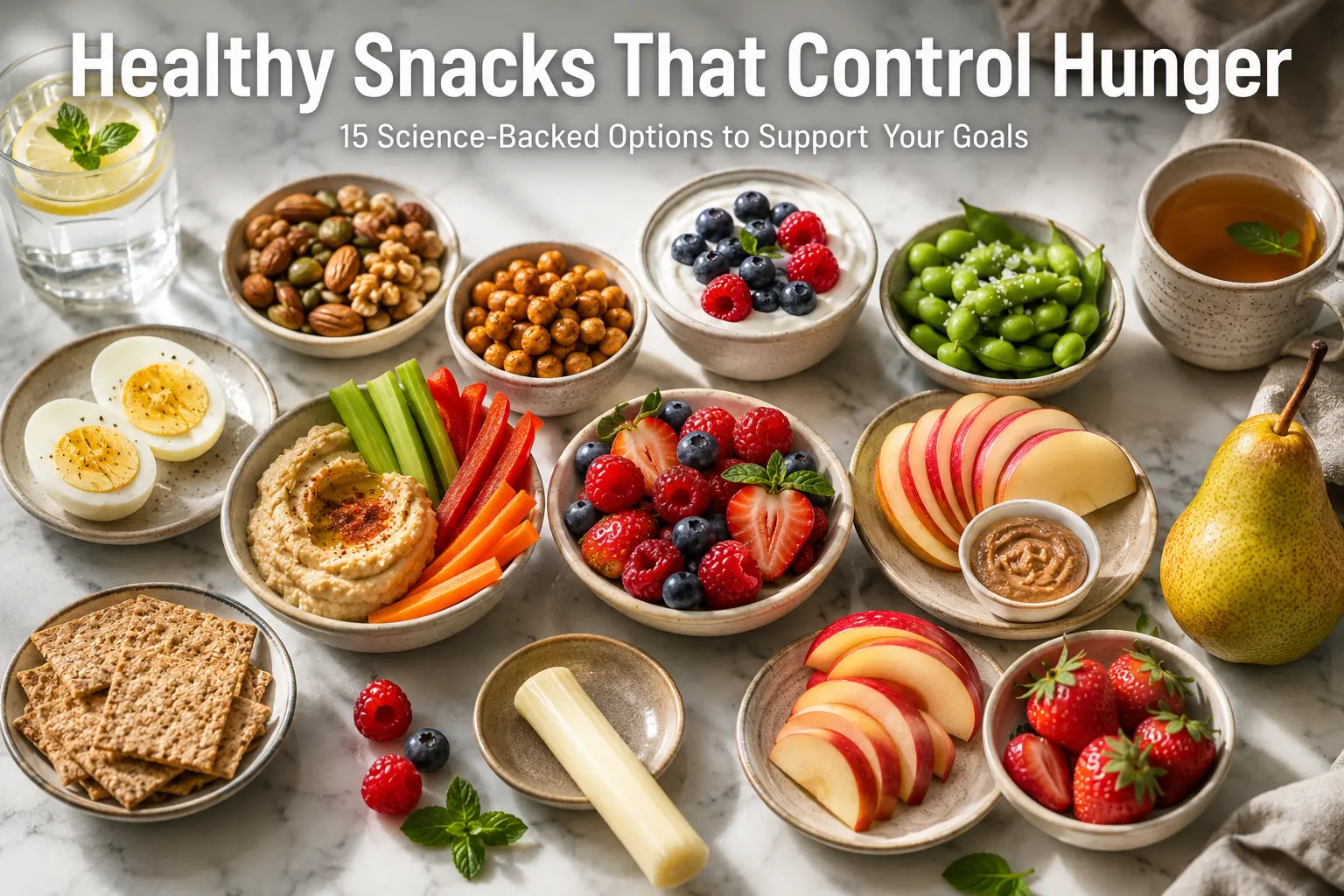
Healthy Snacks That Control Hunger: 15 Science-Backed Options
We’ve all been there. It’s 3 PM, your stomach’s growling, and you’re staring at the office vending machine like it holds the secrets of the universe. Your willpower is already hanging by a thread from back-to-back meetings, and that bag of chips is looking suspiciously reasonable. Sound familiar?
Here’s what most people don’t realize: hunger between meals isn’t a character flaw or lack of discipline. It’s usually a sign that your body needs the right fuel—and the right snacks can absolutely make or break your weight loss efforts.
I’ve spent years researching nutrition science and working with people trying to improve their eating habits, and there’s one pattern that stands out consistently: people who choose the right snacks are the ones who actually stick with their goals. They’re not starving themselves. They’re not white-knuckling through the day. They’ve simply learned to work with their body’s hunger signals instead of against them.
In this guide, I’m sharing 15 evidence-backed healthy snacks that genuinely help control hunger, plus the exact strategies you need to make snacking work for—not against—your weight loss journey.
Why Hunger Control Actually Matters for Weight Loss
Let’s be honest: most weight loss advice conveniently ignores the hunger elephant in the room. “Just eat less” sounds simple in theory, but it ignores the biological reality of how your body works.
The Hunger-Willpower Problem
Your willpower is like a muscle—it gets tired. Every time you resist temptation, you’re depleting a finite resource. Scientists call this “ego depletion,” and it’s why restrictive diets fail so spectacularly. By late afternoon, your willpower is exhausted, and suddenly the drive-through seems like a reasonable choice.
The solution isn’t stronger willpower. It’s smarter snacking.
When you choose snacks that genuinely satisfy hunger—rather than empty calories that leave you wanting more—you’re no longer relying on willpower alone. You’re using biology on your side.
The Blood Sugar Connection
Here’s something nutrition marketing doesn’t want you to understand: not all snacks are created equal when it comes to hunger. A 100-calorie pack of rice cakes and a 100-calorie handful of almonds will hit your body completely differently.
Rice cakes cause a rapid blood sugar spike followed by a crash. Within an hour, you’re hungry again. Almonds, meanwhile, contain protein and healthy fats that keep your blood sugar stable and your hunger suppressed for hours.
This isn’t just theory. Multiple studies show that foods with stable blood sugar impact keep people full longer and reduce overall calorie intake throughout the day—without any calorie counting involved.
The Science of What Actually Makes Food Satisfying
You can’t choose hunger-controlling snacks if you don’t understand what makes them work. There are three nutritional factors that determine whether a snack will genuinely satisfy you:
Protein: The Hunger Suppressor
Protein does something special in your digestive system. It triggers the release of hormones like peptide YY and glucagon-like peptide-1 (GLP-1)—basically your body’s “fullness signals.” These hormones directly tell your brain you’re satisfied, which translates to reduced hunger for hours.
Research published in the American Journal of Clinical Nutrition found that protein has a higher thermic effect than other macronutrients, meaning your body burns more calories digesting it. You’re literally more satisfied and burning more calories. That’s the kind of snack math we like.
Fiber: The Forgotten Hero
Fiber doesn’t get glamorous attention like protein, but it’s equally important for hunger control. Fiber slows gastric emptying—basically, it keeps food in your stomach longer, maintaining that satisfied feeling.
Plus, fiber feeds your gut bacteria, which influences hunger hormones. There’s growing evidence that healthy gut bacteria actually help regulate appetite at a hormonal level. A snack with good fiber content is literally working on multiple levels to keep you satisfied.
Healthy Fats: The Underrated Weapon
Fat slows digestion and provides a sense of satiety that carbohydrates alone can’t match. The key word here is healthy fats—omega-3 rich options like nuts, seeds, and fatty fish.
Here’s what matters: a snack with protein, fiber, and healthy fats creates a combination that your body recognizes as truly nourishing. You’ll feel satisfied. You’ll stop thinking about the next snack. That’s what we’re after.
15 Best Healthy Snacks That Control Hunger
Protein-Focused Snacks (Maximum Satiety)
1. Greek Yogurt with Berries
If you’re looking for a snack that checks every box, this is it. Greek yogurt packs 15-20g of protein per serving, while berries add fiber and antioxidants. The combination keeps you full for hours.
Pro tip: Skip the flavored yogurts loaded with added sugar. Plain Greek yogurt with fresh berries gives you the satisfaction without the blood sugar spike.
2. Hard-Boiled Eggs
Eggs are old-school for a reason. They’re inexpensive, portable, and contain all nine essential amino acids plus choline (important for brain health). One hard-boiled egg has about 6g of protein and keeps hunger at bay remarkably well.
The beauty of hard-boiled eggs is that you can prep them Sunday and grab them all week. No excuse for convenience.
3. Cottage Cheese with Almonds
Cottage cheese has more protein than Greek yogurt (25g per cup) and fewer calories. Pair it with a small handful of almonds for added healthy fats and a satisfying crunch.
This combination keeps blood sugar stable while providing the nutritional density your body actually needs between meals.
4. Protein Smoothie (DIY)
When you make your own smoothie with protein powder, unsweetened almond milk, spinach, and berries, you control exactly what goes in. Commercial smoothies are often sugar bombs in disguise.
A homemade protein smoothie with 25-30g of protein can genuinely replace a light meal and keep hunger suppressed for 3-4 hours.
5. Turkey or Chicken Slices with Whole Grain Crackers
Lean protein + whole grain carbs = stable blood sugar and sustained fullness. This snack feels more “real” than some alternatives, which helps psychologically when you’re making diet changes.
Pair about 2 ounces of deli turkey with 5-6 whole grain crackers for a balanced snack under 150 calories.
Fiber-Rich Snacks (Sustained Fullness)
6. Apple with Almond Butter
An apple provides about 4g of fiber, while almond butter adds protein and healthy fats. The combination creates a snack that’s genuinely satisfying and feels indulgent without being unhealthy.
One medium apple with 1 tablespoon of almond butter is about 200 calories and keeps most people satisfied for 2-3 hours.
7. Raw Vegetables with Hummus
Carrots, celery, bell peppers, and broccoli are incredibly low-calorie but high-fiber. Hummus adds protein from chickpeas and healthy fats from olive oil, making this combination far more satiating than raw veggies alone.
This snack is so low in calories and high in nutrients that you can honestly eat until comfortably full without worrying about overdoing it.
8. Pear with Cheese
A medium pear has 6g of fiber and pairs beautifully with 1 ounce of cheese (about the size of a dice). The fruit provides natural sweetness while the protein and fat in cheese keeps hunger suppressed.
This snack feels fancy but takes 30 seconds to prepare. That matters more than people think for actual snacking consistency.
9. Berries with Nuts
Mixed berries (blueberries, raspberries, strawberries) are fiber-rich and low in calories, but they’re light. Combined with nuts—almonds, walnuts, or cashews—you get the fiber plus protein and healthy fats.
A small handful of each creates a snack that’s nutrient-dense and surprisingly filling for under 150 calories.
10. Whole Grain Toast with Avocado
One slice of whole grain toast with half an avocado is about 150 calories and packed with fiber, healthy monounsaturated fats, and satiety. This snack is especially good mid-morning because the sustained energy helps you power through until lunch.
Balanced Macronutrient Snacks (Complete Nutrition)
11. Mixed Nuts and Seeds
I know nuts seem calorically expensive, but the satiety return is worth it. A small handful (about 1 ounce) of mixed nuts provides protein, fiber, and healthy fats—plus magnesium, which many people don’t get enough of.
The key is portion control. Pre-portion nuts into small containers or bags so you’re not mindlessly eating from the bulk container.
12. String Cheese with Whole Grain Crackers
String cheese provides about 7g of protein per stick, making it more substantial than people realize. Pair with whole grain crackers and you’ve got a balanced snack that satisfies multiple aspects of hunger.
This snack is also incredibly convenient for busy people. Grab and go—no prep needed.
13. Edamame
Steamed edamame (young soybeans) are about 95 calories per half-cup and contain both protein (11g) and fiber (4g). They’re unusual enough to feel like a treat, which matters for psychological adherence.
If you can find pre-steamed, shelled edamame, they’re even more convenient. Sprinkle with sea salt for satisfaction without adding calories.
14. Energy Balls (Homemade)
Mix oats, almond butter, honey, and dark chocolate chips, roll into balls, and refrigerate. These homemade energy balls contain complex carbs, protein, healthy fats, and a touch of sweetness.
One or two balls (about 80-100 calories) satisfy sweet cravings while providing sustained energy. Making them yourself costs a fraction of commercial options.
15. Roasted Chickpeas
Toss canned chickpeas with olive oil, salt, and your favorite spices, then roast at 400°F for 25 minutes. You get 8g of protein and 7g of fiber per ounce—plus they’re addictive.
Make a big batch and you’ve got snacks for the entire week. They’re significantly cheaper than commercial alternatives.
How to Choose Hunger-Controlling Snacks: Your Selection Framework
Now that you’ve seen the options, here’s how to evaluate snacks strategically.
The Nutrition Checklist
Before snacking, ask yourself:
- Does this contain at least 5g of protein?
- Does it have at least 3g of fiber?
- Are the carbs complex (whole grains, fruits, legumes) rather than refined?
- Does it include healthy fats?
- Will this keep me satisfied for at least 2-3 hours?
If your snack checks these boxes, you’re on solid ground.
Understanding Food Labels Like a Professional
Marketing is designed to mislead. “Natural,” “wholesome,” and “made with real fruit” sound healthy but tell you nothing about actual nutrition.
Here’s what you actually need to check:
- Serving size – This is where companies get sneaky. A “low-calorie” snack might have the serving size listed as half of what you’d actually eat.
- Protein – Aim for at least 5g per snack. This is a minimum threshold for genuine satiety.
- Fiber – Look for at least 3g. This number changes how your body processes the snack.
- Sugar – Less than 5g per serving is ideal. Watch added sugars specifically; natural sugars from whole fruits are less problematic.
- Ingredient list – Can you pronounce and recognize the ingredients? If not, this snack is likely engineered for shelf life rather than nutrition.
Portion Reality
Here’s the uncomfortable truth: even healthy snacks have calories, and calories matter for weight loss.
The difference is that hunger-controlling snacks make portion control effortless because you’re actually satisfied. An apple with almond butter naturally stops you from eating three apples. Chips, meanwhile, are literally engineered to be eaten mindlessly.
Pre-portioning is your secret weapon. Buy in bulk, portion into containers, and you remove the decision-making component. Decisions are where willpower dies.
Simple Meal-Prep Strategies for Snacking Success
Snacking consistency comes from preparation, not motivation.
Weekly Snack Prep (30 Minutes, Multiple Days Covered)
Sunday, 3 PM. Thirty minutes of work, and you’ve handled snacking for the entire week:
- Hard-boil a dozen eggs (stores 1 week)
- Chop vegetables and store in water (stays fresh 5-6 days)
- Portion nuts into small containers (keeps 2+ weeks)
- Make a batch of energy balls (refrigerate up to 10 days)
- Prepare hummus if making from scratch (lasts 1 week)
This single session removes barriers during the week. When 3 PM hunger hits, you’ve already won—the healthy option is right there, ready.
Snack Timing Strategies
Hunger doesn’t arrive randomly. If you typically hit 3 PM energy crashes, plan your snack for 2:45 PM. You’re preventing hunger rather than reacting to it.
The best times for snacking are:
- Mid-morning (if you eat breakfast at 7 AM)
- Afternoon (2-3 hours before dinner)
Eating snacks earlier in the day gives you a better chance of actually burning those calories rather than storing them before bed.
Storage and Convenience
Keep snacks visible and accessible. If healthy snacks are in opaque containers on the back shelf of the fridge and junk food is on the counter, you know what you’ll reach for.
The Reality of Convenience:
- Pre-portioned snacks in your desk drawer > healthy food that requires prep
- Hard-boiled eggs in the fridge > eggs in the carton
- Pre-cut vegetables > whole vegetables
- Individual nut containers > buying in bulk
Convenience isn’t laziness. It’s acknowledging how humans actually behave and building your environment accordingly.
Common Snacking Mistakes That Sabotage Your Hunger Control
These patterns repeat across nearly everyone who struggles with snacking. Recognizing them is half the battle.
Mistake #1: Portion Distortion
You know how restaurant portions have become absurd? The same thing happened to snack portions. What was once considered a single serving is now often 2-3 servings.
Check the nutrition label. Many people are eating 200-300 calories and thinking it’s 100 because they’re checking calories but not servings per package.
The Fix: Pre-portion or weigh initial servings until you develop an instinctive understanding.
Mistake #2: The Liquid Calories Trap
Smoothies, juice, nut butters hidden in calories—these hit your stomach quickly without the satisfaction of whole foods. Your body doesn’t register liquid calories the same way it does solid food.
A 250-calorie smoothie leaves you hungry an hour later. A 250-calorie snack with actual structure keeps you satisfied for 3+ hours.
The Fix: Stick to whole foods where possible. When drinking calories, combine with solid food to slow absorption.
Mistake #3: Snacking at the Wrong Time
Hunger at 10 PM when you’re supposed to sleep isn’t physical hunger. It’s often boredom, stress, or habit. Eating won’t address the actual problem—and now you’ve added calories before bed.
This is where understanding your specific hunger patterns matters. Track when you actually feel hungry versus when you’re reaching for snacks out of habit.
The Fix: Identify your genuine hunger windows and reserve snacks for those times.
Mistake #4: Ignoring Blood Sugar Stability
A snack that spikes and crashes your blood sugar leaves you hungrier than before. Rice cakes, pretzels, and low-fat cookies are classic offenders because they’re high-glycemic—meaning your blood sugar spikes and crashes rapidly.
Your body interprets the crash as urgency, triggering stronger hunger signals. Now you’re fighting biology, and biology wins.
The Fix: Always pair carbs with protein and fat. Bread alone is problematic. Bread with cheese is stable.
Mistake #5: Underestimating Hidden Sugars
“Healthy” snacks like granola bars, yogurt, and dried fruit are often loaded with added sugar. A granola bar marketed as health food might have more sugar than a candy bar.
Read labels. Seriously. That’s where the truth lives.
Expert Strategies for Maximizing Hunger Control
Beyond the basics, here’s where snacking becomes strategic:
Strategic Snack Timing (The Advanced Approach)
Instead of snacking reactively when hunger strikes, time snacks based on your schedule:
- Heavy work meetings coming up? Snack 45 minutes before for sustained focus.
- Afternoon energy crash predictable? Snack 90 minutes before it typically hits.
- Late dinner planned? Skip afternoon snacks entirely.
You’re not fighting hunger; you’re choreographing it.
Understanding Physical vs. Psychological Hunger
Real hunger builds gradually and is satisfied by any reasonable food. Fake hunger is sudden, specific, and emotionally triggered. You’re not physically hungry for chips—you’re stressed, bored, or avoiding something.
Before snacking, pause. Ask yourself: Would I eat an apple right now? If the answer is no, you’re probably not physically hungry.
This distinction matters because no snack satisfies psychological hunger. Recognizing the difference saves you from eating mindlessly while chasing emotions.
The Snack Combination Strategy
Sometimes one food isn’t enough for satiety. That’s not failure—it’s intelligence.
An apple alone might not satisfy. An apple with almond butter definitely will. If you notice a single snack doesn’t keep you satisfied for 3+ hours, combine snacks to hit all three macronutrient pillars (protein, fiber, healthy fat).
Your body will tell you what it needs. Listen instead of fighting.
Frequently Asked Questions
Q: Can I snack and still lose weight?
A: Absolutely. The research is clear: people who snack strategically on hunger-controlling foods lose weight just as effectively as people who don’t snack. The key is choosing snacks that support your goals rather than sabotage them. Most weight loss failure comes from hunger leading to overeating at meals, not from strategic snacking.
Q: How many snacks should I eat daily?
A: This depends on your schedule and hunger patterns. Some people thrive with three meals and no snacks. Others do better with two snacks between meals. There’s no universal answer. Track your hunger and energy levels for a week without snacking, then experiment. Most people feel and perform best with one afternoon snack, but you’re not most people.
Q: Are nuts actually okay for weight loss, or are they too high in calories?
A: Nuts are calorie-dense but nutrient-dense, and studies consistently show that people who eat nuts regularly don’t gain weight. Why? Because nuts are extremely satiating. You eat less overall because you’re more satisfied. The portion does matter—stick to one ounce (small handful)—but the calorie amount isn’t the whole story.
Q: What’s the difference between hunger and cravings?
A: Hunger is a physical signal that your body needs fuel. Cravings are emotional or habitual. True hunger is satisfied by any reasonable food. Cravings are specific and emotionally driven. Before eating, determine which you’re experiencing. This distinction prevents thousands of unnecessary calories.
Q: Should I snack before or after workouts?
A: This depends on your goals and workout type. Before light cardio, you typically don’t need a snack. Before strength training, a small snack 30-60 minutes beforehand (carbs + protein) can improve performance. After workouts, protein and carbs help with recovery, but if your next meal is within an hour, you don’t necessarily need a separate snack. Prioritize recovery nutrition at regular meals first, then add snacks if needed.
Q: Which snacks work best for nighttime hunger?
A: This is tricky because nighttime hunger is often emotional rather than physical. If it’s genuinely hunger, opt for protein-based snacks like Greek yogurt or cottage cheese—they’re satisfying and won’t disrupt sleep. If it’s habit or stress, addressing the root cause matters more than finding the “right” snack.
Q: Can I snack if I’m doing intermittent fasting?
A: Technically no—snacking breaks a fast. However, some intermittent fasting protocols include a “snacking window.” If you’re doing IF, define clear eating and fasting windows, then follow them consistently. Snacking during a supposed fast undermines the metabolic benefits you’re pursuing.
Q: Are store-bought healthy snacks worth buying, or should I make everything myself?
A: Homemade is ideal because you control ingredients and portions. But perfect is the enemy of done. A store-bought healthy snack you’ll actually eat beats a homemade snack you never make. My recommendation: prep what you realistically will prep, buy the rest strategically. Some combination is more sustainable than all-or-nothing.
Q: How much protein do I need in a snack to feel satisfied?
A: Research suggests 5-10g is the minimum threshold for meaningful satiety. Beyond that, you’re hitting diminishing returns unless you’re specifically building muscle. A snack with 8-15g of protein keeps most people satisfied for 2-3 hours.
Q: What if I’m allergic to nuts or dairy?
A: You have options. Seeds (sunflower, pumpkin) provide similar nutrition to nuts. Chickpeas, edamame, and legumes provide protein and fiber. Non-dairy yogurts have gotten genuinely good. Beef jerky is underrated protein. Don’t let allergies limit your snacking options—just plan differently.
Q: Is it better to eat one snack or split it into two smaller ones?
A: One satisfying snack is usually better than two inadequate ones because smaller portions trigger less satiety. If you eat two snacks, they should together constitute one balanced snack (protein + fiber + fat). Splitting a 150-calorie snack into 75 calories twice gives you less satisfaction than eating it all at once.
Key Takeaways
- Hunger control isn’t about willpower—it’s about choosing foods that biologically satisfy you. When you eat foods with adequate protein, fiber, and healthy fats, hunger regulation becomes automatic.
- Not all 100-calorie snacks are equal. A 100-calorie apple with almond butter keeps you satisfied for 3 hours. A 100-calorie rice cake leaves you hungry an hour later. Composition matters more than calories.
- Strategic snacking supports weight loss rather than sabotaging it. People who eat planned, nutritious snacks often lose weight more effectively than people who white-knuckle through the day without eating.
- Preparation removes decision-making, which is where willpower fails. One 30-minute prep session weekly removes the snacking barrier for your entire week.
- Understanding your personal hunger patterns matters more than generic advice. Track what keeps you satisfied, when you genuinely feel hungry, and what’s just habit. Build your snacking strategy around your reality.
- Snacks should feel like part of your life, not a compromise. If your healthy snacks feel like punishment, you won’t stick with them. Choose options you genuinely enjoy eating.
CONCLUSION:
Here’s what I’ve learned after years of researching nutrition: the difference between people who successfully lose weight and maintain it versus those who struggle isn’t intelligence, willpower, or commitment. It’s usually much simpler.
It’s that successful people have learned to work with their hunger signals instead of against them.
They understand that snacking isn’t failure—it’s intelligent fuel management. They know that an apple with almond butter at 3 PM isn’t cheating on their diet; it’s preventing the hunger that leads to overeating at dinner. They recognize that their body isn’t broken when it gets hungry between meals; it’s just communicating what it needs.
The snacks in this guide aren’t special because they’re “clean” or “pure” or part of some restrictive philosophy. They’re special because they actually satisfy you. They keep your blood sugar stable. They provide the nutrition your body recognizes as genuinely nourishing.
Start with one snack from this list. Use it consistently for a week. Notice how your hunger changes. Notice how your energy stabilizes. Notice how the afternoon cravings diminish.
That’s not coincidence. That’s biology finally working with you instead of against you.
You don’t need more willpower. You don’t need to be hungry. You just need the right snacks. You’ve got the list. Now it’s time to make snacking work for your goals instead of against them.