Intermittent Fasting: Benefits, Risks & Real Results (Complete Guide)
You’ve tried the kale smoothies. You’ve counted every calorie. You’ve spent countless hours at the gym, and yet that scale isn’t budging the way you hoped. Chances are, you’re not alone in this frustration. Traditional dieting approaches leave millions of people feeling hungry, exhausted, and perpetually stressed about their next meal.
What if there was a different way? What if you didn’t have to obsess over what you eat quite as much as when you eat?
That’s the premise behind intermittent fasting—a growing approach that’s reshaping how people think about weight loss, metabolism, and nutrition. But before you jump in, you need to know what really works, what the risks actually are, and whether this strategy is genuinely right for you.
Let me walk you through the complete picture: the science, the benefits, the very real risks, and how to implement intermittent fasting successfully.

What Is Intermittent Fasting, Really?
Intermittent fasting (IF) isn’t a diet in the traditional sense. It’s an eating pattern that cycles between periods of eating and fasting. Rather than focusing on which foods you should avoid, IF focuses on the timing of your meals.
Here’s the fundamental concept: you designate specific windows during your day when you’re allowed to eat, and you fast during the remaining hours. During fasting periods, you consume no calories—though water, black coffee, and unsweetened tea are typically allowed.
The beauty of this approach? It’s surprisingly simple. You’re not calculating macronutrients obsessively or measuring portions down to the gram. You’re simply respecting certain eating and fasting windows.
What makes IF different from traditional dieting is that it doesn’t inherently restrict calories—though many people end up eating fewer calories naturally because they have fewer eating windows. This distinction matters because it means intermittent fasting can work for some people without the constant willpower required by restrictive diets.
The Science: How Intermittent Fasting Actually Works in Your Body
When you understand what happens physiologically during fasting, the potential benefits become clearer—and so do the risks.
The First 4-8 Hours (Fed State)
When you finish eating, your body enters the “fed state.” Your digestive system is working, insulin levels are elevated, and your body is primarily burning the glucose (sugar) from your recent meal. Your glucose reserves are plentiful, so there’s no need to tap into stored fat.
Hours 8-12 (Early Fasting)
As your glucose depletes, insulin levels drop, and your body begins shifting toward fat-burning. Your liver starts converting stored glycogen (the stored form of glucose) into glucose to fuel your brain and body. You’re still running on your recent meal, essentially.
Hours 12+ (Deep Fasting and Ketosis)
After approximately 12-16 hours of fasting, your glycogen stores are significantly depleted. Your body now turns to stored fat, breaking it down into ketones—an alternative fuel source for your brain and body. This metabolic state is called ketosis, and it’s one reason why longer fasting periods appeal to people seeking weight loss.
This isn’t magic. It’s basic biochemistry. Your body can only use so much glucose at once, and when that source runs dry, it accesses stored energy.
Autophagy (The “Cellular Cleanup” Benefit)
One reason IF has become so popular is the concept of autophagy—essentially cellular “garbage disposal.” Research suggests that extended fasting periods (usually 16+ hours) trigger your cells to break down and recycle damaged components. While this is real, the benefits are often overstated in popular media. Yes, autophagy is beneficial, but you don’t need extreme fasting to activate it—regular exercise and adequate protein also trigger these processes.
Popular Intermittent Fasting Methods: Which One Fits Your Life?
Different IF approaches work for different people. Let’s examine the most effective (and realistic) methods.
16/8 Method (Lean Gains Protocol)
The approach: You fast for 16 hours and eat during an 8-hour window.
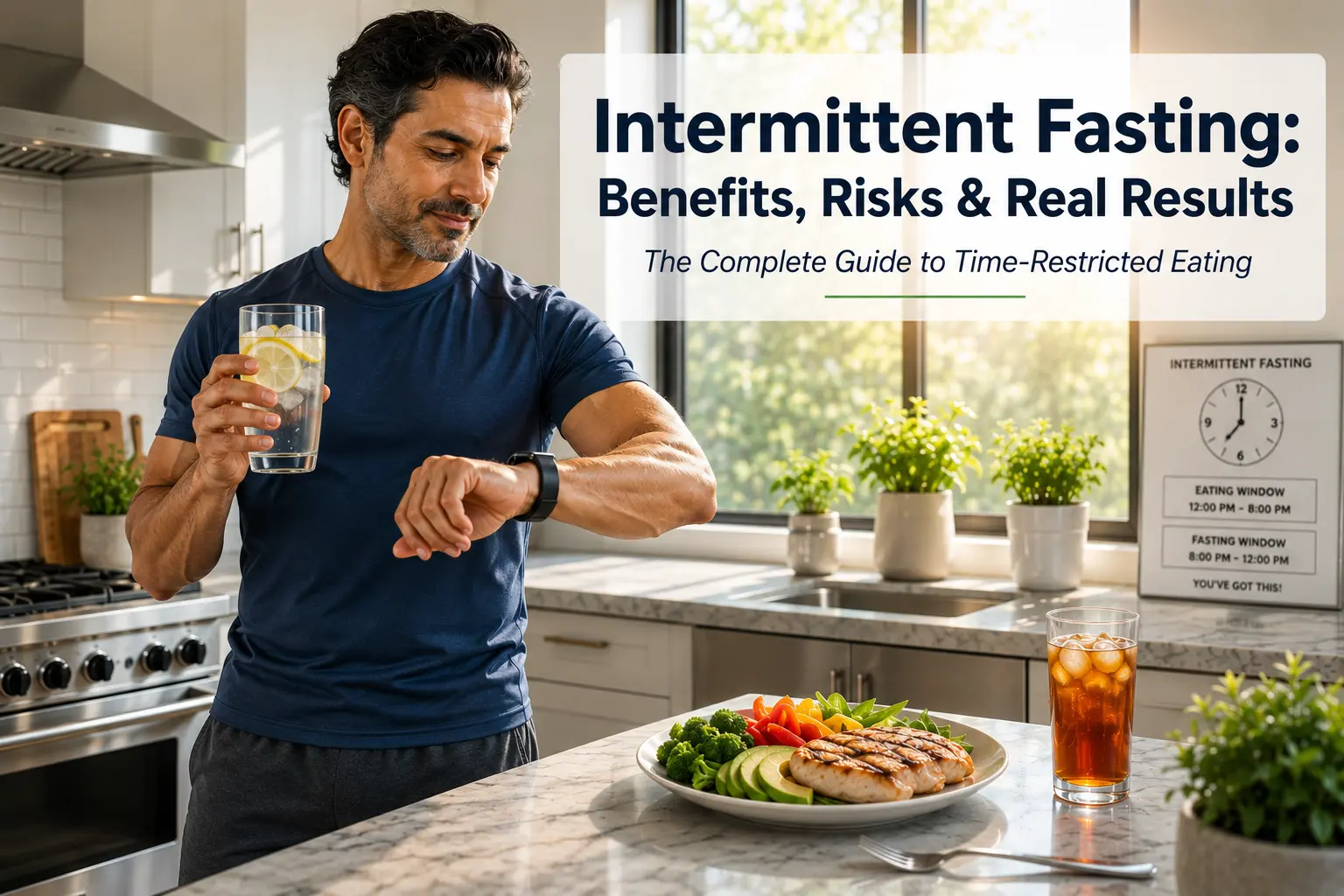
Example: Skip breakfast, eat lunch at noon, finish dinner by 8 PM, then fast until noon the next day.
Why it works: It’s the most sustainable IF method for most people. You’re only skipping breakfast—which many people skip anyway. The 8-hour eating window is genuinely realistic for fitting into modern life.
Best for: People with regular schedules, those who aren’t particularly hungry in the morning, professionals who want simplicity.
5:2 Method (The Flexible Approach)
The approach: Eat normally for 5 days, then restrict calories to 500-600 on 2 non-consecutive days.
Example: Eat normally Monday-Wednesday and Friday-Sunday, then limit yourself to 500 calories on Thursday and Saturday.
Why it works: It feels less extreme because most days have no restrictions. You’re not technically “fasting,” but rather eating very little on two days, which many people find more sustainable than daily fasting windows.
Best for: People who dislike rigid daily routines, those who struggle with fasting for extended periods, people with social eating commitments.
OMAD (One Meal A Day)
The approach: You eat only one meal per day, typically completing it within a 1-2 hour window.
Why it works: It’s the simplest eating schedule imaginable. One meal. Done.
Best for: Experienced fasters, people with strong self-discipline, those seeking rapid weight loss.
Reality check: OMAD is extreme and isn’t sustainable long-term for most people. It can lead to nutrient deficiencies if meal composition isn’t carefully planned.
Eat-Stop-Eat
The approach: Complete 24-hour fasts once or twice per week.
Example: Finish dinner at 7 PM on Monday, then don’t eat again until 7 PM on Tuesday.
Why it works: It’s simple and dramatic—the fasting period is so obvious that you can’t accidentally “cheat.”
Best for: People who want dramatic results quickly, experienced fasters, those who struggle with gradual approaches.
The Real Benefits: What Intermittent Fasting Can Actually Do
Let’s talk about what actually happens when you implement intermittent fasting correctly. I’m going to be honest about what’s proven versus what’s hyped.
Weight Loss (The Primary Benefit)
Here’s the truth: intermittent fasting helps people lose weight. But not because it’s magic—it works because it typically results in eating fewer calories overall.
When you compress your eating into a smaller window, you have fewer opportunities to eat. For many people, this naturally reduces total caloric intake without the need for strict calorie counting. You’re not fighting hunger as much because eating windows feel normal once you adapt.
Studies show that people practicing IF lose roughly the same amount of weight as those practicing traditional calorie restriction—about 1-2 pounds per week for those with significant weight to lose. The advantage? It feels simpler and requires less constant willpower.
Timeline: Most people notice initial weight loss (often water weight) within the first 1-2 weeks. Sustained fat loss typically becomes apparent after 4-6 weeks.
Improved Insulin Sensitivity
Your body’s ability to process insulin efficiently affects everything—from weight loss to disease prevention. Intermittent fasting can improve insulin sensitivity by allowing your insulin levels to drop during fasting periods. This means your cells respond better to insulin signals, and you’re less likely to develop insulin resistance.
This is especially beneficial for people with prediabetes or metabolic syndrome.
Enhanced Mental Clarity and Focus
Many people report improved cognitive function during fasting periods, particularly after the adaptation phase (usually 2-4 weeks). This likely relates to increased ketone production—your brain actually runs quite efficiently on ketones.
That said, this benefit is highly individual. Some people feel foggy and unfocused while fasting, while others report their best thinking happens in fasted states. Your own experience matters more than general claims.
Reduced Inflammation
Some evidence suggests that fasting periods can reduce systemic inflammation in the body. Inflammation is implicated in numerous chronic diseases, so this potential benefit is meaningful. However, the evidence is still emerging, and you can also reduce inflammation through diet quality and exercise.
Potential Longevity Benefits
Animal studies show that caloric restriction (which IF often produces) can extend lifespan. Human research is limited, but some evidence suggests intermittent fasting may improve markers associated with longevity and disease prevention.
The honest reality: IF isn’t inherently superior to other eating patterns for health. It’s a tool that helps some people eat less and make healthier choices. If it doesn’t fit your life or preferences, other approaches work just fine.
Real Results: What to Realistically Expect
I want to set clear expectations because IF isn’t a quick-fix miracle, despite what some online promoters claim.
Weeks 1-2: Initial Adaptation
Your body is adjusting to a new eating pattern. You might experience some hunger (it gets better), occasional irritability, and possibly a slight headache. You’ll likely see the scale drop, but this is mostly water weight from reduced glycogen and sodium intake.
What to expect: 3-5 pounds of weight loss (largely water)
Weeks 3-6: The Adjustment Phase
Your hunger hormones are adapting. Fasting becomes genuinely easier. You’re establishing the habit. Fat loss becomes more visible on the scale and in the mirror.
What to expect: 1-2 pounds per week of actual fat loss
Weeks 7-12: Sustained Progress
You’re in a rhythm. The fasting windows feel normal. Energy levels typically improve. Results continue consistently if you’re maintaining reasonable eating habits during feeding windows.
What to expect: 1.5-2 pounds per week, visible body composition changes
12+ Weeks: Long-Term Results
If you’ve stuck with it, you’re seeing significant changes. Clothes fit differently. Energy is stable. You’ve likely established a sustainable pattern.
What to expect: Continued progress, though the rate may slow as you approach your genetic set point
The Important Caveat
These timelines assume you’re eating reasonably during eating windows. If you use your eating window as a license to consume junk food, results will disappoint. IF doesn’t override the fundamental law of weight loss: you need to consume fewer calories than you burn.
The Risks: What You Really Need to Know
I’m not going to sugarcoat this—intermittent fasting has legitimate downsides that rarely get discussed honestly in popular media.
Disordered Eating Risk
For people with a history of eating disorders, intermittent fasting can be dangerously enabling. The structured “permission to fast” can mask restrictive behaviors. If you’ve struggled with disordered eating, consult with a mental health professional before implementing IF.
Nutrient Deficiencies
Compress your eating into smaller windows, and you have less opportunity to consume essential nutrients. If your eating window contains only casual snacking, you’ll miss micronutrients—iron, zinc, B vitamins, calcium.
This is entirely preventable with intentional food choices, but it’s a real risk if you’re not thinking about nutrition.
Muscle Loss
Extended fasting periods can potentially trigger muscle breakdown if you’re not consuming adequate protein during eating windows. This is particularly concerning for older adults and those trying to maintain athletic performance.
Mitigation: Ensure adequate protein intake during eating windows. Strength training signals your body to preserve muscle even during fasting periods.
Metabolic Slowdown
Here’s a myth that needs debunking: intermittent fasting doesn’t boost your metabolism. Extended fasting can actually slow your metabolic rate as your body adapts to lower energy intake. You might see faster results initially, but your body adjusts.
Hormonal Disruption (Especially for Women)
Women’s hormones are more sensitive to fasting and caloric restriction than men’s. Extended fasting can potentially disrupt estrogen and progesterone balance, affecting menstrual cycles, mood, and energy. This isn’t inevitable, but it’s a real consideration.
Women who experience irregular periods, mood changes, or energy crashes should consult a healthcare provider before extended fasting protocols.
Practical Challenges
- Social friction: Explaining to friends and family why you’re not eating at normal meal times gets old
- Energy crashes: Before adaptation, you might hit 3 PM completely depleted
- Relationship stress: Eating differently than your partner can create household tension
- Blood sugar issues: For people with diabetes or blood sugar regulation problems, fasting requires medical supervision
Who Should Avoid Intermittent Fasting
Intermittent fasting isn’t appropriate for everyone. If any of these apply to you, consult a healthcare provider before starting:
- Pregnant or breastfeeding women – Your caloric and nutrient needs are elevated
- People with a history of eating disorders – The structure can enable disordered patterns
- Those with diabetes or blood sugar disorders – Fasting can cause dangerous blood sugar fluctuations
- People taking certain medications – Some medications require food intake for proper absorption
- Adolescents and teenagers – Growing bodies need consistent nutrition
- People with a history of depression or anxiety – Fasting can exacerbate mood disorders
- Those with adrenal fatigue or chronic stress – Fasting adds additional stress to an already taxed system
Getting Started: Your Step-by-Step Implementation Guide
If you’ve decided IF might work for you, here’s how to actually implement it without burning out.
Step 1: Choose Your Method (Week 1)
Select one of the IF protocols that fits your lifestyle. For most people, 16/8 is the most sustainable starting point. Don’t overcomplicate this choice—you can adjust later.
Step 2: Plan Your Eating Window (Week 1)
Decide when you’ll eat. Common windows are:
- Lunch to evening: Noon-8 PM
- Early afternoon to evening: 2 PM-8 PM
- Afternoon to early evening: 3 PM-7 PM
Choose something that aligns with your social life and work schedule. The best timing is the one you’ll actually stick to.
Step 3: Start Gradual (Week 1-2)
Don’t jump straight to full fasting. If you normally eat breakfast at 7 AM, don’t suddenly shift your first meal to noon. Instead:
- Week 1: Move breakfast to 9 AM, keep your eating window until 7 PM (10-hour window)
- Week 2: Move breakfast to 10 AM (11-hour fasting window)
- Week 3: Move breakfast to 11 AM (12-hour fasting window)
- Week 4: Move breakfast to noon (13-hour fasting window)
Gradual adjustment minimizes hunger and adapts your body progressively.
Step 4: Manage Your Fasting Period (Weeks 3+)
During fasting windows, stay occupied. Drink water (add electrolytes if fasting longer than 16 hours), coffee, or tea. The hunger passes in 15-20 minutes if you don’t think about it.
Step 5: Optimize Your Eating Window (Weeks 3+)
During eating windows, prioritize:
- Protein (chicken, fish, eggs, legumes, yogurt)
- Whole foods (vegetables, fruits, whole grains)
- Healthy fats (olive oil, nuts, avocado)
- Adequate calories to meet your activity level
Don’t earn the right to eat garbage by fasting. The eating window is where all the nutritional work happens.
Step 6: Monitor and Adjust (Week 4+)
Track:
- How you feel (energy, mood, hunger)
- Scale weight (not daily, but weekly)
- Energy levels during workouts
- Sleep quality
- Menstrual cycle (if applicable)
If something isn’t working after 4-6 weeks, adjust. Try a shorter fasting window, add a small snack, or switch to the 5:2 method instead.
Expert Tips for Maximum Results
Now that you understand the fundamentals, here’s what experienced practitioners know that beginners don’t.
Time Your Workouts Strategically
Exercise during your fasting window triggers your body to preserve muscle (because you’re signaling that muscle is needed). Strength training in a fasted state is particularly effective. However, intense cardio might leave you depleted. Experiment to find what works for your body.
Break Your Fast Thoughtfully
Your first meal after fasting shouldn’t be a massive 2,000-calorie feast. Start with something moderate—a solid meal with protein, healthy fats, and vegetables. This prevents digestive stress and blood sugar spikes.
Stay Hydrated and Electrolyte-Balanced
If you’re fasting for extended periods (20+ hours), add electrolytes to your water. Sodium, potassium, and magnesium become important when you’re not getting minerals from food.
Be Flexible
The best IF protocol is the one you’ll actually follow. If you need to eat at 10 AM on a Tuesday for social or work reasons, eat. One meal won’t derail you. Rigid perfectionism is the enemy of consistency.
Pair IF with Strength Training
To preserve muscle while losing fat, incorporate resistance training 3-4 times per week. Fasting works best when you’re signaling your body that muscle is valuable.
Sleep is Non-Negotiable
Fasting is slightly more stressful on your body than eating normally. Your sleep needs to be excellent to recover properly. If your sleep drops below 6-7 hours per night, IF might not be appropriate for you right now.
Track Metrics Beyond the Scale
Weight fluctuates based on water retention, menstrual cycle, sodium intake, and gut contents. Use additional metrics:
- How clothes fit
- Energy levels
- Strength gains
- Body measurements
- Progress photos
The scale is useful but incomplete.
Common Mistakes That Derail Progress (And How to Avoid Them)
After seeing numerous people implement IF, certain patterns emerge. Here’s what typically goes wrong:
Mistake 1: Using IF as Permission to Eat Anything
“I fasted for 16 hours, so I can eat pizza and ice cream.” No. You still need nutritional density during eating windows. IF amplifies the importance of food quality because you have fewer eating opportunities.
Fix: Treat your eating window as precious real estate for nutrient-dense foods.
Mistake 2: Eating Too Little Overall
Some people get excited about fasting and end up in severe caloric restriction. This backfires—energy crashes, hormonal disruption, and muscle loss. You should still eat enough to fuel your activity level.
Fix: Track calories loosely for a week or two to ensure you’re eating an appropriate amount.
Mistake 3: Going All-In Too Fast
Jumping from three meals per day to OMAD overnight is a recipe for failure. Your willpower depletes, hunger overwhelms you, and you quit.
Fix: Start with 12-hour fasting, gradually work toward your target fasting window.
Mistake 4: Skipping Electrolytes
If you fast for extended periods without addressing electrolyte balance, you’ll experience headaches, weakness, and cramps. These aren’t signs to quit—they’re signs to add electrolytes.
Fix: A simple electrolyte powder (sodium, potassium, magnesium) is cheap insurance.
Mistake 5: Ignoring Hunger Signals Long-Term
Some hunger during adaptation is normal. Persistent, overwhelming hunger after 6+ weeks suggests IF isn’t working for your body. Respect that signal.
Fix: If you’re consistently miserable, switch to a different eating pattern. Health is about sustainability, not willpower.
Mistake 6: Not Adjusting for Women’s Cycles
If you’re a menstruating woman, your fasting tolerance changes with your cycle. You might handle 16-hour fasts easily during the follicular phase but need shorter fasts during the luteal phase.
Fix: Track your cycle alongside your fasting and adjust windows accordingly.
Frequently Asked Questions
Q: Will I lose muscle on intermittent fasting? A: Not necessarily. Protein intake during eating windows and regular strength training preserve muscle effectively. However, if you’re eating inadequate protein while fasting extensively, muscle loss can occur.
Q: How long does it take to see results? A: Initial results (water weight) appear in 1-2 weeks. Visible fat loss typically becomes apparent after 4-6 weeks with consistent adherence.
Q: Can I exercise while fasting? A: Yes. Moderate to intense strength training is fine fasted. Extreme endurance work might require some fuel. Listen to your body.
Q: Will fasting damage my metabolism? A: Short-term fasting (16-24 hours) doesn’t permanently damage metabolism. Extended fasting or severe caloric restriction does slow metabolic rate temporarily, but it returns to normal with adequate eating.
Q: Is intermittent fasting safe for women? A: Generally yes, but women should be cautious about extended fasting periods, which can disrupt hormones. Shorter fasting windows (12-14 hours) are often better tolerated.
Q: What should I eat during my eating window? A: Focus on protein, vegetables, whole grains, and healthy fats. Quality matters because you have fewer eating opportunities to meet nutrient needs.
Q: Can I drink coffee while fasting? A: Yes. Black coffee is fine. Anything with calories (cream, sugar, milk) breaks your fast technically, though a small amount of coffee creamer is unlikely to significantly impact results.
Q: How quickly will I need to adapt to fasting? A: Most people adapt within 2-4 weeks. Your hunger hormones adjust, and fasting becomes genuinely easier.
Q: What if I get really hungry during fasting? A: This is normal during adaptation. Drink water, have tea, or distract yourself. Hunger is temporary. If it persists beyond 6 weeks, consider a shorter fasting window.
Q: Can I do intermittent fasting while building muscle? A: Yes, but you need adequate protein during eating windows and resistance training to signal muscle building. Ensure you’re eating enough overall calories to support muscle growth.
Conclusion: Is Intermittent Fasting Right for You?
Intermittent fasting isn’t a miracle. It’s a tool—a surprisingly effective one for some people, and completely wrong for others.
Here’s what we know: IF works for weight loss primarily because it helps many people eat fewer calories without constant calorie counting. It can improve insulin sensitivity, potentially enhance mental clarity, and for some, it feels sustainable long-term. These are genuine benefits.
But it’s not superior to other eating patterns for everyone. If you hate fasting, if you have a history of eating disorders, if your hormones are sensitive to fasting, or if you thrive on frequent meals, there’s absolutely nothing wrong with that. Different approaches work for different people, and forcing yourself into an eating pattern that feels wrong is counterproductive.
If you’re curious about trying intermittent fasting, start with the 16/8 method, implement gradually, prioritize protein and whole foods during eating windows, and give it 6-8 weeks before deciding if it works for you.
But here’s my final takeaway: the best diet is the one you’ll actually follow consistently. Whether that’s intermittent fasting, traditional calorie counting, or something else entirely, your long-term adherence matters infinitely more than following the “perfect” protocol.
Listen to your body. Track what works. Be willing to adjust. That’s where real, lasting results come from.
KEY TAKEAWAYS
- Intermittent fasting is a timing-based eating pattern, not a diet focused on food restriction
- Weight loss occurs because most people eat fewer calories naturally with IF, not due to metabolic magic
- The 16/8 method is the most sustainable for most people (16-hour fast, 8-hour eating window)
- Results take time: visible results appear after 4-6 weeks; significant results after 12+ weeks
- Food quality matters: eating junk during eating windows undermines the entire approach
- Protein during eating windows is critical to preserve muscle while losing fat
- Women may need to adjust fasting length based on menstrual cycle for optimal results
- Gradual implementation outperforms sudden changes significantly
- IF isn’t appropriate for everyone: people with eating disorders, diabetes, or certain hormonal conditions should avoid it without medical supervision
- Consistency beats perfection: occasional flexibility is fine; complete consistency is more important than rigid adherence.