15 Medical & Health Myths Debunked by Science | Evidence-Based Facts
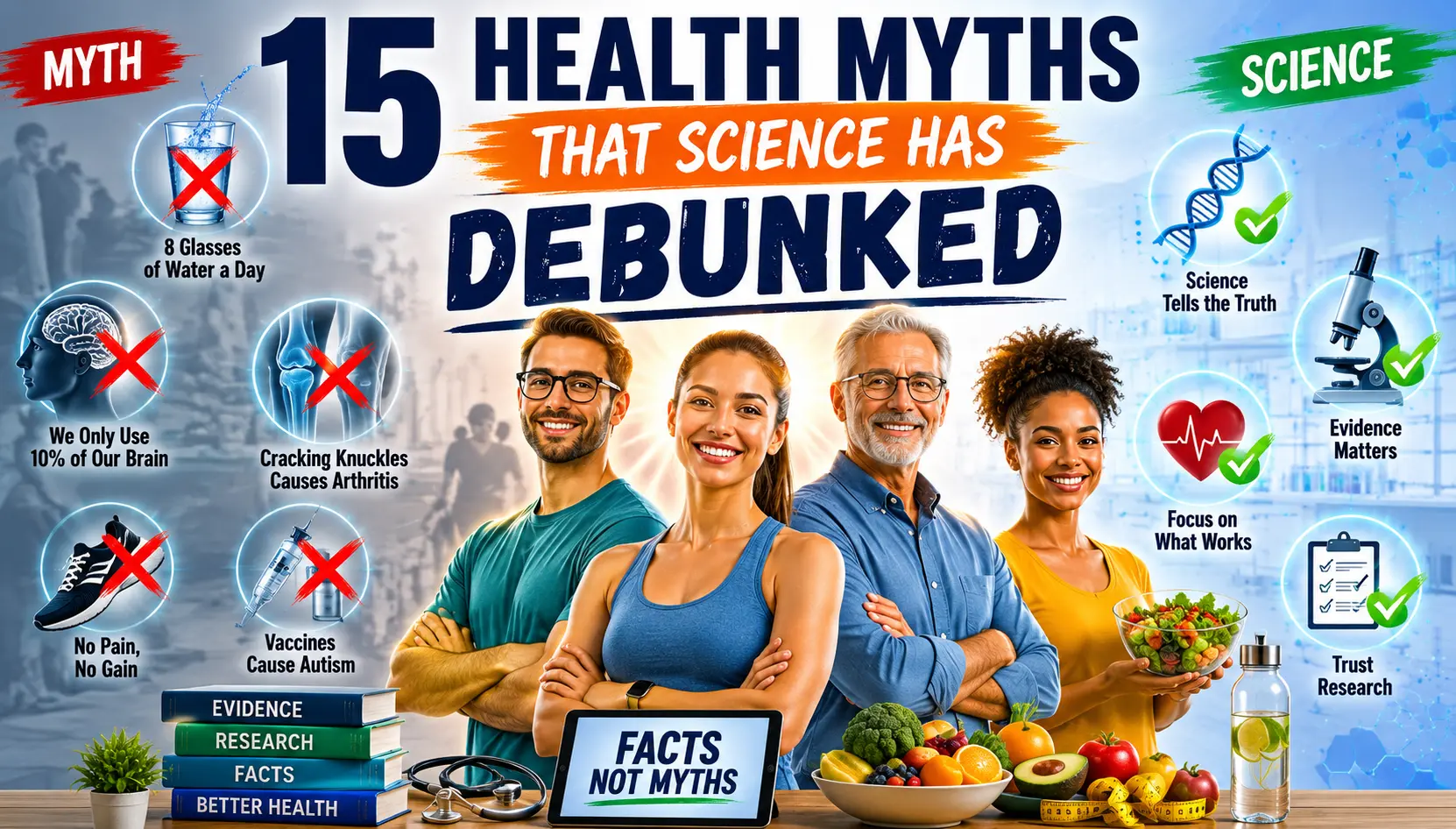
If you’ve ever been told that you need eight glasses of water daily, that cracking your knuckles causes arthritis, or that you lose most body heat through your head, you’ve encountered a health myth. These ideas are so widespread that they’ve become part of our cultural common sense, passed down through family advice, repeated on blogs, and even mentioned in casual conversations at the gym.
But here’s the thing: many of the health claims we accept as facts are actually dead wrong.
The problem isn’t that people are gullible. It’s that misinformation spreads easily, especially when it sounds plausible, comes from people we trust, or gets repeated often enough to feel true. The human brain is wired to accept information that confirms what we already believe, which means once a health myth takes root, it’s remarkably sticky.
That’s why I’ve put together this comprehensive guide to 15 of the most pervasive health myths that scientific research has thoroughly debunked. By the end, you’ll understand not just what the science actually says, but why these misconceptions became so widespread in the first place.
Why Do Health Myths Persist in the First Place?
Before we dive into the specific myths, it’s worth understanding why these misconceptions exist at all. Health myths survive for several key reasons:
Partial truths at their core: Many myths start with a grain of truth that’s been exaggerated or misinterpreted over time. This makes them just credible enough to believe.
Confirmation bias: Once we believe something, we tend to notice evidence supporting it and ignore evidence against it. We all do this unconsciously.
Repetition and authority: When enough people repeat something—especially people we respect—it gains credibility. Celebrity endorsements or mentions from parents who “always said so” add weight.
Slow correction: Scientific understanding evolves, but old beliefs don’t update as quickly. By the time research debunks a claim, it’s often been circulating for years.
Now, let’s look at the myths themselves.
Brain & Cognition Myths
Myth #1: We Only Use 10% of Our Brains
This might be the most famous neuroscience myth ever. The idea is that most of our brain sits dormant, unused and wasted. If only we could unlock that hidden 90%, we’d suddenly gain superhuman intelligence, telekinesis, or whatever else the myth promises.
Here’s what the science actually shows: We use virtually all of our brain, and most of it is active almost all the time.
Brain imaging studies using PET scans and fMRI technology consistently demonstrate that even during sleep, all areas of the brain show some level of activity. Neurologists find that people with brain injuries affecting relatively small areas experience significant problems, which wouldn’t be the case if 90% of our brain were genuinely useless.
We do use different brain regions more intensively for different tasks—you engage your visual cortex more when looking at something than when thinking about abstract math—but the notion of a vast “unused” portion simply doesn’t hold up.
Why did people believe this? The myth likely originated from misquotes of early neuroscientists who noted that we don’t fully understand all brain functions. Over time, this became distorted into the claim that we don’t use the brain fully. Hollywood loved this myth, too, making it the premise of countless films.
Myth #2: Alcohol Kills Brain Cells
Here’s where the science gets nuanced, and nuance doesn’t make for great myth-making. Many people believe that drinking alcohol directly destroys brain cells, causing permanent neurological damage. While heavy alcohol consumption can certainly damage the brain, the mechanism isn’t as simple as “alcohol kills cells on contact.”
The reality: Moderate alcohol consumption doesn’t kill brain cells in the way most people imagine. Heavy, chronic alcohol abuse, however, can lead to brain damage—but primarily through nutritional deficiencies (particularly thiamine/vitamin B1), inflammation, and by interfering with the brain’s normal functioning rather than by directly poisoning neurons.
Research in animals shows that even significant alcohol exposure doesn’t necessarily kill the majority of brain cells. The damage observed in people with alcohol-related brain disorders typically comes from years of heavy drinking combined with poor nutrition and other lifestyle factors.
Moderate drinking—defined as up to one drink daily for women and up to two for men—hasn’t been shown to cause detectable brain cell death. That said, excessive drinking absolutely poses serious neurological risks, but the risk comes from chronic overuse, not from the chemical directly assassinating cells.
Myth #3: Coffee Stunts Your Growth
How many times did your parents tell you that coffee would stunt your growth if you drank it too young? This myth has been told to generations of children, making them believe that caffeine somehow prevents normal development.
The science says: There’s no credible evidence that caffeine stunts growth in children. Multiple studies have examined the relationship between caffeine consumption and growth patterns, and researchers have found no meaningful connection.
What researchers did find: The myth might have arisen because caffeine can slightly increase the amount of calcium your body excretes through urine. However, the effect is minimal and easily offset by normal dietary calcium intake. Children who drink caffeinated beverages don’t grow shorter than those who don’t, provided their overall nutrition is adequate.
The real concern with caffeine in children isn’t growth—it’s that caffeine is a stimulant that can interfere with sleep, which actually is important for growth. So the myth had the mechanism all wrong, but the underlying concern about giving kids stimulants before bed isn’t entirely unfounded.
Nutrition & Diet Myths
Myth #4: You Need Eight Glasses of Water Per Day
The “8×8 rule” (eight 8-ounce glasses) is probably the most universally repeated health advice. Drink eight glasses of water daily, the saying goes, and you’ll be hydrated, healthy, and glowing.
What the research actually shows: There’s no scientific basis for this specific number. It’s largely a myth that became popularized through repetition.
Here’s what we know instead: Hydration needs vary dramatically based on climate, activity level, metabolism, body size, and overall health. A sedentary person in a cool climate needs far less water than an athlete in a hot environment. Your actual need might be anywhere from four glasses to over ten glasses daily.
A better rule? Drink when you’re thirsty, monitor your urine color (pale yellow indicates good hydration), and adjust based on your activity level and environment. Most people who eat water-rich foods like fruits and vegetables and drink other beverages (tea, milk, etc.) get plenty of fluids without counting glasses obsessively.
The myth became so entrenched that the U.S. National Academies of Sciences, Engineering, and Medicine eventually had to publish specific recommendations: adequate intake is about 15.5 cups total water per day for men and 11.5 cups for women—but this includes water in food and other beverages, not just plain water.
Myth #5: Carbs Are Bad For You & Make You Fat
The demonization of carbohydrates has spawned countless fad diets and influenced millions of people to view bread, pasta, rice, and fruit as nutritional enemies. The logic seems simple: carbs break down into sugar, sugar gets stored as fat, therefore carbs make you fat.
Here’s what nutrition science actually shows: Carbohydrates are not inherently bad, and carb-rich foods don’t automatically cause weight gain or poor health.
Yes, simple refined carbohydrates (white bread, sugary drinks, pastries) should be limited. But complex carbohydrates like whole grains, legumes, and vegetables are nutritional superstars. They’re rich in fiber, vitamins, minerals, and phytonutrients. Populations that eat high-carb diets with whole grains—like in the Mediterranean region—consistently show excellent health outcomes.
The weight gain associated with high-carb diets in research typically happens when people eat excess calories overall, often through refined carbs. When people eat equal calories on low-carb versus moderate-carb diets, the results are remarkably similar in terms of weight loss. The carbs themselves aren’t the enemy; overconsumption of calories is.
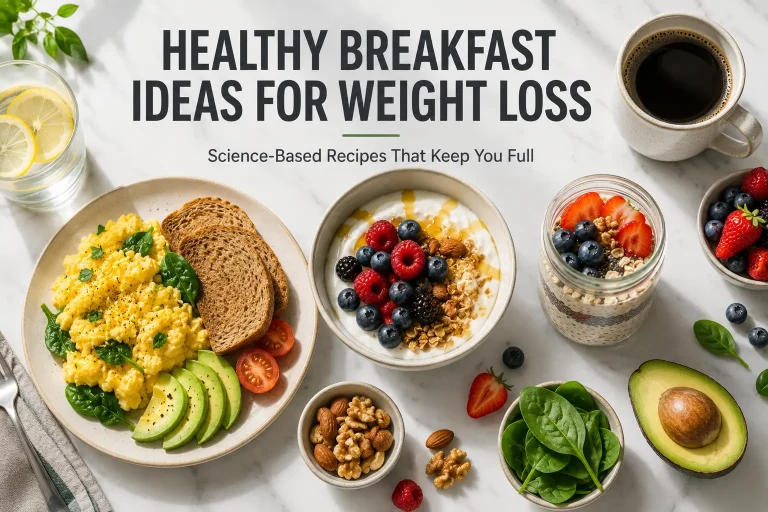
Myth #6: Breakfast Is Essential For Weight Loss & School Performance
“Breakfast is the most important meal of the day”—you’ve heard this your whole life. Skip breakfast and you’ll gain weight, have low energy, and perform poorly at work or school. Except… that’s not what the science shows.
The reality: Whether eating breakfast actually helps with weight loss or cognitive performance depends more on the individual and the specific breakfast than on eating it per se.
Recent research has thoroughly undermined the “breakfast is essential” narrative. Meta-analyses of breakfast studies show that eating breakfast doesn’t significantly improve weight loss compared to not eating breakfast. Some studies find no effect on children’s academic performance either.
What actually matters: Overall calorie intake, diet quality, sleep quality, and individual preference. Some people genuinely function better with breakfast. Others aren’t hungry in the morning and perform better skipping it. For some people, forcing down breakfast leads to overeating later. For others, the opposite is true.
The breakfast industry’s messaging (yes, cereal companies promoted the “breakfast is essential” idea) happened to align with old nutritional assumptions that weren’t as robust as we thought.
Myth #7: Milk Is Essential For Strong Bones
For decades, the dairy industry’s messaging dominated nutritional advice: drink milk for strong bones and teeth. Calcium from dairy became synonymous with bone health, and people who don’t drink milk were viewed as at-risk for osteoporosis.
What the bone health research reveals: Milk provides calcium, which is necessary for bones, but it’s not the only source and isn’t essential for bone health. Countries with the lowest dairy consumption often have the lowest rates of osteoporosis. What actually predicts bone health is more complex: adequate calcium intake (from any source), vitamin D, exercise (especially resistance training), and genetics all matter.
Calcium from sources like leafy greens, fortified plant-based milks, legumes, nuts, and seeds works just as well as calcium from dairy. Many people are lactose intolerant and do fine without dairy milk. The real concern isn’t whether calcium comes from milk specifically—it’s whether someone gets enough calcium overall, along with vitamin D and exercise.
Personal Care & Body Myths
Myth #8: Shaving Makes Hair Grow Back Thicker
One of the most persistent myths about personal grooming: shaving legs, underarms, or facial hair causes it to grow back thicker, coarser, or darker. This belief has influenced grooming choices for generations.
The science: This is simply not true. Hair shaft thickness is determined by genetics and hormones, not by shaving.
Here’s why the myth survives: When you shave, the top of each hair is cut bluntly rather than tapering to a fine point naturally. This can make the hair feel thicker or stubbly when it grows back in. Additionally, unshaved hair gradually thins with weathering and sun exposure, so regrowth compared to long hair can appear coarser. It’s a perceptual trick, not an actual change in hair growth.
Dermatologists and hair specialists are unanimous: shaving does not change the rate of hair growth, thickness, or color. Multiple studies have confirmed this. You can shave confidently without worrying about thicker regrowth.
Myth #9: You Lose Most Body Heat Through Your Head
The idea that you lose 45% or even 75% of your body heat through your head is widely repeated, prompting parents to insist children wear hats in winter and rescuers to prioritize covering hypothermia victims’ heads.
Here’s what thermodynamics and physiology actually show: You lose body heat through any uncovered surface proportionally to how much surface area it represents. Your head is about 10% of your body’s surface area, so you’d expect to lose roughly 10% of heat through it under normal circumstances.
Why the myth exists: An early military study in the 1950s, later widely misquoted, suggested that covered soldiers lost more heat through their heads than other areas. But the study was comparing a covered head to a completely naked body—not a fair comparison. When researchers controlled for the fact that heads were uncovered while the rest of the body was clothed, the numbers aligned with expectations.
The real takeaway: Yes, keeping your head covered in the cold helps retain heat because it’s exposed. But it’s not special or disproportionate—it’s just another 10% of your surface area. Wearing warm clothing on your torso, legs, and arms is equally important.
Myth #10: Cracking Your Knuckles Causes Arthritis
Ask anyone who cracks their knuckles regularly, and they’ve probably heard this warning a thousand times: “Stop doing that, you’ll get arthritis!” The anxiety this causes is real, even if the scientific basis isn’t.
What rheumatology research shows: There is no credible evidence linking knuckle cracking to osteoarthritis or rheumatoid arthritis. Multiple studies have examined this, including one famous long-term study where a researcher cracked the knuckles of one hand for decades while leaving the other hand alone—no difference in arthritis development.
What happens when you crack your knuckles: The “pop” sound comes from gas bubbles collapsing in your synovial fluid (the lubricant in your joints). It’s harmless, though some evidence suggests very frequent, forceful cracking might cause some hand swelling or loss of grip strength in some people. But arthritis? Not a concern based on current evidence.
Myth #11: You Must Stretch Before Exercise to Prevent Injury
The pre-exercise stretch is so ingrained in fitness culture that many people do it without thinking. But modern exercise science has thoroughly challenged this tradition.
What the research actually shows: Static stretching (holding a stretch) before exercise doesn’t prevent injury and may actually impair performance by reducing muscle activation temporarily.
Instead, evidence supports a dynamic warm-up: light movement and gradually increasing intensity. This prepares your cardiovascular system, increases muscle temperature, and activates your nervous system better than static stretching.
Interestingly, static stretching is beneficial—just after exercise, when muscles are warm and your body is ready for flexibility work. The benefit of flexibility for injury prevention is real, but the timing and method matter tremendously. The myth persists because stretching is beneficial; people just had the wrong timing in mind.
Exercise & Movement Myths
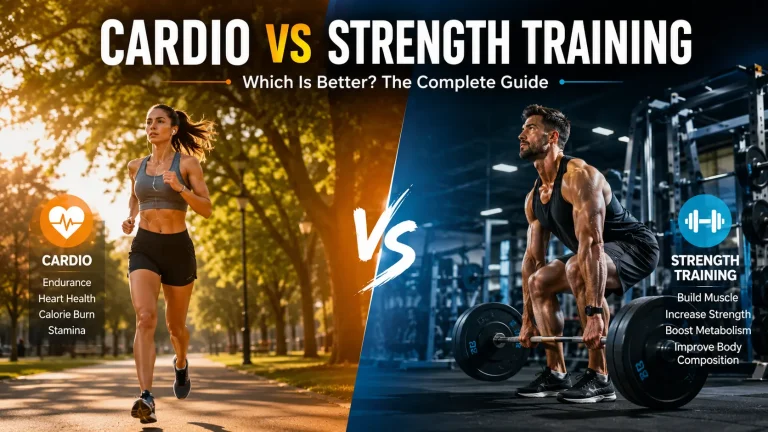
Myth #12: Running Ruins Your Knees
Many people avoid running because they believe it inevitably damages their knees, leading to arthritis and joint problems later in life. This fear keeps countless people sedentary.
The orthopedic evidence: Moderate running doesn’t damage knees in healthy people. In fact, runners don’t have higher rates of knee arthritis than non-runners. Some research suggests runners might even have lower arthritis rates because weight-bearing exercise strengthens supporting tissues.
That said, running incorrectly, with poor form, inadequate recovery, or excessive volume too quickly can cause problems. And people with existing knee conditions should modify their running. But for generally healthy people, running is a safe, joint-supporting activity.
The myth likely arose from observation of extreme athletes with overuse injuries, but the problem there is excessive training volume, not running itself.
Myth #13: No Pain, No Gain—You Must Be Sore to Build Muscle
The “no pain, no gain” mentality has convinced people that muscle soreness is a sign of effective training and that workouts should hurt to be beneficial.
What exercise physiology demonstrates: Muscle soreness (DOMS—delayed onset muscle soreness) is a sign of muscle damage and inflammation, not a prerequisite for muscle growth. You can build significant muscle without being sore at all.
In fact, once your body adapts to an exercise, soreness decreases even as you continue building strength and muscle. Elite athletes often experience minimal soreness despite intense training. Beginners get sore because their muscles are new to the stimulus, but that soreness isn’t the mechanism of growth.
Effective training involves progressive challenge, adequate recovery, and good nutrition—not necessarily pain. Training should be challenging, yes, but the goal is adaptation, not suffering.
Illness & Immunity Myths
Myth #14: Cold Weather Makes You Sick
When winter arrives, people bundle up to avoid catching a cold. The assumption is that cold temperatures directly cause illness.
Here’s what virology and epidemiology show: Cold weather doesn’t cause illness directly. Viruses and bacteria cause colds and flu. However, cold weather is associated with increased illness rates—just not because the cold itself makes you sick.
Why illness increases in winter: People spend more time indoors in close proximity, viruses survive longer in cold, dry air (reduced humidity indoors), vitamin D production decreases with less sun exposure (potentially affecting immunity), and respiratory mucous membranes may be more vulnerable in cold conditions.
Being cold itself doesn’t lower immune function or increase your chances of catching a virus if you’re otherwise healthy. But the environmental changes that come with cold weather do increase exposure and viral transmission opportunities.
Myth #15: Vaccines Cause Autism
This is the most consequential myth on this list because it directly impacts public health. Despite being thoroughly debunked by massive research, the claim that vaccines cause autism persists, leading some parents to avoid vaccinating their children.
The scientific consensus: There is no causal link between vaccines and autism. The original study claiming this link was fraudulent and retracted. The researcher lost his medical license. Hundreds of subsequent studies involving millions of children have found no connection whatsoever.
What we know about autism: It has a strong genetic component. Brain differences associated with autism develop prenatally. Autism diagnoses increased because of better diagnostic criteria and increased awareness, not because something changed in vaccines.
Why did this myth take hold so strongly? The timing seemed to matter—autism is typically diagnosed around 12-18 months, which coincides with vaccine schedules. This coincidental timing, combined with parents seeking explanations and mistrust of institutions, created fertile ground for this false narrative.
This myth has had tragic real-world consequences: measles outbreaks in communities with low vaccination rates have led to deaths and serious complications that were largely eliminated decades ago.
How to Spot Health Misinformation (And Protect Yourself)
Now that we’ve covered what myths sound convincing but aren’t true, how do you evaluate health claims yourself? Here’s a practical framework:
Check the source: Is this coming from a qualified expert? A personal blog? A sales page? Medical doctors, registered dietitians, and peer-reviewed research carry more weight than celebrity endorsements or people selling something.
Look for the research: Good health claims cite actual studies. If someone makes a health claim without mentioning evidence, that’s a red flag. Look for peer-reviewed research, not just anecdotes.
Consider motivation: Who benefits if you believe this claim? If someone’s selling a supplement, they have a financial incentive to convince you it works. That doesn’t mean they’re wrong, but it’s worth noting.
Check for nuance: Real science is almost always more complicated than “X is bad” or “Y is good.” Claims that are too simple or absolute usually oversimplify the evidence.
See if mainstream medicine addresses it: Major medical organizations like the Mayo Clinic, CDC, and professional medical associations typically publish positions on major health claims. Their consensus matters.
Look for consistency: If every major health organization says something is safe but the internet says it’s dangerous, the internet is probably wrong. Scientific consensus matters.
Where to Find Reliable Health Information
When you need accurate health information, turn to these authoritative sources:
- Mayo Clinic (mayoclinic.org) – Evidence-based, written for general audiences
- CDC (cdc.gov) – Government health guidance
- NIH/PubMed (pubmed.ncbi.nlm.nih.gov) – Access to peer-reviewed research
- WebMD and Healthline – Reviewed by medical professionals
- Cochrane Library – Systematic reviews of research evidence
- Your own doctor – Always a good starting point for personal health questions
Avoid: Blogs without author credentials, websites selling the product they promote, and sensationalized health news without medical review.
Expert Tips for Evaluating Health Claims: A Practical Framework
When you encounter a health claim you’re unsure about, run it through these checks:
The “Too Good to Be True” Test: If something promises to cure multiple conditions, reverse aging, or work dramatically faster than conventional medicine, skepticism is warranted. Real medicine is often gradual and condition-specific.
The Specificity Test: Good claims are specific. “Improves immunity” is vague. “Increases interferon production by 23% in this specific context” is testable. More specificity typically indicates actual research rather than marketing language.
The Reversibility Test: Can you find legitimate research contradicting this claim? If hundreds of studies show the opposite, one internet enthusiast saying otherwise probably isn’t right.
The Side Effect Honesty Test: Credible health advice acknowledges potential downsides. If something has zero drawbacks or side effects ever mentioned, someone’s hiding something.
The Long-Term Test: Have people been following this advice for decades without harm becoming apparent? Time is a good filter for actually harmful ideas.
Common Mistakes People Make When Evaluating Health Information
Understanding why we fall for myths helps prevent it:
Mistaking correlation for causation: “I started this supplement and felt better” doesn’t mean the supplement caused the improvement. You might have rested more, reduced stress, or benefited from placebo effect.
Relying too heavily on anecdotes: One person’s experience, even a celebrity’s, doesn’t constitute scientific evidence. What works for them might not work for you, and might not be what actually caused their results.
Confirmation bias: Actively seeking out information that challenges your beliefs is hard. We naturally gravitate toward information supporting what we already think. Combat this by deliberately looking for contradictory evidence.
Recency bias: Recent articles seem more credible than older ones, but established scientific consensus often comes from decades of research, not the latest blog post.
Trusting authority without verification: Someone being famous, attractive, or charismatic doesn’t make their health claims true. Medical credentials matter; celebrity doesn’t.
FAQ: Common Questions About Health Myths
Q: Are all health myths completely false, or is there usually some truth to them? A: Most myths have a kernel of truth or arose from misunderstood research. The “8 glasses of water” rule came from a century-old study misquoted repeatedly. Understanding the actual science behind where myths came from helps you evaluate them critically.
Q: If these myths are false, why do doctors and health experts sometimes mention them? A: Healthcare providers work in busy environments with limited time per patient. They might repeat conventional wisdom without questioning it, especially if they were taught it during their own training. This is why consulting current research and guidelines matters.
Q: How do myths persist when the debunking information is available online? A: The internet makes misinformation spread faster than corrections. Myths are often simpler than nuanced facts, easier to remember and share. People also tend to believe information they’ve encountered multiple times, regardless of accuracy.
Q: Should I trust alternative medicine practitioners’ claims about health myths? A: Some alternative practitioners are credible and science-informed. Others promote claims contradicted by evidence. The same evaluation framework applies: check credentials, look for research, be skeptical of absolute claims, and consult medical doctors for serious conditions.
Q: What’s the best source for understanding if a health claim is real? A: Start with major medical organizations’ published positions, then dig into peer-reviewed research if available. If you’re dealing with a personal health situation, your doctor combined with reliable resources like Mayo Clinic or NHS websites is ideal.
Q: Do pharmaceutical companies fund health research, and does that make it unreliable? A: Yes, pharma companies often fund research on their products, which creates potential bias. However, peer review, multiple independent studies, and regulatory oversight provide checks. Be aware of funding sources, but don’t dismiss all industry-funded research categorically.
Q: How can I know if a supplement is actually effective? A: Look for clinical trials showing benefit, understand the quality of those trials (large, randomized, peer-reviewed are better), check if major medical organizations recommend it for your condition, and be realistic about what supplements can do. Supplements aren’t regulated as strictly as drugs.
Q: Is it ever okay to trust health advice from non-experts? A: General wellness advice from people with relevant experience (an experienced runner giving running tips, for example) can be useful. But for medical claims, medical credentials matter. Listen to experience, but verify with authoritative sources.
Q: Why do health recommendations change over time? A: Science evolves. New research provides better understanding. What seemed true with limited data might be contradicted by better studies. This is normal and doesn’t mean science was “wrong”—it means it’s self-correcting. Changing recommendations based on new evidence is a sign the system works.
Q: What should I do if my doctor recommends something that contradicts what I’ve read online? A: Talk to your doctor about your concerns. Ask them to explain their reasoning and cite evidence. If you’re still unsure, get a second opinion from another doctor. Your doctor knows your full medical history and context; anonymous internet sources don’t.
Key Takeaways: What You Should Remember
Here’s what to walk away with from this article:
- Most health myths sound plausible because they usually contain a grain of truth or come from misunderstood science.
- Skepticism is your best tool. Before accepting a health claim, ask where it comes from, what evidence supports it, and who benefits from you believing it.
- Peer-reviewed research matters. Not all studies are equal, but research published in reputable journals and reviewed by experts matters more than anecdotes or celebrity claims.
- Your individual situation is unique. Even accurate general advice might not apply to your specific circumstances. That’s what doctors are for.
- Better to change your mind based on evidence than cling to myths. Some of the most successful people and healthiest populations do things contradicting persistent myths.
- Time tests claims. If a health claim has been around for decades and hasn’t caused the predicted problems, it’s probably fine. Genuinely harmful things tend to get noticed eventually.
- Simple answers to complex problems are usually wrong. Real health involves genetics, environment, behavior, medical history, and luck. Anyone offering a silver bullet is probably selling something.
Conclusion:
The prevalence of health myths shows something important about human nature: we want to understand our bodies and make good health decisions. We’re not foolish for believing myths—we’re just human. Our brains evolved to learn from patterns and accept information from trusted sources, which usually serves us well. Sometimes, though, it leaves us vulnerable to misinformation.
The good news? You now know how to think critically about health claims, where to find reliable information, and why some of the most widespread health advice isn’t backed by science. You understand that your brain uses way more than 10%, that carbs aren’t evil, that running won’t destroy your knees, and that breakfast isn’t essential for everyone.
More importantly, you have a framework for evaluating any new health claim you encounter. In a world drowning in wellness advice, confusion, and conflicting information, that critical thinking skill might be the most valuable health knowledge you can have.
The science of health continues to evolve. Recommendations you read today might be refined by research tomorrow. That’s not a weakness of science—it’s the whole point. A system that self-corrects based on evidence is one you can trust, even when individual claims sometimes need updating.
Next time you hear a health claim that sounds too definitive or too simple, ask yourself the questions we’ve discussed. Look for the evidence. Check the source. Consider the nuance. The time you spend thinking critically now might save you from years of following advice that doesn’t actually work—or worse, causes harm.
Your health is too important for myths. Demand evidence. Trust science. And when something contradicts your deeply held beliefs, that’s when critical thinking matters most.