
Beginner’s Guide to Home Workout Plan: Start Today, No Gym Needed
You’ve probably thought about getting in shape. Maybe it’s been a nagging thought in the back of your mind, or perhaps something recently sparked a genuine desire to change. But here’s what typically happens next: you imagine the gym. The crowded machines. The impossibly fit people. The membership fee you’ll have to commit to. And just like that, the idea quietly fades away.
Here’s the truth nobody tells beginners—you don’t need any of that. You don’t need fancy equipment, an expensive membership, or even much space. What you actually need is right here: the knowledge that home workouts for beginners aren’t just effective—they’re often better than starting at a commercial gym.
This guide isn’t about selling you on some miracle transformation. It’s about showing you how to build a sustainable fitness habit from the comfort of your own space, with zero equipment if that’s what you want. More importantly, it’s about creating a realistic pathway that actually fits your life instead of disrupting it.
Why Home Workouts Are Perfect for Beginners
Let’s address the elephant in the room: can you actually get fit at home? Absolutely. In fact, research consistently shows that beginners who start with home workouts have higher adherence rates than those who join gyms but struggle with the intimidation factor.
You eliminate the intimidation factor. Walking into a gym as a beginner carries real psychological weight. There’s the self-consciousness about looking like you don’t know what you’re doing, the fear that everyone’s watching, and the general discomfort of being vulnerable in front of strangers. At home, you remove that barrier entirely. You can adjust your form, take breaks, and move at your own pace without anyone observing or judging.
The convenience is genuinely life-changing. No commute. No waiting for equipment. No “I’ll go tomorrow.” When your workout space is literally where you live, you eliminate the friction that causes most beginners to quit. That 30-minute time investment becomes realistic because you’re not spending 20 of those minutes driving.
The cost is essentially zero. A gym membership might seem affordable until you calculate the actual expense over a year. Home workouts? Your only investment is your time. If you decide later that you want dumbbells or resistance bands, they’re cheap and take up minimal space. Most beginners will discover they can build solid strength with nothing but bodyweight.
You control the environment. The temperature, music, lighting, and intensity are all up to you. Some mornings you might need a gentle, quiet workout. Other days you can crank up the music and go harder. This flexibility helps you stay consistent, which is far more important than occasional intense sessions.
The psychology works in your favor. Each home workout you complete builds confidence and proves to yourself that you’re capable. This internal evidence is more powerful than any external validation. After two weeks of consistent home workouts, you’ll genuinely believe you can do this—and that belief is half the battle.
Getting Started: The Beginner’s Mindset
Before we dive into specific exercises, let’s talk about the mental framework that actually matters.
Most beginners approach fitness with the same urgency they’d approach everything else in life. They go all-in. They create elaborate plans. They commit to working out six days a week. And then life happens—you miss a day, feel guilty, decide you’ve “ruined it,” and quit entirely.
This boom-bust cycle is incredibly common, and it’s almost entirely preventable if you adopt what I call the “realistic marathon mindset.” You’re not preparing for a one-month transformation. You’re building a skill you’ll use for decades. That fundamentally changes your approach.
Expect to feel awkward at first. There’s nothing wrong with you if the first few weeks feel uncomfortable. Your body isn’t used to this, your coordination might be rusty, and you’re learning new movement patterns. This is completely normal. In fact, beginners who feel awkward the first week are often the ones who see the best results because they’re properly challenging themselves.
Understand that consistency beats intensity every single time. A beginner who does three 20-minute home workout sessions per week will see dramatically better results than someone who does one intense 90-minute session and then skips two weeks. Your body adapts to repeated stimulus, not rare extreme sessions. Think of fitness like learning a language—daily practice beats occasional cramming.
Results take time, and that’s okay. Most beginners need to be honest with themselves: you won’t see dramatic changes in two weeks. You might feel slightly better, sleep a bit deeper, and start to notice clothes fitting differently around week three or four. Strength improvements appear around week four to six. Visible muscle definition takes 8-12 weeks minimum. This timeline isn’t depressing—it’s liberating. It means you can stop obsessing over daily changes and just focus on the habit.
Set one primary goal, not twelve. Beginners often want to lose fat, build muscle, increase endurance, and achieve flexibility simultaneously. Instead, choose one primary goal—let’s say building a consistent workout habit. Everything flows from that. Once the habit is established (usually 3-4 weeks), you can refine other goals. This approach prevents overwhelm.
Forget “no pain, no gain.” That phrase has damaged more beginner fitness journeys than any other single piece of advice. You should feel challenged, not in pain. Soreness in the first few days? Normal. Sharp pain? Stop immediately. If working out causes dread rather than mild anticipation, you’re doing something wrong. Adjust the intensity downward. It’s not a sign of weakness—it’s being smart.
Setting Up Your Home Workout Space
Here’s the good news: you probably already have everything you need.
An effective home workout space can be as simple as a clear floor area about 6 feet by 4 feet. That’s it. That’s genuinely all you need for a complete bodyweight routine. If you have a staircase, even better. If you have a sturdy chair, that opens up additional exercise options.
The non-negotiables:
- Clear floor space (hardwood or carpet both work; just avoid slippery surfaces)
- Ability to move your arms in all directions without hitting anything
- Comfortable temperature (fresh air helps)
- Water access nearby
Nice-to-haves (completely optional):
- A yoga mat (prevents discomfort when lying down; costs $15-30)
- A mirror (helps with form feedback; not essential)
- Resistance bands (incredibly cheap and storage-friendly; great when you’re ready to progress)
Safety considerations:
- Ensure your space is clear of hazards
- Wear supportive athletic shoes or go barefoot (avoid socks on slippery floors)
- Have water nearby
- Tell someone what you’re doing (for safety, not accountability)
- If you have any health concerns, check with your doctor before starting
Most beginners make the mistake of thinking they need to invest in equipment before starting. Resist this urge. Start with bodyweight. Prove to yourself you’ll actually maintain the habit. Then invest.
Foundational No-Equipment Exercises for Beginners
These five categories of movements form the foundation of any solid home workout routine. You’ll notice that each exercise has beginner modifications. Use them without hesitation—they’re not “lesser versions,” they’re the appropriate version for where you are right now.
Upper Body
Push-ups (Modified) The most misunderstood exercise in home workouts. Beginners often skip them because they can’t do a full push-up. Don’t.
Standard version: Hands on floor slightly wider than shoulders, body in a straight line from head to heels, lower your body until your chest nearly touches the floor, push back up.
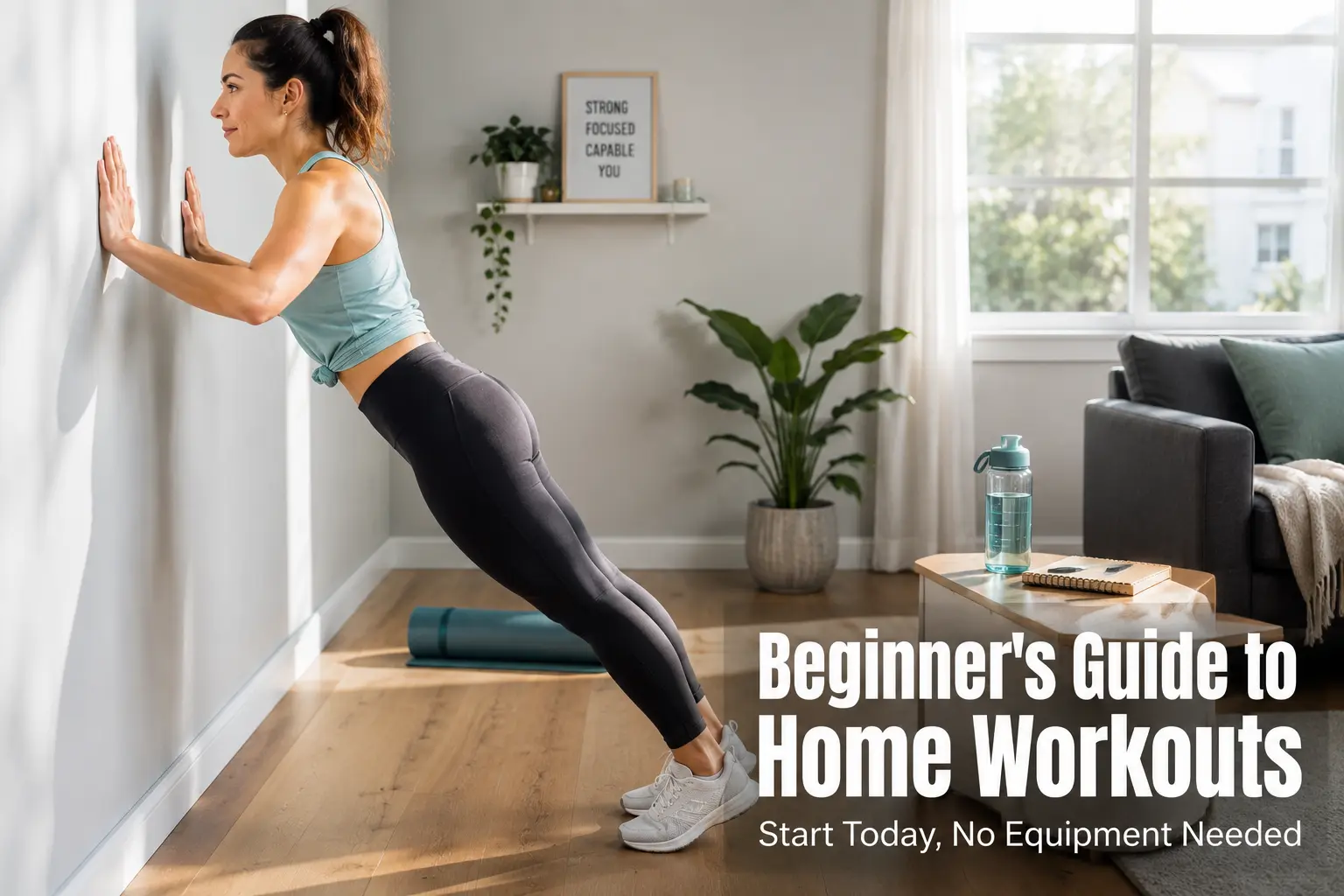
Beginner modification: Do wall push-ups (hands on a wall, feet further away) or incline push-ups (hands on a chair or bench). These maintain the movement pattern while making it more manageable. You can progress to regular push-ups over time.
Proper form: The biggest mistake is dropping your hips—keep your core tight and your body aligned.
Sets and reps: 3 sets of 8-12 reps (whatever version you choose)
Inverted Rows (Dips) If you have a sturdy table, chair, or low railing, this becomes possible. Grip the edge, keep your body straight, and pull yourself up. If you’re very new to exercise, skip this for week one and come back to it.
Beginner modification: Bent-knee inverted rows (knees slightly bent, easier) or assisted rows (using a partner for slight support).
Sets and reps: 3 sets of 8-10 reps
Lower Body
Bodyweight Squats Stand with feet shoulder-width apart, lower your body by bending your knees and hips as if sitting back into a chair, keep your chest upright, stand back up. This is arguably the most important lower body movement.
Form cues: Knees should track over your toes, don’t let them collapse inward. Your weight should be in your heels.
Beginner modification: Box squats (lower yourself until you barely touch a chair, then stand). This gives you a reference point and builds confidence.
Sets and reps: 3 sets of 15-20 reps (higher reps help you learn the pattern safely)
Walking Lunges Step forward, lower your body by bending both knees until your back knee nearly touches the floor, push through your front heel to return to standing, repeat on the other side.
Why lunges are great for beginners: They work each leg individually, helping you identify and fix imbalances. They also feel less intense than squats for many people.
Beginner modification: Stationary lunges (stay in one spot, alternating legs). Easier to balance and learn the pattern.
Sets and reps: 3 sets of 10 reps each leg
Glute Bridges Lie on your back, knees bent, feet flat on the floor, push through your heels to lift your hips toward the ceiling, squeeze your glutes at the top, lower back down slowly.
Why this matters: Most beginners have weak glutes. Bridges activate and strengthen them safely while improving hip mobility.
Sets and reps: 3 sets of 15 reps
Core
Planks Forearm position: elbows under shoulders, body in a straight line, hold without sagging. This is harder than it looks and more valuable than hundreds of crunches.
Beginner modification: Wall planks (hands on wall) or modified planks (on your knees). These build the foundational strength.
Hold duration: 3 sets of 20-30 seconds (even 10 seconds is fine to start)
Form tip: The most common mistake is hiking your hips up. Keep everything aligned.
Dead Bugs Lie on your back, arms extended toward the ceiling, knees bent at 90 degrees, lower your right arm and left leg toward the floor simultaneously while keeping your lower back in contact with the ground, return to start, alternate sides.
Why beginners should learn this: It teaches core stability without the intensity of planks. It also safely mobilizes your spine.
Sets and reps: 3 sets of 10 each side
Cardio (No Equipment Needed)
Modified Burpees This can be scaled dramatically for beginners. Start by standing, place hands on the floor, step or jump back into a plank position, step or jump your feet back to your hands, stand up.
Beginner modification: Skip the jumping. Step back and forward instead. This gives you the cardiovascular benefit without the complexity.
Duration: 30-second intervals with 30 seconds rest, repeat 5-8 times
Jumping Jacks Classic move, incredibly effective. If jumping irritates your knees, do step-jacks instead (step one foot out to the side rather than jumping).
Duration: 3 sets of 30-60 seconds with rest between
Mountain Climbers (Modified) Start in a plank position, bring one knee toward your chest, return to start, alternate legs. For beginners, move slowly rather than fast.
Duration: 3 sets of 20 seconds
Your First Week Home Workout Plan
Week one is about establishing habit and learning proper form. It’s not about intensity. Here’s what actually works:
Day 1: Upper Body + Cardio
- Warm-up: 5 minutes of light movement (arm circles, leg swings)
- Modified push-ups: 3 sets of 8 reps
- Inverted rows (if available): 3 sets of 5 reps
- Wall push-ups: 3 sets of 8 reps
- Jumping jacks: 3 sets of 30 seconds
- Cool-down: Gentle stretching
Day 2: Rest or Light Activity Seriously. Your body needs this. Go for a walk, do gentle yoga, or do nothing. The point is you’re not doing structured strength training.
Day 3: Lower Body + Core
- Warm-up: Light walking
- Bodyweight squats: 3 sets of 15 reps
- Glute bridges: 3 sets of 15 reps
- Dead bugs: 3 sets of 10 each side
- Modified burpees: 3 sets of 15 seconds
- Cool-down: Stretching
Day 4: Rest Again, recovery is part of training. Use this time to do something you enjoy.
Day 5: Full Body Light Workout
- Warm-up: Arm and leg movements
- Modified push-ups: 3 sets of 8
- Squats: 3 sets of 15
- Planks: 3 sets of 15 seconds
- Jumping jacks: 3 sets of 30 seconds
Days 6 & 7: Active Rest or Light Stretching
What to expect: You’ll likely feel sore, especially in days 2-3 after your first workout. This is normal and not a sign of injury. It’s called DOMS (delayed-onset muscle soreness) and it means your body is adapting. By day 5 or 6, you’ll notice the soreness decreases significantly.
Common Beginner Mistakes to Avoid
Learning what not to do is often more valuable than learning what to do.
Mistake #1: Doing Too Much Too Fast The most common beginner error. You’re excited, motivated, and you decide to work out every day or do 60-minute sessions. Your body burns out. Your motivation evaporates. You quit.
The fix: Start with three sessions per week. Full stop. This is enough to see results, builds a sustainable habit, and gives your body adequate recovery.
Mistake #2: Ignoring Form for Speed or Reps You see an exercise that requires 15 reps, and you rush through them. Bad form defeats the purpose—it reduces muscle activation and increases injury risk.
The fix: Slow down. Controlled movement beats speed. Get comfortable with 8 reps of perfect form before pushing to 12 reps of mediocre form.
Mistake #3: Skipping Warm-ups You wake up, jump into push-ups, and your shoulders feel weird. Your body needs 3-5 minutes of light movement to increase blood flow and activate your nervous system.
The fix: Every single session starts with 5 minutes of light walking, arm circles, and leg swings.
Mistake #4: Neglecting Cool-downs and Stretching You finish your workout and immediately go about your day. Your muscles tighten, your recovery suffers, and you feel stiffer the next day.
The fix: Dedicate 3-5 minutes post-workout to gentle stretching. This aids recovery and feels amazing.
Mistake #5: Being Inconsistent and Expecting Dramatic Results Quickly You work out three days this week, skip the next week, do one session the week after. This erratic pattern prevents your body from adapting.
The fix: Aim for consistency, not perfection. Three workouts a week, every week, beats sporadic intense sessions.
Mistake #6: Comparing Yourself to Others You watch some YouTube fitness influencer doing advanced exercises and feel discouraged. That person likely has years of training behind them.
The fix: Compare yourself only to who you were yesterday. That’s your only relevant comparison.
Mistake #7: Avoiding Progressive Overload Week 5 rolls around and you’re still doing the exact same workout as week 1. Your body has adapted—this no longer challenges you.
The fix: Every 2-3 weeks, slightly increase difficulty. More reps, longer duration, harder modifications. Small, consistent progress compounds.
Nutrition and Recovery Basics
Here’s where beginners often miss an opportunity: they work out consistently but ignore the other 23 hours of the day.
Hydration is non-negotiable. Your muscles are roughly 75% water. Exercise depletes water through sweat. Dehydration directly impairs performance and recovery. Aim for half your body weight in ounces of water daily. During workouts, take small sips.
Nutrition doesn’t have to be complicated. You don’t need special supplements or meal plans. You need adequate protein (chicken, eggs, beans, yogurt—whatever you like), whole carbs (rice, oats, sweet potatoes), and healthy fats (nuts, avocado, olive oil). Eat mostly whole foods. Don’t stress about perfection.
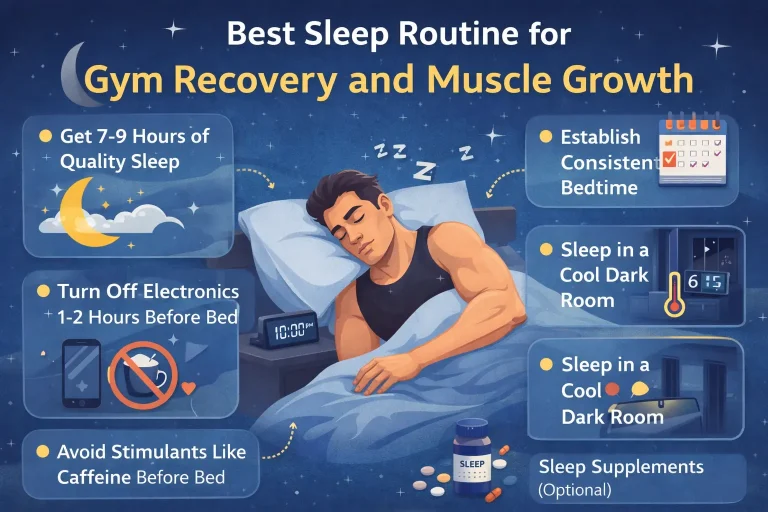
Sleep might be more important than the workout itself. This is where adaptation happens. Your muscles don’t grow during the workout—they grow during recovery. If you’re sleeping 5 hours a night, your workouts matter less. Aim for 7-9 hours. Seriously.
Rest days are when you get results. When you rest, your body repairs micro-tears in muscle fibers, making them stronger. Skip rest days and you prevent adaptation. Work hard, but rest harder.
Listen to your body, but distinguish between discomfort and pain. Muscle soreness? That’s okay. Sharp pain, especially in joints? Stop and rest. Being sore is different from being injured.
Expert Tips for Long-Term Success
After thousands of beginners start home workout journeys, certain patterns separate those who stick with it from those who quit.
Track your progress in a simple way. This doesn’t mean obsessing over numbers daily. It means writing down what you did each session. Weeks later, you’ll look back and see you went from 8 push-ups to 20. That visible evidence is incredibly motivating and concrete proof that you’re improving.
Progressive overload is your best friend. Your muscles adapt quickly. After four weeks of the same routine, they stop adapting. This doesn’t mean totally changing your workout. It means slightly increasing the challenge. Maybe you add 2 reps. Maybe you move slower (more time under tension). Maybe you decrease rest periods. Small, consistent increases drive all progress.
Adapt your workout to your life. If you have a crazy week where you can only work out twice, do that. The goal is building a sustainable habit that survives life’s chaos. A missed session isn’t a failure—skipping the following session because you feel bad about missing one is.
Stay curious about your body. Notice what types of exercises you enjoy. Notice when you feel strongest. Some people thrive with bodyweight routines. Others eventually want resistance bands or dumbbells. Your preferences will evolve—that’s good.
Consider adding one piece of equipment around week 6-8. If you want to progress faster, a $15 set of resistance bands opens up incredible options. Dumbbells are another option. But don’t add equipment before you’ve proven consistency. Equipment is nice, but habit is everything.
Build a support system. This might be a friend who checks in on your progress, or it might be an online community. Humans are social creatures. Having even one person who knows about your goal increases adherence significantly.
Frequently Asked Questions
Q1: How many days per week should a beginner work out at home? Start with three days per week with at least one rest day between sessions. This provides adequate stimulus for adaptation while allowing recovery. Many beginners make the mistake of doing too much too soon. Once you’ve built the habit (4-6 weeks), you can adjust based on your goals.
Q2: What’s the best time of day to work out at home? The best time is whenever you’ll actually do it consistently. If that’s 6 AM, great. If it’s 5 PM, also great. Morning workouts do have a slight advantage for habit formation (fewer excuses can derail you), but consistency beats optimal timing.
Q3: How long should each home workout session last? 20-30 minutes for beginners is ideal. This is enough time to get in an effective workout without being so long that it’s unsustainable. As you progress, 45 minutes might feel right. Start short and build.
Q4: Can I do home workouts if I live in a small apartment? Absolutely. You need about 6 feet by 4 feet of space. Even smaller if you’re doing floor exercises. Beginners can build serious strength in incredibly limited space.
Q5: Do I need to buy expensive equipment to see results at home? Not even a little bit. Bodyweight workouts are incredibly effective for beginners. Your own body provides sufficient resistance for the first 2-3 months. Equipment is helpful later, not necessary initially.
Q6: How quickly will I see results from home workouts? Strength improvements appear around week 3-4. You’ll feel better and sleep better sooner. Visible changes in body composition typically take 8-12 weeks depending on current fitness level and nutrition.
Q7: Is it bad if I’m sore after my first workout? Soreness is completely normal and actually indicates your body is adapting. It’s called DOMS and typically peaks around 48 hours post-workout, then decreases. If you have sharp pain (not soreness), stop and rest that area.
Q8: What if I can’t do a full push-up? Should I skip them? Never skip an exercise because you can’t do the full version. Wall push-ups and incline push-ups are legitimate progressions. You’ll get stronger over time and eventually perform standard push-ups. This progression is powerful.
Q9: Can I do home workouts every single day? Technically yes, but it’s not optimal for beginners. Your muscles need recovery days to adapt and grow. The sweet spot is usually 4-5 workouts per week with 2-3 full rest days.
Q10: What should I do if I get injured during a home workout? Stop immediately. Rest for a few days. If pain persists beyond three days or swelling develops, see a healthcare provider. Most minor tweaks resolve with rest. Once cleared, modify exercises to avoid aggravating the area.
Key Takeaways
Home workouts for beginners work. They work because they remove barriers, build confidence, maintain consistency, and deliver real results. But none of that matters if you don’t actually start.
Here’s what we covered:
- Why home workouts beat traditional gyms for beginners: No intimidation, perfect convenience, zero cost, total environmental control, and psychological advantage
- The beginner’s mindset that matters: Consistency over intensity, realistic timelines, proper expectations, and avoiding the boom-bust cycle
- A practical space setup: You need almost nothing to get started
- Foundational exercises: Upper body, lower body, core, and cardio movements with modifications
- Your actual first week plan: Three workouts, rest days, realistic progression
- Common mistakes: Too much too fast, ignoring form, skipping warm-ups, inconsistency, comparing yourself to others
- Recovery matters: Sleep, hydration, nutrition, and rest days are part of training
- Long-term success: Progressive overload, tracking progress, adapting to life, staying curious
Your Next Steps
- Pick a specific day and time this week to do your first workout. Not “sometime soon.” A specific day and time.
- Choose your workout space. It’s probably your living room or bedroom. That’s perfect.
- Commit to three weeks of consistency. Not forever, just three weeks. That’s enough time to build initial habit momentum.
- Do the first week plan provided above. Don’t create your own routine yet. Follow this proven pathway.
- Expect to feel different. Not necessarily in your body (though that comes), but in your confidence. You’ll prove to yourself you can do this.
The hardest part of any fitness journey is the first workout. That one moment where you decide to try. Everything after that gets easier. Your body adapts. Your confidence grows. Your habit strengthens.
You have everything you need. You have the space. You have the knowledge. You have the exercises. The only thing left is the decision. Make it today.
Start small. Stay consistent. Expect progress, not perfection. Your future self will thank you for beginning now.




![4 Ways to Lose Belly Fat: A Realistic 30-Day Formula for [Men & Women]](https://sleepingtime.online/wp-content/uploads/2025/12/lose-belly-fat-768x382.png)