How Much Sleep Do You Need? Sleep Calculator & Science (2026)
You’ve probably heard it a thousand times: “You need eight hours of sleep every night.“ It’s the golden rule everyone knows, the benchmark we measure ourselves against, and the reason most of us feel guilty when we don’t hit that magic number. But here’s what sleep science actually shows us—and it might surprise you.
That eight-hour recommendation? It’s not a one-size-fits-all solution. Your ideal sleep duration depends on your age, genetics, lifestyle, and even your work schedule. Some people genuinely thrive on seven hours, while others need a solid nine. And yes, there’s a difference between getting enough sleep and getting good sleep.
The real question isn’t just how much sleep you need—it’s how to figure out what your body actually requires and how to achieve that consistently. That’s what we’re diving into today.
Why Sleep Duration Matters More Than You Think
Sleep isn’t a luxury or a sign of laziness. It’s one of the three pillars of health alongside diet and exercise, yet most of us treat it like an optional feature we can skip when life gets busy.
Here’s what happens when you’re chronically sleep-deprived: Your cognitive function declines, your metabolism suffers, your immune system weakens, and your risk for serious diseases like heart disease, diabetes, and depression increases significantly. One bad night affects your focus; weeks of insufficient sleep compounds into measurable health damage.
But oversleeping—consistently sleeping more than your body needs—comes with its own concerns. Research suggests that sleeping excessively might indicate underlying health issues or depression, or it could actually increase inflammation in your body. The sweet spot is finding your personal optimal amount and hitting it consistently.
The variable part? What’s “optimal” looks different for everyone. That’s the nuance most sleep advice misses.
Understanding Sleep Science: What Actually Happens When You Sleep
To understand how much sleep you need, it helps to know what your brain and body are doing while you’re unconscious.
Sleep isn’t one long, uniform state. Instead, it’s a series of cycles, each lasting roughly 90 minutes. Each cycle moves through different stages: light sleep, deeper sleep, and REM (rapid eye movement) sleep. During light sleep, you’re easily awakened. During deep sleep, your body performs critical maintenance—muscle repair, immune function strengthening, hormone regulation. During REM sleep, your brain consolidates memories and processes emotions.
Most people need somewhere between 4 and 6 complete sleep cycles per night. That’s why sleep duration works best in 90-minute increments: seven and a half hours (five cycles), nine hours (six cycles). This is also why waking up mid-cycle feels worse than waking up naturally after completing one.
Your circadian rhythm—your body’s internal 24-hour clock—governs when you feel alert and when you feel sleepy. Light exposure is the primary regulator. Your brain releases melatonin (the “sleep hormone”) when the sun sets, signaling your body to prepare for sleep. This isn’t something you can easily override, which is why that morning alarm feels so brutal.
Understanding this matters because it explains why some sleep optimization advice actually works and why some doesn’t. You’re not fighting just tiredness; you’re working with complex biological systems.
How Much Sleep Do You Need? Age-By-Age Breakdown
Let’s get specific. Here’s what sleep research tells us about optimal sleep duration by age:
Infants (4 months – 12 months): 12-16 hours per 24 hours (including naps)
Toddlers (1-2 years): 11-14 hours per 24 hours (including naps)
Preschoolers (3-5 years): 10-13 hours per 24 hours (including naps)
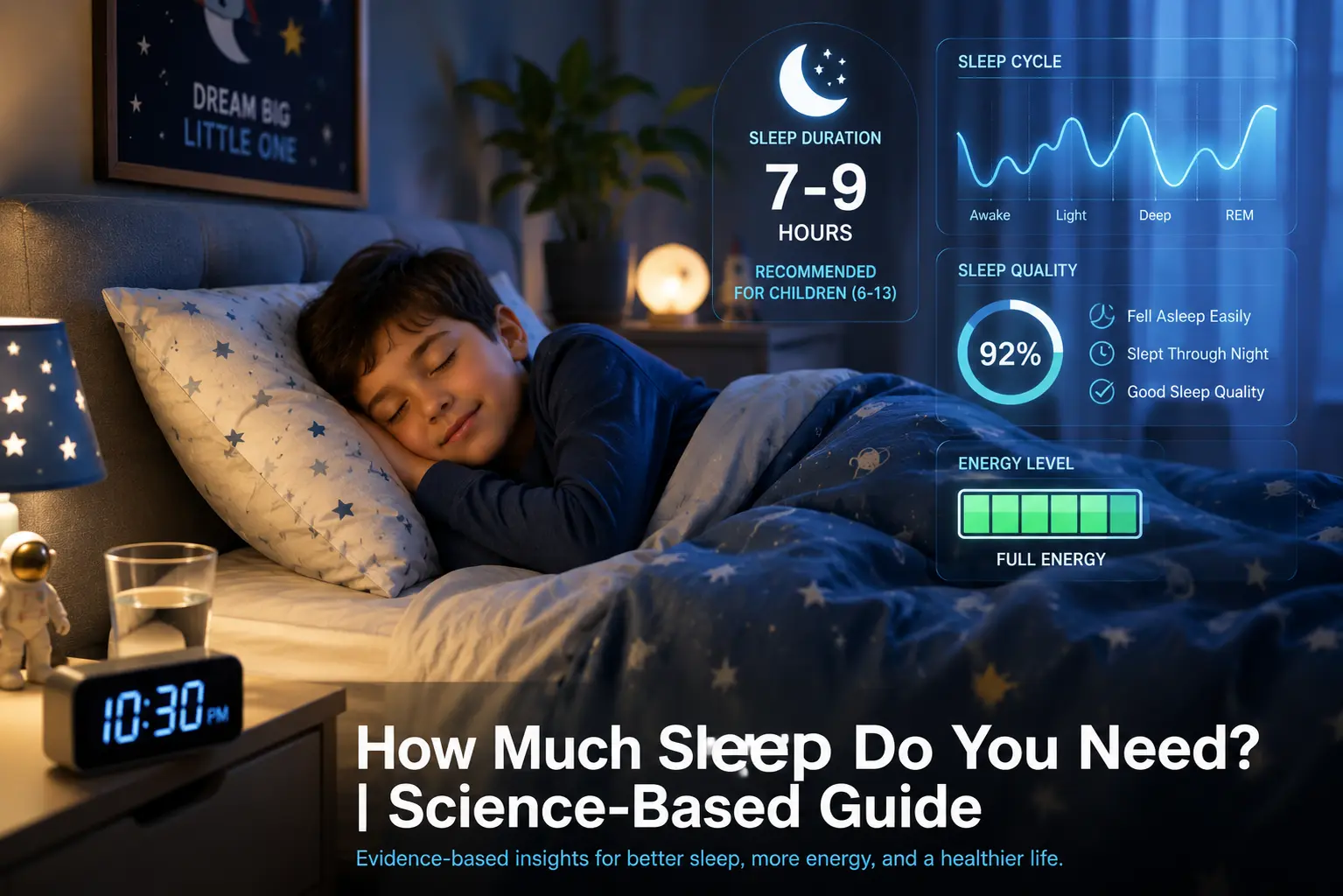
School-age children (6-12 years): 9-12 hours per night
Teenagers (13-18 years): 8-10 hours per night
Adults (18-64 years): 7-9 hours per night
Older adults (65+ years): 7-8 hours per night
But—and this is crucial—these are ranges, not prescriptions. Someone might feel fantastic at seven hours while their partner needs nine. Factors influencing your individual needs include:
- Genetics: Some people are genetically programmed to need more or less sleep
- Physical activity level: More intense exercise increases sleep needs
- Stress levels: Psychological stress demands more sleep for recovery
- Pregnancy: Sleep needs increase during pregnancy
- Medications: Some drugs affect sleep duration requirements
- Sleep quality: Better sleep efficiency means you might need less total time
- Age transitions: Needs shift as you get older
- Chronic health conditions: Certain diseases alter sleep requirements
Rather than asking “How much should I sleep?” the better question is “How much sleep makes me feel my best?” That’s your number.
Interactive Sleep Calculator
Here’s how to find your optimal sleep window:
For one week, track:
- When you go to bed (consistent time)
- When you wake up naturally (without an alarm)
- How you feel throughout the day (energy, focus, mood)
- Any caffeine or alcohol intake
- Exercise timing
Calculate your average sleep duration from these nights.
Rate your daytime function on a scale of 1-10 for:
- Energy levels
- Cognitive focus
- Mood stability
- Physical recovery
Your optimal sleep amount is typically:
- The duration that brings your daytime function rating to 8+
- The duration where you wake naturally without groggy feeling
- The duration you can sustain consistently
Most people discover their number falls between 7-9 hours. If you consistently need significantly more or less, that’s not abnormal—but it’s worth tracking to ensure consistency.
Signs You’re Not Getting Enough Sleep
Knowing your needs is one thing. Knowing whether you’re actually meeting them is another. These are the reliable indicators that you’re sleep-deprived:
Physical symptoms: Constant yawning, frequent illness, persistent muscle aches, slower healing from injuries
Cognitive signs: Difficulty concentrating, forgetting things more often, slower problem-solving, increased mistakes at work
Emotional indicators: Increased irritability, mood swings, heightened anxiety, emotional oversensitivity
Behavioral changes: Increased appetite, craving junk food, tendency to oversleep on weekends, relying on caffeine to function
Performance decline: Slower reaction times, reduced work productivity, decreased athletic performance
The frustrating part? These symptoms build gradually. You don’t suddenly feel terrible from one night of bad sleep—you don’t notice until sleep deprivation becomes chronic. By then, you’re operating at a deficit without realizing it.
This is why that weekend sleep binge feels necessary. You’re trying to pay back a sleep debt you’ve accumulated throughout the week.
The Real Health Consequences of Chronic Sleep Deprivation
While occasional short nights won’t destroy your health, chronic sleep deprivation is genuinely concerning.
Regular insufficient sleep (consistently getting 5-6 hours when you need 7-9) increases your risk for:
- Cardiovascular disease: Sleep helps regulate blood pressure and inflammation
- Type 2 diabetes: Sleep deprivation impairs insulin sensitivity
- Obesity: Poor sleep disrupts hunger hormones, increasing appetite and cravings
- Depression and anxiety: Sleep is essential for emotional regulation
- Weakened immunity: Your immune system rebuilds during deep sleep
- Cognitive decline: Sleep loss accelerates age-related memory loss and cognitive dysfunction
- Accidents: Fatigue-impaired judgment affects driving and workplace safety
The research is particularly striking for shift workers and people chronically sleep-deprived: mortality rates increase, disease risk climbs, and aging seems accelerated.
This isn’t fear-mongering. It’s why sleep scientists are so emphatic about consistency—because the data clearly shows sleep deprivation has serious consequences.
Quality Versus Quantity: Why Both Matter
Here’s a nuance that separates sleep beginners from people who actually optimize their rest: You can technically get enough hours while getting terrible sleep.
Someone might spend eight hours in bed but only sleep six due to insomnia. Another might sleep deeply but wake up frequently. A third might have fragmented REM sleep that prevents memory consolidation.
This is where sleep quality comes in. Quality measures how efficiently you sleep—what percentage of time in bed is actual quality sleep, whether you complete full cycles, whether you wake during the night.
Signs of poor sleep quality despite adequate hours:
- Waking up multiple times per night
- Feeling unrested despite adequate hours
- Vivid, disturbing dreams or nightmares
- Waking up with tension or muscle pain
- Difficulty falling back asleep if you wake
If you’re sleeping eight hours but still exhausted, the problem likely isn’t duration—it’s quality. This changes what you need to fix. Rather than sleeping longer, you might need to address sleep apnea, adjust your bedroom temperature, reduce caffeine, or manage anxiety.
Expert Tips to Help You Feel Full of Energy
Getting adequate sleep matters, but so does making that sleep count. Here are evidence-based strategies that actually work:
1. Maintain consistent sleep and wake times (even weekends) Your circadian rhythm thrives on consistency. Even if you can’t sleep more, consistency improves sleep quality significantly.
2. Get morning light exposure Bright light in the morning (ideally sunlight) sets your circadian rhythm for the day, making evening sleep easier. Aim for 10-20 minutes of morning light within the first hour of waking.
3. Limit caffeine after 2 PM Caffeine has a 5-hour half-life. That afternoon coffee still affects your system at 10 PM. If you struggle with sleep, cut caffeine entirely after early afternoon.
4. Keep your bedroom cool (around 65-68°F), dark, and quiet Your body naturally cools down to initiate sleep. A hot bedroom fights this biological process. Darkness triggers melatonin; noise disrupts sleep cycles.
5. Avoid large meals close to bedtime Digestion requires energy and body heat, both of which interfere with sleep. Eat your last substantial meal 2-3 hours before bed.
6. Get regular exercise (but not right before bed) Exercise improves sleep quality and duration, but timing matters. Intense exercise within 2-3 hours of bedtime can interfere with sleep.
7. Manage stress through relaxation practices Whether it’s meditation, deep breathing, journaling, or yoga—find a practice that quiets your mind. Stress is one of the biggest sleep disruptors.
8. Limit screen time one hour before bed The blue light from phones and computers suppresses melatonin. Use this hour for reading, conversation, or relaxation instead.
9. Consider your sleeping position Side sleeping is optimal for most people (especially for reducing snoring and improving spinal alignment). Back sleeping can worsen sleep apnea; stomach sleeping strains your neck.
10. Track your sleep if problems persist Wearable sleep trackers aren’t perfectly accurate, but they help identify patterns. If you’re consistently not meeting your target sleep duration, the data makes this obvious.
Common Sleep Myths That Are Costing You Rest
Let’s clear up some widespread misconceptions that keep people from getting good sleep:
Myth #1: “You need exactly 8 hours of sleep” Reality: Eight hours is an average for adults, but your number could be 7 or 9 and be perfectly healthy. Pay attention to how you feel, not arbitrary hours.
Myth #2: “You can catch up on sleep on weekends” Reality: Weekend oversleep doesn’t fully reverse a week of sleep debt. Plus, the inconsistency disrupts your circadian rhythm, making Monday mornings harder. Consistency matters more than occasional catch-up.
Myth #3: “If you can’t fall asleep in 20 minutes, you’re insomnia” Reality: Occasional difficulty falling asleep is normal. It only becomes insomnia when it’s persistent and significantly impacts your life.
Myth #4: “Snoring is just annoying” Reality: Frequent snoring might indicate sleep apnea, which disrupts sleep quality and carries serious health risks. It’s worth getting checked if your snoring is loud or frequent.
Myth #5: “You don’t need sleep if you’re motivated or young” Reality: No amount of determination overrides biology. Young people need just as much sleep as older adults. Sleep deprivation affects focus and performance regardless of age or motivation.
Myth #6: “Sleeping more is always better” Reality: Sleeping significantly more than your body needs (consistently 10+ hours) can indicate underlying problems like depression or thyroid issues. It’s not inherently healthy.
Myth #7: “If you’re tired, you just need more sleep” Reality: While sleep deprivation causes fatigue, so do dehydration, poor nutrition, lack of exercise, and thyroid problems. Before assuming you need more sleep, rule out other factors.
How to Improve Your Sleep if You’re Struggling?
If you’ve identified that you’re not meeting your sleep needs, here’s the actionable approach:
Step 1: Diagnose the problem Is it:
- Not spending enough time in bed? (Schedule adjustment needed)
- Difficulty falling asleep? (Sleep onset insomnia)
- Staying asleep? (Sleep maintenance insomnia)
- Low sleep quality? (Sleep architecture problem)
The solution differs based on the problem.
Step 2: Start with sleep hygiene basics Before considering supplements or medication, address the fundamentals: consistent schedule, cool dark bedroom, no caffeine after 2 PM, exercise, stress management.
Step 3: Give it 2-4 weeks Sleep improvements don’t happen overnight (ironically). Your circadian rhythm needs time to adjust to new patterns. Give changes at least two weeks before evaluating whether they’re working.
Step 4: Track what matters Use a simple sleep log: bedtime, wake time, how you feel, any changes made. Patterns emerge after one week.
Step 5: Know when to seek help If sleep doesn’t improve after 4 weeks of consistent sleep hygiene changes, or if you suspect sleep apnea, restless leg syndrome, or another sleep disorder, consult a sleep specialist. Sleep medicine is a real field with real solutions.
FAQ:
Q: Is it bad to sleep more than 8 hours? A: Occasionally sleeping longer is fine and often necessary. Consistently sleeping 9-10+ hours might indicate you’re not getting quality sleep despite the quantity, or it could signal an underlying condition. If you need more than 9 hours regularly, track your sleep quality and consult a doctor.
Q: Can I train myself to need less sleep? A: No. Sleep needs are largely determined by genetics. You might function on less sleep for a while, but you’re accumulating sleep debt. Eventually, your body demands repayment in the form of illness or decreased performance.
Q: What’s the best time to sleep? A: Your personal circadian rhythm matters more than the clock. If you’re naturally alert until 1 AM and sleep best from 1-9 AM, that’s your rhythm (though society makes unconventional sleep schedules challenging). The key is consistency—same bedtime, same wake time—regardless of when that is.
Q: Does alcohol help you sleep? A: Alcohol might make you drowsy, but it significantly disrupts sleep quality, fragments REM sleep, and prevents deep sleep. It’s particularly problematic if consumed within 3 hours of bedtime. You’ll spend more hours sleeping but get worse rest.
Q: How does exercise affect sleep? A: Regular moderate exercise improves sleep quality and duration. However, intense exercise too close to bedtime (within 2-3 hours) can be stimulating and interfere with sleep. Aim for morning or afternoon workouts.
Q: What about naps? A: Short naps (20-30 minutes) can boost alertness without causing grogginess. Longer naps might reduce nighttime sleep pressure. If you need regular long naps to function, you’re likely sleep-deprived at night.
Q: Is melatonin safe to take? A: Melatonin is generally safe for short-term use and is available without prescription. However, it’s not a sleep aid in the traditional sense—it’s a timing mechanism. It works best if your circadian rhythm is disrupted (jet lag, shift work). For chronic insomnia, addressing underlying causes is more effective long-term.
Q: How much sleep do shift workers need? A: Shift workers need the same total sleep as everyone else (7-9 hours for adults) but face significant challenges maintaining quality sleep due to circadian rhythm disruption. Strategies include consistent sleep schedules around shifts, light exposure management, and sometimes temporary melatonin use.
Q: What if I have a sleep disorder? A: Common sleep disorders include sleep apnea, insomnia, restless leg syndrome, and narcolepsy. These require professional diagnosis and aren’t solved through sleep hygiene alone. If you suspect a sleep disorder, request a sleep study from your doctor.
Q: Can medication affect my sleep needs? A: Yes, many medications (antidepressants, stimulants, antihistamines, beta-blockers) affect sleep quality and duration. If sleep problems started after beginning new medication, discuss it with your doctor—there might be alternatives or timing adjustments.
The Bottom Line: Your Sleep Matters
Here’s what we know for certain: Sleep is non-negotiable for your health. Whether you need seven hours or nine, that need is real and important.
The specifics—your personal optimal duration, your best sleep schedule, your ideal sleep environment—are unique to you. The eight-hour standard is useful as a starting point, but it’s not a rule.
Your job is to:
- Identify how much sleep actually makes you feel great (not just functional)
- Prioritize hitting that number consistently
- Optimize the quality of that sleep
- Adjust as needed based on your life circumstances
This isn’t lazy. It’s not indulgent. It’s foundational health maintenance that directly affects how you think, feel, perform, and ultimately how long and how well you live.
If you’re not hitting your sleep needs, that’s a problem worth solving. Start this week. Track for seven days. See what your real number is. Then protect that sleep like you protect your most important commitments, because in many ways, it is.
- Your ideal sleep duration is individual. While 7-9 hours works for most adults, your number might be different. Track how you feel at different sleep durations to find your personal sweet spot.
- Consistency matters more than occasional catch-up. Maintaining a consistent sleep schedule trains your circadian rhythm, improving sleep quality and duration. Weekend oversleep disrupts this benefit.
- Sleep quality matters as much as quantity. Getting 8 hours of fragmented sleep is worse than 7 hours of consolidated, deep sleep. If you’re exhausted despite adequate hours, investigate sleep quality first.
- Sleep needs vary by life stage. Teenagers need 8-10 hours, adults need 7-9, and requirements shift with age, pregnancy, illness, and stress. What worked last year might not work this year.
- Sleep deprivation has serious health consequences. Chronic insufficient sleep increases disease risk, impairs cognition, and affects mood and safety. This isn’t a small concern—it’s a health priority.
- Most sleep problems respond to sleep hygiene changes. Consistent schedule, cool/dark bedroom, morning light, exercise, limited caffeine, and stress management solve most sleep issues without medication.
- Common sleep myths can sabotage your rest. The 8-hour rule, weekend catch-up, and “just try harder” approaches miss what actually matters: finding your personal sleep need and protecting it.
- When to seek professional help: If sleep problems persist after 4 weeks of improved sleep hygiene, if you suspect a sleep disorder (apnea, insomnia, restless leg syndrome), or if symptoms suddenly worsen, consult a sleep specialist.

![4 Ways to Lose Belly Fat: A Realistic 30-Day Formula for [Men & Women]](https://sleepingtime.online/wp-content/uploads/2025/12/lose-belly-fat-768x382.png)


![Understanding Calorie Deficit for Sustainable Weight Loss [Science-Based]](https://sleepingtime.online/wp-content/uploads/2026/06/Calorie-Deficit-for-Sustainable-Weight-Loss-768x512.webp)
One Comment