
10 Daily Habits That Improve Physical and Mental Health in 2026
The most transformative changes in your life won’t come from a one-time decision. They’ll come from what you do every single day.
Whether you’re struggling with low energy, anxiety, poor sleep, or just feeling disconnected from your body and mind, the answer isn’t some expensive wellness program or miracle supplement. It’s something far more powerful: the deliberate cultivation of small, daily habits that compound into extraordinary health improvements.
I’ve spent years studying what separates people who maintain vibrant health from those stuck in cycles of fatigue, stress, and disconnection. The difference isn’t luck or genetics—it’s consistency. It’s showing up for yourself, day after day, through small choices that reshape your physical and mental landscape.
In this guide, I’m sharing the 10 daily habits I’ve seen create the most profound transformations. These aren’t complicated. They don’t require a gym membership or significant time investment. What they do require is intention—a commitment to treating your health like the priority it deserves to be.
Why Daily Habits Matter More Than You Think
Before diving into the specific habits, let’s talk about why daily routines matter so much.
Your brain doesn’t think in terms of grand gestures. It thinks in patterns. Every morning you wake up, every meal you eat, every moment you choose stress or calm—these repetitions literally rewire your neural pathways. This process, called neuroplasticity, means you’re not stuck with the brain and body you have today. You can reshape both through deliberate, repeated action.
This is where daily habits become magical. A single meditation session won’t transform your anxiety levels. But 365 meditation sessions? That rewires your nervous system. One healthy meal doesn’t change your energy. But consistent nutrition does.
The Compounding Effect
The mathematician James Clear popularized a concept that explains this beautifully: the 1% improvement principle. If you improve just 1% each day, you’ll be 37 times better at something after one year. Conversely, if you decline 1% daily, you’ll be nearly zero.
Your daily habits are that 1%. They’re not sexy. They won’t get you quick results. But they’re the most reliable path to sustainable transformation.
Physical and Mental Health Connection
Here’s something crucial to understand: physical and mental health aren’t separate systems. They’re deeply intertwined. The stress you carry tenses your muscles and disrupts your sleep. Poor sleep tanks your mental resilience and immune function. Social isolation increases inflammation throughout your body.
This interconnection works in your favor. When you improve one aspect of your health, everything else gets easier. Exercise improves mood. Better sleep enhances focus. Gratitude reduces inflammation. You’re not just building isolated habits—you’re creating a cascade of positive effects.

Habit #1: Start Your Day with Hydration
This might sound simple, but it’s transformative.
Most people wake up dehydrated. Your body loses water throughout the night through respiration and perspiration. By morning, your cognitive function, mood, and physical performance are already compromised before you’ve done anything wrong.
The fix is elegantly simple: drink water first thing after waking.
Why It Matters
When you’re dehydrated, your body has to work harder to function. Your heart pumps faster. Your cognitive performance drops. Your mood suffers. Studies show even mild dehydration impairs attention, focus, and decision-making abilities. For mental health, this matters. For physical performance, it’s crucial.
Drinking water immediately upon waking:
- Activates your internal organs
- Helps flush toxins accumulated overnight
- Boosts metabolism by up to 30%
- Improves mental clarity within minutes
- Supports kidney function
- Enhances nutrient absorption
Implementation
Drink 16-20 ounces of water (about 500ml) immediately after waking. Room temperature is fine—even better, as it’s gentler on your digestive system than cold water first thing. Some people add lemon for taste and vitamin C. Others wait until their first cup of coffee.
The key is making it non-negotiable. Keep a glass or bottle by your bed, so it’s there waiting.
Expected timeline for results: You’ll notice improved clarity within a few days. Energy improvements typically appear within 1-2 weeks.
Habit #2: Prioritize Quality Sleep
Sleep is where the magic happens.
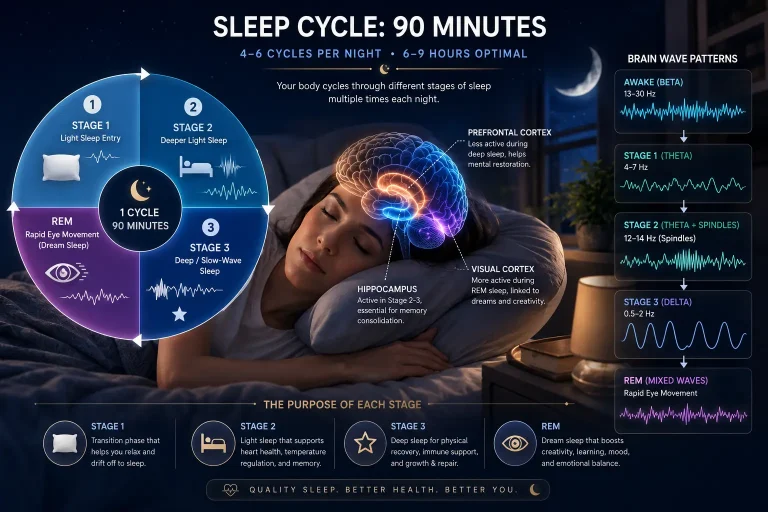
During sleep, your brain consolidates memories, processes emotions, and flushes out metabolic waste. Your body rebuilds muscle, strengthens your immune system, and regulates hormones that control hunger, mood, and stress. Without adequate sleep, no other habit matters much.
Yet most people treat sleep like an inconvenient necessity rather than a health cornerstone.
The Science Behind Sleep
When you sleep, your brain’s glymphatic system activates—a cleaning mechanism unique to sleep. This system removes beta-amyloid proteins linked to Alzheimer’s disease, processes emotional memories, and resets your nervous system. Short sleep chronically impairs this process.
Insufficient sleep also:
- Increases cortisol (your stress hormone)
- Reduces insulin sensitivity (increasing diabetes risk)
- Impairs immune function
- Damages emotional regulation
- Decreases growth hormone production
- Weakens memory consolidation
Sleep Hygiene Strategies
Environment: Keep your bedroom cool (around 65-68°F), dark, and quiet. Invest in a quality mattress and pillows. Your bedroom should be a sleep sanctuary, not a multipurpose room.
Timing: Sleep and wake at the same time daily, even weekends. This synchronizes your circadian rhythm. Most adults need 7-9 hours; respect that rather than fighting it.
Pre-sleep routine: Stop work 1-2 hours before bed. Dim lights. Reduce stimulation. This signals your brain to begin producing melatonin. Some people benefit from herbal tea, reading, or gentle stretching.
Avoid: Caffeine after 2 PM, large meals within 3 hours of bed, alcohol close to bedtime, and blue light from screens 1-2 hours before sleep.
Exercise timing: Regular exercise improves sleep, but intense exercise close to bedtime can be stimulating. Aim for afternoon workouts when possible.
Habit #3: Move Your Body Daily
Movement is medicine. Not sometime. Daily.
This doesn’t mean punishing gym sessions or running marathons. It means consistent, intentional physical activity that your body can sustain long-term. This habit transforms physical health while simultaneously boosting mental resilience.
Benefits Beyond Fitness
Exercise isn’t primarily about aesthetics or weight—though those often follow. It’s about:
- Mental health: Exercise is one of the most effective treatments for depression and anxiety, rivaling medication in many studies
- Brain function: Movement increases BDNF (brain-derived neurotrophic factor), which builds new neural connections and improves cognitive function
- Stress management: Physical activity metabolizes stress hormones and activates your parasympathetic nervous system
- Energy paradoxically: While exercise uses energy, it increases your capacity to produce and utilize energy
- Disease prevention: Regular movement reduces risk of heart disease, diabetes, cancer, and Alzheimer’s
Options for Different Fitness Levels
You don’t need to be an athlete. Movement options include:
- Walking (30 minutes daily is phenomenal)
- Swimming (full-body, low-impact)
- Yoga (combines movement, strength, and mindfulness)
- Dancing (fun, social, effective)
- Cycling (low-impact, builds lower body strength)
- Strength training (builds muscle, bone density, metabolism)
- Sports and recreational activities (basketball, tennis, hiking)
The best exercise is the one you’ll actually do consistently.
Practical Movement Strategies
- Walk during phone calls: Multitask movement with communication
- Take the stairs: Build movement into daily life
- Stand while working: Alternate between sitting and standing
- Exercise with a friend: Social accountability increases consistency
- Choose activities you enjoy: You’ll never sustain something you hate
- Move in nature: Combines exercise with nature exposure
Habit #4: Practice Mindfulness or Meditation
Meditation transformed from “spiritual woo” to evidence-based medical intervention. Thousands of studies now document its profound effects on brain structure and function.
When you meditate regularly, you’re literally rewiring your brain toward greater calm, focus, and emotional resilience.
Demystifying Meditation
Let’s clear up myths first. Meditation isn’t:
- Clearing your mind of all thoughts
- Spiritual or religious (though it can be)
- About achieving a “perfect” state
- Time-consuming to be effective
Meditation is simply practicing focused attention. When your mind wanders (it will), you gently return it. That’s the practice. It’s like doing reps at the gym, but for your attention and emotional regulation.
The Neuroscience Benefits
Regular meditation:
- Reduces amygdala activation: Your brain’s threat-detection center becomes less reactive
- Strengthens prefrontal cortex: The part of your brain responsible for rational decision-making and emotional regulation
- Increases gray matter density: In regions associated with learning and memory
- Lowers cortisol: Chronic stress hormone reduces, promoting recovery
- Improves focus: Your ability to concentrate strengthens measurably
Beginner-Friendly Techniques
Breath awareness (simplest): Close your eyes. Notice your breath—the inhale, the exhale. When your mind wanders (it will), gently return attention to the breath. Start with 5 minutes.
Body scan: Mentally scan your body from head to toe, noticing sensations without judgment. This builds interoception (body awareness) while calming your nervous system.
Loving-kindness meditation: Mentally direct well-wishes toward yourself and others. This reduces negative self-talk while increasing emotional warmth.
Guided meditation: Use apps like Insight Timer (free) or Calm. Someone guides you, reducing the barrier to starting.
Start small: 5 minutes daily beats 30 minutes once weekly. Consistency matters more than duration.
Habit #5: Eat Whole, Nutrient-Dense Foods
Nutrition is foundational. Your physical health, mental clarity, mood stability, and energy levels are all directly influenced by what you eat.
This doesn’t mean restrictive dieting or perfectionism. It means consistently choosing foods that genuinely nourish your body.
Nutrition’s Impact on Mood and Energy
The gut-brain connection is profound. Your gut microbiota produces neurotransmitters including serotonin (your mood chemical). Ultra-processed foods destroy healthy gut bacteria, while whole foods feed them.
Nutrient deficiencies also directly impact mental health:
- Low B vitamins: Linked to depression and anxiety
- Omega-3 deficiency: Associated with depression and cognitive decline
- Low magnesium: Contributes to anxiety and sleep issues
- Iron deficiency: Causes fatigue and brain fog
- Zinc deficiency: Impairs immune function and mood
Simple Dietary Guidelines
Rather than restrictive rules, think principles:
Eat mostly whole foods: Foods with one ingredient—chicken, broccoli, rice, nuts, berries. Minimize ultra-processed foods, which are engineered to override satiety signals and damage your gut.
Include protein at meals: Stabilizes blood sugar, supports neurotransmitter production, keeps you satisfied. Aim for 25-35g per meal.
Prioritize vegetables: Aim for 7-10 servings daily across different colors. Different colors provide different phytonutrients and antioxidants.
Choose healthy fats: Olive oil, avocado, nuts, fatty fish. These support brain function and reduce inflammation.
Stay hydrated: You already know this from Habit #1, but it bears repeating. Dehydration masquerades as hunger.
Moderate sugar and refined carbs: They provide quick energy followed by crashes. They also feed pathogenic gut bacteria and promote inflammation.
Practical Implementation
- Plan ahead: Meal prep on Sunday for three days of healthy lunches
- Stock your pantry: Keep whole food staples available
- Cook at home: Restaurant and processed foods contain excessive salt, sugar, and unhealthy fats
- Practice moderation, not deprivation: You can enjoy treats while maintaining overall health
- Listen to your body: Eat when hungry, stop when satisfied
Habit #6: Limit Screen Time Before Bed
Your screens are engineering your insomnia.
The blue light emitted by phones, tablets, and computers signals your brain that it’s daytime. This suppresses melatonin production—your sleep hormone. Additionally, scrolling engaging content triggers dopamine release, which activates your brain right when you’re trying to wind down.
The solution is simple but requires discipline: eliminate screens 1-2 hours before bed.
Blue Light Effects
Blue light wavelengths (460 nanometers) specifically trigger photoreceptors in your eyes that regulate circadian rhythm. Your brain interprets blue light as “it’s daytime.” When you expose yourself to blue light at night, you’re essentially telling your brain it’s 2 PM, not 10 PM.
Over time, chronic blue light exposure:
- Delays melatonin production
- Shifts your sleep schedule later
- Reduces total sleep duration
- Decreases sleep quality
- Increases next-day fatigue and cognitive impairment
Sleep Quality Impact
The sleep you lose isn’t insignificant. Each hour of sleep deprivation compounds. After a week of poor sleep, your cognitive function resembles someone legally intoxicated.
Implementation Strategies
Remove devices: Don’t just silence your phone—leave it in another room. Out of sight, out of mind.
Create wind-down rituals: Read, journal, stretch, meditate, or have meaningful conversations. These activities relax your nervous system.
Use blue light filters: If you must use screens, enable blue light filters (f.lux, Night Shift, or native settings). These aren’t perfect but help somewhat.
Set boundaries: Establish a household rule—no screens after a certain time. This works even better if it’s a family practice.
Consider an alarm clock: Stop using your phone as your alarm. Buy a cheap alarm clock and leave your phone in another room.
Habit #7: Practice Gratitude Daily
Gratitude seems almost too simple to mention, yet it’s one of the most powerful practices for mental health.
When you consistently practice gratitude, you’re literally training your attention toward what’s working, what you have, and what you’re appreciating. This is powerful because your brain is naturally biased toward threat and negativity—a survival mechanism called the negativity bias.
Neuroscience of Gratitude
Practicing gratitude activates neural networks associated with:
- Dopamine release: The pleasure and reward neurotransmitter
- Oxytocin: The bonding and trust hormone
- Increased gray matter: In regions associated with social bonding and theory of mind
Additionally, gratitude practice:
- Reduces inflammatory markers: People with gratitude practices show lower inflammation
- Improves sleep: Grateful people fall asleep faster and sleep better
- Decreases anxiety and depression: Gratitude and worry are neurologically incompatible
- Increases resilience: Grateful people bounce back from adversity faster
Mental Health Benefits
Gratitude isn’t about toxic positivity—pretending bad things aren’t bad. It’s about genuinely acknowledging what’s valuable in your life, which contextualizes challenges and builds resilience.
People with regular gratitude practices report:
- Better mood stability
- Improved relationships (they appreciate others more genuinely)
- Greater life satisfaction
- Enhanced perspective during difficulties
- More genuine happiness (not forced cheerfulness)
Easy Practices
Gratitude journal: Write 3-5 specific things you’re grateful for each day. Be specific: not “my family” but “my sister texted me a funny meme this morning.” Specificity makes the practice more powerful.
Gratitude in conversation: Share appreciation with others. “I really appreciated how you helped me with that project.” This builds relationships while cementing gratitude.
Gratitude meditation: Spend 5 minutes mentally reviewing your day, appreciating the moments, people, and comforts you encountered.
Gratitude walk: While walking, actively notice and appreciate your surroundings—a beautiful tree, a kind stranger’s smile, the absence of pain in your legs.
What went well ritual: Each evening, reflect on what went well and why.
Habit #8: Build Social Connections
You’re wired for connection. Humans evolved in groups, and our nervous systems still expect this. Loneliness is now recognized as a disease with health impacts comparable to smoking.
Yet modern life increasingly isolates us. Remote work, digital communication, and busy schedules mean many people feel chronically disconnected.
Building genuine social connections is therefore a health imperative, not a luxury.
Loneliness Epidemic
The surgeon general has declared loneliness a public health crisis. Consider:
- Loneliness increases mortality risk by 29%
- It’s as harmful as smoking 15 cigarettes daily
- Isolated people have higher rates of heart disease, stroke, dementia, and depression
- Loneliness is as common as diabetes
Yet we talk about exercise and nutrition far more than connection. This is a massive oversight.
Health Impact of Relationships
Strong social bonds:
- Reduce inflammation: Socially isolated people have higher inflammatory markers
- Improve immunity: Social connection strengthens immune response
- Decrease mental illness rates: Depression and anxiety are lower in socially connected people
- Increase lifespan: People with strong relationships live 7-15 years longer
- Buffer stress: Social support makes stress less physiologically damaging
- Improve recovery: People with strong relationships recover faster from illness and surgery
Simple Connection Strategies
Quality over quantity: One deep friendship beats ten shallow acquaintances.
Regular contact: Consistency matters. Weekly contact is better than occasional deep conversations.
In-person when possible: Video calls and texts don’t fully satisfy our need for physical presence.
Common activity: Connect over shared interests—book clubs, sports, classes, volunteering. This provides natural conversation topics and repeated interaction.
Vulnerable conversations: True connection requires showing up authentically, not just surface-level small talk.
Family traditions: Regular family dinners, game nights, or activities build consistent connection.
Volunteering: Service builds connection while providing purpose.
Remote-friendly options: If you’re isolated by circumstance, online communities, virtual book clubs, and gaming groups still provide meaningful connection.
Habit #9: Spend Time in Nature
Nature is medicine that’s completely free and infinitely available.
Numerous studies confirm what many of us intuitively know: time in nature reduces stress, improves mood, increases creativity, and enhances overall well-being. Even limited nature exposure creates measurable health improvements.
Biophilic Design and Nature Benefits
We evolved in natural environments over millions of years. Our nervous systems, our visual systems, our immune systems—all are calibrated for natural settings. Modern environments (fluorescent lights, right angles, artificial sounds) are evolutionarily novel and often stress-inducing.
Time in nature:
- Reduces cortisol: Just 20 minutes in nature measurably lowers stress hormones
- Lowers blood pressure: Nature exposure reduces both systolic and diastolic pressure
- Decreases inflammation: Nature time correlates with lower inflammatory markers
- Improves mood: Nature exposure increases serotonin and decreases symptoms of depression
- Enhances focus: Nature restores attention (called Attention Restoration Theory)
- Boosts immunity: Phytoncides (compounds released by trees) enhance immune function
- Increases creativity: Natural environments enhance creative thinking
Mental Health Improvements
Beyond mood improvement, nature provides:
- Perspective: Your problems shrink when you’re surrounded by vast natural systems
- Mindfulness: Nature naturally draws you into present-moment awareness
- Purpose: Seeing natural cycles reminds you that you’re part of something larger
- Simplification: Nature cuts through modern complexity and clutter
Easy Access Strategies
You don’t need wilderness access:
- Parks: Even urban parks provide nature benefits
- Walking trails: Many areas have free accessible trails
- Gardening: Growing plants connects you to natural cycles
- Houseplants: Indoor plants improve air quality and provide nature connection
- Windows: Even views of nature reduce stress
- Water exposure: Lakes, rivers, and oceans have enhanced restorative effects
- Nature sounds: If you can’t access nature, recordings of birds, water, or rain help
Target: Aim for at least 20 minutes daily, or 2-3 hours weekly.
Habit #10: Establish a Consistent Routine
This is the meta-habit. Everything else rests on this foundation.
Consistency is where transformation happens. Your body and brain adapt to what you do repeatedly. Sporadic effort, no matter how intense, creates minimal lasting change. Consistent moderate effort compounds into extraordinary results.
Why Consistency Matters
Your nervous system functions through patterns. When you do something consistently, your brain and body adapt to expect and prepare for it. This is why:
- Exercise gets easier after a few weeks
- Your sleep improves once you establish consistent bedtime
- Meditation becomes less effortful with practice
- Healthy eating feels normal after it’s consistent
This adaptation process, called homeostasis, is powerful. It means once you establish a routine, maintaining it becomes easier than starting.
Creating Sustainable Routines
Start small: Don’t overhaul everything. Add one habit at a time, allowing 2-4 weeks for it to become established before adding another.
Anchor to existing routines: Attach new habits to things you already do. “After I pour my morning coffee, I drink water” or “After I close my laptop, I take a 20-minute walk.” This is called habit stacking.
Remove friction: Make desired behaviors easy. Leave your meditation cushion out. Keep walking shoes by the door. Stock healthy snacks visibly.
Add friction to undesired behaviors: Make bad habits inconvenient. Delete social media apps from your phone. Keep junk food out of your house. Unsubscribe from trigger emails.
Track consistently: Use a simple calendar, habit app, or checklist. Seeing your streak motivates continuation. Don’t break the chain.
Build accountability: Tell others about your goals. Check in with a friend. Public commitment increases follow-through.
Be flexible with implementation, rigid with consistency: You might walk instead of exercise if you’re injured, but you still move. You might meditate for 2 minutes instead of 10, but you still practice. The point is consistency, not perfection.
Expert Tips for Maximum Results
Habit Sequencing
Order matters. I recommend building in this sequence:
- Sleep: Everything is harder without sleep. Establish sleep hygiene first.
- Hydration: Easiest habit to build, creates immediate benefits.
- Movement: Boosts energy and mood, making other habits easier.
- Meditation: Builds the mental resilience to maintain other habits.
- Nutrition: Most complex habit, easier to build once others are established.
- Nature time: Reinforces movement and provides restorative benefits.
- Social connection: Builds on improved mood and energy from other habits.
- Gratitude: Increases motivation and enjoyment of other habits.
- Screen time limits: Often needs social/entertainment replacement, easier once other habits provide fulfillment.
- Routine consistency: By now, you’re ready to optimize sequencing and timing.
Motivation Maintenance
Your motivation will fluctuate. Expect this. Here’s how to maintain consistency during low motivation:
Reduce friction: On days you don’t feel like it, make the barrier to doing the habit extremely low. A 5-minute meditation beats no meditation. A 10-minute walk beats no walk.
Remind yourself why: Keep your “why” visible. Why does health matter to you? What becomes possible when you’re healthier? Return to this frequently.
Track visibly: Use a calendar where you visibly check off completed habits. Seeing your streak is motivating.
Find your people: Connect with others building similar habits. Communities increase accountability and provide encouragement.
Celebrate small wins: When you complete your week of meditation, acknowledge it. When you make it to 30 days, celebrate. These milestones matter.
Focus on the habit, not the outcome: You can’t control your weight, your mood, or your fitness level directly. You can control whether you move, eat well, and sleep. Focus on the controllable.
Advanced Strategies
Habit stacking: Chain habits together. After meditation (5 minutes), drink water (1 minute), then move (20 minutes). Three habits in sequence feel like one routine.
Environmental design: Arrange your environment to support your habits. Sleep-friendly bedroom, walking shoes by the door, meditation cushion visible, healthy food accessible.
Time blocking: Schedule habits at specific times. “6:00 AM: wake, water, meditation; 6:30 AM: exercise” removes decision-making energy.
Measurement: Track not just completion but results. How’s your sleep quality? Your energy levels? Your mood? Measurable improvements fuel motivation.
Common Mistakes to Avoid
All-or-Nothing Thinking
This is the habit killer. One missed workout doesn’t mean you’ve failed. One day of poor eating doesn’t mean you should give up. Life is imperfect. Consistency isn’t about perfection; it’s about overall trajectory.
If you miss a day, simply start again the next. The only real failure is quitting entirely.
Expecting Overnight Results
Some changes are quick (better sleep quality often appears within a week). Others take months. Neuroplasticity requires repetition. Metabolic changes take time. Emotional patterns take effort to rewire.
Expect to wait 8-12 weeks before evaluating whether a habit is working for you. This is how long most changes take to become measurable.
Ignoring Individual Variation
Your body is unique. You might thrive on 7 hours of sleep while your partner needs 9. You might prefer evening workouts while someone else is a morning exerciser. Social connection might be essential while others are more introverted.
Use these habits as a framework, then customize them to your biology and preferences. What matters is that you find versions you’ll sustain.
Skipping the Fundamentals
There’s a temptation to do advanced optimization before mastering basics. Don’t meditate for two hours if you haven’t slept well. Don’t get fancy with nutrition if you’re not moving daily.
Build from the foundation up. Boring basics create 80% of your results.
FAQ Section
Q: How long until I see results? A: It depends on the habit and what you’re measuring. Sleep quality might improve within a week. Energy improvements typically appear within 2-3 weeks. Mood and focus changes take 4-8 weeks. Major physical changes take 8-12 weeks. Neurological changes (improved focus, emotional regulation) take 8-16 weeks. Be patient with the process.
Q: Can I start all these habits at once? A: Not recommended. You’ll experience decision fatigue and likely abandon them all. Start with one habit, allow 2-4 weeks for it to become automatic, then add the next. This systematic approach creates lasting change.
Q: Do I need special equipment or gym membership? A: No. Walking is an excellent form of movement. Meditation requires nothing but your mind. Yoga can be learned free online. The most important factor is consistency, not equipment.
Q: What if I have zero time? A: You do, you just haven’t prioritized it yet. Most of these habits can be done in under 30 minutes total daily. Meditation: 5 minutes. Movement: 30 minutes (can be walking). Nutrition: not extra time, just different choices. Sleep, hydration, and gratitude require no extra time.
Q: I’ve tried everything and nothing works. A: Usually this means you haven’t given anything enough time, or you’re expecting too much change too fast. Give one habit 12 full weeks of consistent practice. Most people see results within 4-8 weeks if they truly commit.
Q: Should I change everything at once or gradually? A: Gradually. Change one habit at a time. This prevents overwhelm and allows you to actually see what’s working. Once one habit is automatic (requires minimal willpower), add another.
Q: I missed several days. Should I give up? A: Absolutely not. This is normal. Life happens. The question isn’t whether you’re perfect; it’s whether your trajectory is positive overall. Miss three days? Get back on day four. That’s all that matters.
Q: How do I stay motivated long-term? A: By feeling the results. Once you experience better sleep, more energy, improved mood, and increased clarity, motivation becomes self-sustaining. You’re not forcing yourself through willpower; you’re continuing because you feel better.
Q: Can I do these habits if I have depression or anxiety? A: These habits are especially helpful for mental health conditions. Start gently and small. Even 5 minutes of movement or meditation helps. Consider professional support (therapy, potentially medication) alongside these habits, not instead of it.
Q: What if certain habits don’t work for me? A: That’s okay. These are guidelines, not dogma. The goal is vibrant health. If a particular habit doesn’t align with your preferences or life, find another that serves the same purpose. Can’t meditate? Dance instead. Don’t like gym? Walk outside.
Q: How do I know if I need professional help? A: If you’re experiencing persistent depression, anxiety, suicidal thoughts, disordered eating, or other serious mental health symptoms, these habits support but don’t replace professional treatment. See a therapist or psychiatrist. These habits are excellent adjuncts to professional care.
Q: Do these habits require any belief system or religion? A: No. These are biologically grounded practices that work regardless of beliefs. You don’t need to be spiritual to benefit from meditation, nature, gratitude, or connection.
Conclusion
Your health isn’t determined by what you do occasionally. It’s determined by what you do daily.
You now have ten evidence-based habits that, when practiced consistently, will transform your physical health, mental resilience, energy levels, and overall well-being. None require special circumstances, equipment, or expertise. All of them are accessible to you starting today.
The transformation won’t happen overnight. It will happen through the compounding power of small, consistent actions repeated daily. One meditation session won’t change your anxiety. Three hundred and sixty-five will. One walk won’t improve your mood. Three hundred daily walks will change your life.
Your future self will be the cumulative result of your habits today. The person you’ll become in one year, five years, ten years—that person is being built right now, with each decision you make.
The question isn’t whether you can build these habits. Human brains are neuroplastic; they can adapt to anything. The question is: will you?
Start with one habit this week. Not all ten. One. Choose the habit that will create the most positive cascade in your life. Maybe it’s sleep for you. Maybe it’s movement. Maybe it’s meditation. Pick one, commit to it for four weeks, and let that be your foundation.
You deserve vibrant health. You deserve to feel energized, clear, and emotionally resilient. You deserve to sleep well, move joyfully, and feel connected to yourself and others.
These habits are your path there. The only question remaining is whether you’ll take the first step.
8. KEY TAKEAWAYS
- Small daily habits compound into extraordinary health transformations
- Physical and mental health are interconnected; improving one enhances the other
- Consistency beats intensity; a sustainable 80% effort maintained for years beats sporadic 100% effort
- Start with one habit and allow 2-4 weeks for it to become automatic before adding another
- Sleep is foundational; every other habit is harder without adequate sleep
- Movement and hydration are the easiest and fastest wins to implement
- Meditation and gratitude rewire your nervous system toward greater calm and emotional resilience
- Social connection and nature time are health essentials, not luxuries
- You don’t need special equipment, gym memberships, or significant time investment
- Results take time; expect 4-8 weeks for most changes to become measurable
- Perfection isn’t the goal; consistency and overall trajectory are
- Professional help (therapy, medication) complements but doesn’t replace these habits for serious mental health conditions.