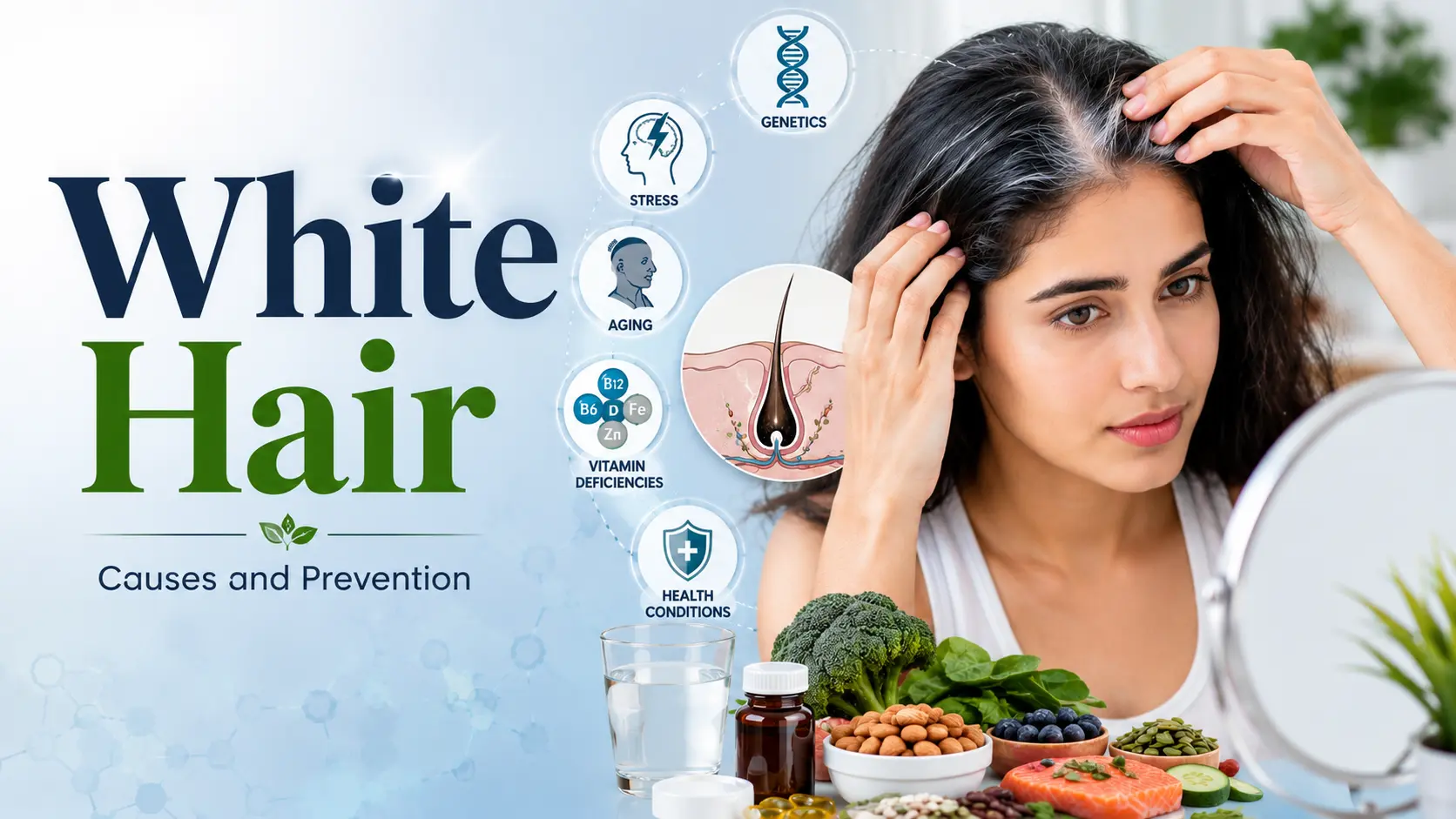
White Hair Causes & Prevention: Expert Guide to Stop Premature Graying
Introduction: Let’s Talk About the Hair You’re Seeing in the Mirror
You woke up one morning, caught sight of that white or gray strand in your hair, and thought: When did that happen?
Maybe it was just one. Maybe it was several. Either way, that moment probably stirred up some uncomfortable feelings. If you’re in your twenties or thirties, it might’ve felt unfair. If you’re in your forties, you might’ve expected it but hoped it wouldn’t show up for another decade.
Here’s the thing nobody talks about openly: white hair isn’t just about looking older. It’s wrapped up in how we feel about ourselves, our energy, our vitality. And that’s completely valid.
The good news? You’re not alone, and you’re not doomed to a head full of white hair if you don’t want one. There’s actually a lot you can do—though maybe not what you’ve been told.
Over the next few minutes, I’m going to walk you through exactly why your hair is turning white, what you can realistically do about it, and what’s actually worth your time and effort versus what’s just marketing hype.

Understanding Hair Color: How Your Hair Actually Gets Its Shade
Before we talk about what goes wrong, let’s understand what’s supposed to happen.
Your hair gets its color from a pigment called melanin. You’ve probably heard of melanin in the context of skin color, but it works the same way in hair. This pigment is produced by specialized cells called melanocytes that live at the base of your hair follicles.
These melanocytes are working right now, even as you read this. They’re busy producing melanin that gets stored in your hair shaft as it grows. That’s what gives your hair its natural color—whether you’re naturally blonde, brunette, red-haired, or black-haired.
The amount of melanin and the type of melanin your body produces determines your specific shade. More melanin? Darker hair. Less melanin? Lighter hair. Different types of melanin? Red or golden tones.
It’s a pretty elegant system. Your body just keeps producing pigment, your hair keeps growing, and you maintain your natural color year after year.
Then… something changes.
The Main Culprits: Why Hair Turns White
Here’s where things get interesting. Hair doesn’t gradually fade from your natural color to white. It’s not like a T-shirt that loses color after a hundred washes. Instead, your body gradually produces less melanin, and your hair follicles eventually stop producing pigment altogether.
Gray hair? That’s hair with some melanin still being produced.
White hair? That’s hair with zero melanin.
But why does this happen? That’s where things get complicated, because it’s usually not just one thing.
Genetics: The Reality You Can’t Ignore
Let’s start with the uncomfortable truth: genetics is the biggest factor in when—and if—you’ll develop white hair.
Here’s the kicker. If your parents went gray early, chances are extremely high that you will too. Your genes determine the age at which your melanocytes will start declining, the speed at which they’ll decline, and how many you’ll retain over time.
This isn’t about lifestyle. It’s not about whether you eat well or exercise. Some people with perfect habits go gray at 25. Others with chaotic lifestyles keep their color into their sixties.
Is it fair? No. But it’s real.
What’s interesting is that ethnicity plays a role too. White people typically start graying in their mid-thirties. Asian populations often start in their late thirties to early forties. Black populations, on average, don’t see significant graying until their mid-forties.
But premature graying—the kind that shows up before these average ages—is when genetics really matters. If someone in your family had white hair at 20, 25, or 30, you likely will too.
The frustrating part? You can’t fight your genetics. You can’t supplement your way out of genetic programming. You can’t meditate your genes away.
But here’s what you can do: you can slow things down. And you can address other factors that might be making things worse.
Stress and Your Hair: The Real Connection (Sort Of)
You’ve probably heard it: “Stress causes gray hair.”
It’s one of those things people say with absolute certainty, as if it’s a well-established medical fact. Marie Antoinette’s hair supposedly turned white overnight from stress. There are countless stories about politicians’ hair going gray while in office.
Here’s what the science actually shows: the relationship is real, but more complex than you’d think.
A 2020 study published in eLife found that chronic stress can cause hair to turn gray prematurely. The mechanism? Stress hormones like adrenaline and cortisol can speed up the depletion of stem cells in hair follicles responsible for regenerating pigment.
But—and this is important—it only happens if you’re under chronic, intense stress. And it only affects hair follicles that are already at the threshold of turning gray anyway.
Translation: stress isn’t starting a chain reaction that turns all your hair white overnight. It’s accelerating an existing biological process in specific follicles.
The practical takeaway? Manage your stress. Not because it’ll definitely prevent white hair (it might slow it down), but because chronic stress damages your health in about a hundred different ways. Better sleep, lower cortisol, and less anxiety are worth pursuing regardless.
Nutritional Deficiencies: Where This Gets Fixable
Now we’re getting somewhere interesting.
Unlike genetics and stress, nutritional deficiencies are actually preventable and sometimes reversible.
Your body needs specific nutrients to produce melanin. If you’re deficient in certain vitamins and minerals, your hair’s ability to maintain its color gets compromised.
The main culprits:
B12 (Cobalamin): This vitamin is critical for cell division and DNA synthesis. B12 deficiency has a documented connection to premature white hair. If you’re deficient and you supplement, you might slow down or even partially reverse graying—but only if you catch it early.
Folate (B9): Similar story to B12. A 2017 study found links between folate deficiency and premature graying in young people. Correcting it can help.
Copper: Your body uses copper to produce tyrosinase, an enzyme that catalyzes melanin production. True copper deficiency is rare in developed countries, but it can contribute to premature graying.
Iron: Low iron (measured by serum ferritin) has been associated with premature graying. If your iron stores are depleted, your hair pigment production suffers.
Vitamin D: Emerging research suggests vitamin D plays a role in melanocyte function. Deficiency might contribute to early graying.
Zinc and selenium: Both are involved in antioxidant defense and melanin production.
Here’s the reality check though: if you don’t have a documented deficiency, taking supplements for these nutrients won’t reverse white hair. Your body doesn’t just store excess vitamins for later. It uses what it needs and excretes the rest.
If you’re concerned you might be deficient? Get tested. A blood test is quick and cheap. If you are deficient, supplementation actually makes sense and can help.
Health Conditions: The Things Nobody Thinks About
Sometimes white hair is your body’s way of saying something else is going on.
Thyroid dysfunction is a big one. Your thyroid regulates metabolism and affects about a million different bodily functions, including how your hair follicles behave. Both hyperthyroidism and hypothyroidism can trigger premature graying. The good news? Treating the thyroid condition often helps.
Autoimmune diseases like vitiligo and alopecia areata can cause white hair. With vitiligo, the immune system attacks melanocytes directly. With alopecia areata, the immune system attacks hair follicles, and sometimes when hair regrows, it’s white.
Pernicious anemia is an autoimmune condition that prevents B12 absorption. It causes premature graying through the B12 deficiency route.
Chronic diseases in general can trigger early graying. If you have untreated diabetes, celiac disease, or other chronic conditions, your body’s resources are stretched thin.
The bottom line: if white hair shows up suddenly and it doesn’t run in your family, it’s worth getting checked out by a doctor. There might be something addressable underneath.
Environmental Factors: Pollution, Sun, and Smoking
Here’s something most people don’t consider: your environment is literally damaging your hair follicles.
UV radiation from the sun causes oxidative stress in hair follicles. This accelerates melanocyte death and can speed up premature graying. If you’re in the sun a lot without protecting your hair, you’re literally aging your hair follicles faster.
Pollution and toxins cause similar oxidative stress. Studies have found associations between air pollution exposure and premature graying.
Smoking is probably the most well-documented environmental factor. Smokers’ hair goes gray significantly earlier than non-smokers. The mechanism involves oxidative stress and damage to melanocyte-producing cells.
The somewhat good news? These are things you can control. Quitting smoking, wearing a hat in the sun, protecting your hair from pollution—these are all within your power.
Premature White Hair in Your 20s and 30s: What You Really Need to Know
If you’re dealing with white hair in your teens, twenties, or early thirties, you’re probably feeling a mix of emotions.
First: you’re not weird or defective. Premature graying affects millions of people. It’s becoming more common, actually, especially in younger generations dealing with higher stress levels and more environmental pollution.
Second: don’t panic. This isn’t automatically a sign that something is medically wrong (though it’s worth getting checked if it’s sudden).
Third: you have options.
Most likely, it’s genetic. If your parents, grandparents, aunts, or uncles grayed early, you probably will too. That’s just how your hair is programmed.
But while you can’t change your genes, you can:
- Address nutritional deficiencies if you have them
- Manage stress better
- Protect your hair from environmental damage
- Treat any underlying health conditions
- Decide whether this is worth addressing cosmetically
Some people with premature white hair embrace it completely. Some dye it. Some do a combination—let it grow out but maintain it with color.
All of these are legitimate choices.
Prevention Strategies That Actually Work
Okay, so here’s where we get practical. What can you actually do to slow down white hair development?
First, the reality: if it’s genetic and you’re just hitting your programmed graying age, you can’t stop it. But you can potentially slow it down.
Get Tested for Deficiencies
If white hair is sudden or unexpected, ask your doctor for:
- Complete blood count
- B12 level
- Folate level
- Iron panel (serum ferritin)
- Thyroid panel (TSH, Free T3, Free T4)
- Vitamin D level
This costs maybe $100-300 and takes a week or two. If there’s something fixable, you’ll know. If everything is normal, at least you’ll stop wondering.
Eat for Hair Health
Forget “gray hair superfoods” that promise reversal. But do eat nutrient-dense foods that support your body’s ability to produce and maintain pigment.
B12-rich foods: Meat, fish, eggs, dairy, fortified grains. If you’re vegetarian or vegan, get B12 from supplements or fortified foods—it doesn’t occur naturally in plant-based sources.
Folate-rich foods: Leafy greens, legumes, asparagus, Brussels sprouts, broccoli.
Copper-rich foods: Shellfish, nuts, seeds, dark chocolate, mushrooms.
Iron-rich foods: Red meat, poultry, beans, dark leafy greens, fortified cereals. (Pair them with vitamin C for better absorption.)
Antioxidant-rich foods: Berries, dark chocolate, green tea, nuts, olive oil. These help fight oxidative stress.
You don’t need special supplements or expensive superfoods. Just eat a reasonably balanced diet that includes these nutrients.
Manage Stress Seriously
Not because it’ll definitely prevent white hair, but because chronic stress is terrible for everything.
- Meditation or mindfulness: Even 5-10 minutes daily helps
- Exercise: 30 minutes most days, whatever you enjoy
- Sleep: 7-9 hours nightly (this is non-negotiable)
- Social connection: Time with people who matter
- Therapy: If stress is severe, professional help is worth it
Protect Your Hair From UV Damage
Wear a hat or use sun-protective products when you’re going to be in the sun for extended periods. Your hair’s cells are being damaged by UV rays. Why accelerate the process?
Quit Smoking
If you smoke, quitting is probably the single most impactful thing you can do for your hair color (and everything else).
Use Gentle Hair Care
- Avoid excessive heat styling
- Use sulfate-free shampoos
- Don’t wash hair in overly hot water
- Be gentle when combing, especially when wet
- Minimize chemical treatments
None of this will reverse genetic graying, but it prevents additional damage to cells that are already compromised.
Natural Remedies and Treatments: What Actually Works (And What Doesn’t)
Let’s be honest: there’s a lot of nonsense out there about reversing gray hair naturally.
Coconut oil won’t bring back your pigment. Curry leaves aren’t a cure. Henna might cover gray temporarily, but it’s not reversing anything.
That said, here’s what has some evidence:
Catalase supplementation: Your body naturally produces catalase, an enzyme that breaks down hydrogen peroxide. As you age, catalase production drops, and hydrogen peroxide builds up in hair follicles, damaging melanocytes. Theoretically, supplementing with catalase or foods high in it (like mushrooms) could help. But human evidence is limited.
Antioxidants: Fighting oxidative stress with antioxidant-rich foods or supplements might slow graying. The evidence is suggestive but not definitive.
B-complex vitamins: If you’re deficient, supplementing helps. If you’re not deficient, it probably doesn’t.
Stress management: Probably helps, definitely doesn’t hurt.
What won’t work:
- Biotin (despite heavy marketing)
- General multivitamins (unless you’re deficient in something specific)
- Expensive “gray hair reversal” serums
- “Ancient remedies” sold on social media
Common Mistakes People Make
Mistake #1: Buying Supplements Based on Marketing, Not Deficiency
You see an ad for a supplement promising to reverse gray hair. It looks legit. You buy it. Nothing happens.
Why? Because unless you have a specific deficiency, that supplement doesn’t do anything for your gray hair.
The fix: get tested first. Know what you’re actually deficient in. Then supplement strategically.
Mistake #2: Assuming One White Hair Means You’re Doomed
One white hair doesn’t mean your entire head is about to turn white tomorrow.
Hair doesn’t coordinate. Some follicles might start graying while others keep producing pigment for years. Having a few white hairs is completely normal and doesn’t predict rapid change.
Mistake #3: Plucking Gray Hairs
The myth: plucking one gray hair causes two more to grow back.
The reality: this isn’t true. But constant plucking can damage the hair follicle and eventually cause that follicle to stop producing hair altogether.
Just let it be or dye it.
Mistake #4: Ignoring Potential Health Issues
If your hair starts graying suddenly or rapidly, and it doesn’t run in your family, get it checked out.
It’s probably nothing, but thyroid issues, B12 deficiency, and other conditions can cause sudden graying. They’re also easily treatable.
Mistake #5: Waiting for a Miracle Product
There is no miracle product for genetic white hair. No supplement, serum, oil, or treatment will reverse graying caused by your genetics.
What will help:
- Dyeing your hair (effective, simple, reversible)
- Embracing your white hair (becoming increasingly popular and often looks genuinely striking)
- Addressing modifiable factors (stress, deficiencies, sun protection)
When to See a Doctor
Schedule an appointment if:
- White hair appears suddenly
- It appears before your twenties and doesn’t run in your family
- You have other symptoms (fatigue, weight changes, skin changes, etc.)
- You’re concerned about possible vitamin deficiencies
- You want to rule out thyroid issues or autoimmune conditions
What to ask for:
- Complete blood work including B12, folate, iron
- Thyroid panel
- Vitamin D level
- General health assessment
This is a legitimate reason to see your doctor. You’re not being paranoid. There might be something addressable underneath the white hair.
Frequently Asked Questions
Q: Can white hair turn black again naturally?
A: Rarely, and only if an underlying medical condition caused it. If a thyroid issue or severe B12 deficiency caused premature graying and you treat it early, some color might return. But genetic white hair? It’s permanent.
Q: Does stress really cause white hair?
A: It can accelerate the process in hair that’s already starting to gray. It doesn’t start a sudden chain reaction, but chronic stress does contribute to oxidative stress in hair follicles.
Q: What vitamin deficiency causes white hair?
A: B12 is the most common, followed by folate, copper, and iron. If you have a deficiency, correcting it might slow graying, especially if caught early.
Q: Why is my hair turning white in my 20s?
A: Most likely genetics. Your parents probably grayed early too. If not, it could be a nutrient deficiency, thyroid issue, or excessive stress. Worth getting checked if it’s sudden.
Q: How to prevent white hair from increasing?
A: Address any modifiable factors (nutrient deficiencies, stress, sun exposure, smoking). Eat well. Sleep well. Protect your hair. But genetics will do what genetics do. You can potentially slow it, but you probably can’t stop it entirely.
Q: Does biotin prevent white hair?
A: Only if you have a biotin deficiency, which is extremely rare. Otherwise, no. Biotin is heavily marketed for hair health, but the evidence for gray hair prevention specifically is lacking.
Q: Are there natural remedies for premature white hair?
A: Natural remedies can support overall hair health (good nutrition, stress management, sun protection) but won’t reverse genetic graying. Be skeptical of products promising “natural” reversal.
Q: Is white hair a sign of a serious health problem?
A: Sometimes. Sudden white hair can indicate thyroid issues, B12 deficiency, or autoimmune conditions. Worth getting checked. But usually, it’s just genetics.
Q: Can I prevent white hair with diet?
A: A good diet supports hair health and might slow graying, but it won’t prevent genetically programmed white hair. It’s about supporting your body’s ability to do what it’s going to do anyway.
Q: What’s the best white hair treatment?
A: Depends on your goals. Hair dye is simple and effective. Accepting and styling your white hair is increasingly popular. Addressing modifiable health factors (deficiencies, stress) might slow progression. No treatment reverses genetic graying.
Final Thoughts: What You Actually Need to Do
Here’s the honest truth: most white hair is genetic, and you can’t fight your genes.
But—and this is important—you’re not completely helpless. You can:
- Get checked if it’s sudden. Rule out thyroid issues, B12 deficiency, or other treatable conditions.
- Address what you can control. Manage stress, eat well, protect your hair from sun and pollution, quit smoking if applicable.
- Stop wasting money on reversal products. They don’t work for genetic white hair. Full stop.
- Make a choice. Dye it, embrace it, or do something in between. This is about what makes you feel confident and like yourself.
- Stop seeing it as a disaster. White or gray hair is normal. It’s increasingly celebrated. You’re not less attractive, less vital, or less valuable because your hair is changing color.
The white hair you’re seeing in the mirror isn’t a failure on your part. It’s not a sign you didn’t do something right. It’s just… what human hair does sometimes.
And that’s actually okay.
Key Takeaways
- Genetics are the primary factor in when you develop white hair. You can’t override genetic programming with supplements.
- Some causes are reversible. Vitamin B12 deficiency, thyroid issues, and other medical conditions can cause white hair. Treating them might help, especially if caught early.
- Prevention is about slowing down, not stopping. Good nutrition, stress management, and sun protection might slow progression, but won’t prevent genetically programmed graying.
- Most “remedies” are marketing. Expensive supplements, serums, and treatments won’t reverse genetic white hair. Don’t waste your money.
- Get tested if it’s sudden. If white hair appears unexpectedly, get bloodwork done to rule out deficiencies or thyroid issues.
- Stress matters, but probably less than you think. Manage it for overall health, but don’t stress about your white hair being caused by stress. (That’s counterproductive.)
- You have options. Dye it, embrace it, or do a combination. The choice is yours, and all are valid.
- This is normal. Millions of people deal with white hair. You’re not weird, defective, or failing at something.