Healthy Breakfast Ideas for Weight Loss: 15 Proven Recipes
Remember when breakfast was just a bowl of cereal? Yeah, those days cost most of us a few extra pounds. The truth is, what you eat in those first few hours after waking up can make or break your entire weight loss journey—and it’s not just about calories.
I’ve spent years researching how nutrition affects weight management, and I can tell you with confidence: the right breakfast doesn’t just help you lose weight. It sets up your entire day for success. You’ll have fewer cravings, more stable energy, better focus at work, and honestly? You’ll stop feeling deprived while dieting.
But here’s what trips most people up: they think “healthy breakfast for weight loss” means suffering through bland egg whites and toast. That couldn’t be further from the truth. The best weight loss breakfasts are actually delicious, satisfying, and—this is the game-changer—they keep you full until lunch.
In this comprehensive guide, I’m going to walk you through everything. We’ll cover the science behind why certain breakfasts work better for weight loss, break down the nutrients you actually need, and give you 15 proven recipes you can start making tomorrow. Whether you’ve got five minutes or thirty, whether you’re vegetarian or omnivore, whether you’re on a shoestring budget or not—we’ve got you covered.
Let’s dive in.
Why Breakfast Matters (More Than You Think) for Weight Loss
Here’s something most diet articles won’t tell you straight up: skipping breakfast doesn’t make you lose weight faster. In fact, it usually does the opposite.
When you skip breakfast, your body enters the day in a stressed metabolic state. You’re already depleted of glycogen (your muscles’ preferred fuel), so your body starts looking for energy sources less efficiently. By mid-morning, hunger hits hard—and suddenly you’re raiding the office snack drawer or hitting the drive-through because your willpower tank is empty.
This is called “compensatory eating,” and research in the journal Appetite found that people who skip breakfast typically consume 15% more calories throughout the day than those who eat a balanced morning meal. That’s roughly 250-350 extra calories daily from poor choices made later.
But that’s only part of why breakfast matters.
The Satiety Effect
A well-constructed breakfast—one with adequate protein, fiber, and healthy fats—triggers your body’s satiety hormones. These chemical messengers tell your brain “hey, we’re satisfied, stop looking for more food.” Ghrelin (your hunger hormone) drops, and peptide YY increases, signaling fullness.
Studies published in the American Journal of Clinical Nutrition show that eating a protein-rich breakfast reduces overall daily calorie intake more effectively than any willpower-based approach ever could. We’re talking about real neurochemistry here, not motivation.
The Blood Sugar Stability Advantage
What happens after you eat a donut or a bowl of sugary cereal? Your blood sugar spikes, insulin rushes in to handle it, and forty minutes later you’re back to feeling hungry and irritable. This rollercoaster doesn’t just leave you exhausted—it actually makes weight loss harder because your body’s dealing with constant energy crashes.
A balanced breakfast stabilizes blood sugar, which means:
- Steady energy throughout the morning
- No mid-morning energy crash
- Reduced cravings for sweets
- Better workout performance
- Improved mood and focus
The Science Behind Weight Loss Breakfasts: What Actually Matters
Let me break down the mechanics so you understand what you’re optimizing for—because understanding the “why” makes sticking to healthier habits way easier.
Caloric Deficit is Still King (But It’s Boring to Discuss)
I’m going to get this out of the way: you can’t out-exercise a bad diet, and you can’t lose weight by eating in a caloric surplus. The laws of thermodynamics still apply. That said, a caloric deficit doesn’t have to mean suffering.
Most people trying to lose weight aim for a 300-500 calorie daily deficit, which results in losing about 0.5-1 pound per week. A healthy breakfast should represent about 20-35% of your daily calories—so if you’re eating 1,800 calories daily, that’s roughly 350-630 calories for breakfast.
But here’s where most diets fail: hitting that calorie target while staying satisfied is harder than it looks. That’s why macronutrient composition matters so much.
Protein: Your Weight Loss Secret Weapon
This isn’t hype—it’s biochemistry.
Protein has the highest thermic effect of any macronutrient, meaning your body burns more calories digesting it than it does carbs or fat. You’ll burn about 20-30% of protein calories just processing it. That’s significant.
More importantly, protein is supremely satiating. It triggers stronger fullness signals than carbs or fats, making you feel genuinely satisfied rather than just not hungry. This matters because satisfaction drives adherence, and adherence drives results.
Research suggests 25-35 grams of protein at breakfast is the sweet spot for weight loss. This amount optimizes satiety without requiring you to eat massive portions of chicken breast or drink protein shakes all day.
Fiber: The Overlooked Hero
While protein gets the spotlight, fiber is the unsung hero of sustainable weight loss. Dietary fiber:
- Slows digestion, extending satiety
- Stabilizes blood sugar
- Feeds your good gut bacteria (which influences metabolism)
- Adds volume to meals without adding calories
- Improves cholesterol levels
Most people consume only about 15 grams of fiber daily, but research supports 25-38 grams for weight loss and overall health. A healthy breakfast should include 8-10 grams.
Healthy Fats: Not Your Enemy
Fat is calorie-dense, sure. But it’s also essential for hormone production, nutrient absorption, and satiety. Including healthy fats in breakfast—like avocado, nuts, seeds, or olive oil—actually helps you eat less overall because you stay satisfied longer.
The key is including the right fats: monounsaturated and polyunsaturated fats from whole sources, not ultra-processed options.
Essential Nutrients Every Weight Loss Breakfast Should Include
Think of building your breakfast like constructing a high-performance machine. You need the right components, in the right proportions, for optimal results.
Protein Sources
Choose one or combine several:
- Eggs (whole eggs, not just whites—the yolk has valuable nutrients)
- Greek yogurt (high protein, probiotics)
- Cottage cheese (underrated, incredibly satiating)
- Plant-based (tofu, tempeh, edamame)
- Fish (salmon, sardines—bonus omega-3s)
- Legumes (lentils, beans)
- Protein powder (as a supplement, not replacement)
Healthy Carbohydrates
Choose complex options:
- Whole grain bread or sprouted grain varieties
- Oats (steel-cut are more satisfying than instant)
- Quinoa
- Sweet potatoes
- Whole fruit (not juice)
- Legumes (double benefit: protein + carbs)
Healthy Fats
Include small portions:
- Avocado (about 1/4 per meal)
- Nuts and seeds (almonds, walnuts, chia, flax)
- Nut butters (2 tablespoons max)
- Olive oil (for cooking or drizzling)
- Fatty fish (omega-3 source)
Fiber Additions
Aim for 8-10 grams:
- Berries (especially raspberries—7 grams per cup)
- Chia seeds (10 grams per ounce)
- Ground flaxseed
- Whole grains
- Vegetables (yes, for breakfast—think veggie omelets)
Micronutrients Matter
Include foods rich in:
- Calcium (dairy, fortified plant milks, leafy greens)
- Iron (eggs, legumes, fortified cereals)
- B vitamins (whole grains, eggs, nuts)
- Antioxidants (berries, vegetables, tea)
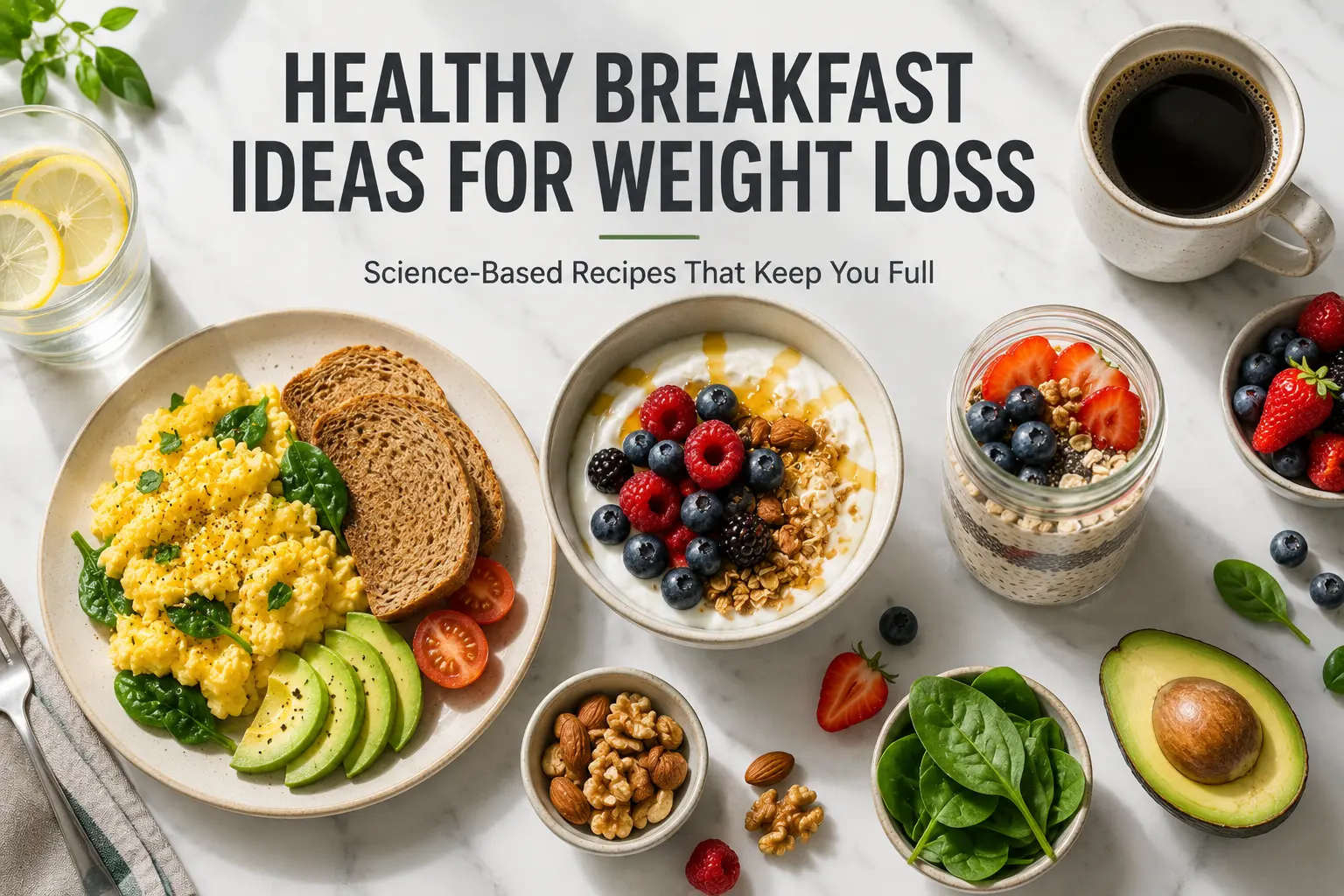
15 Proven Healthy Breakfast Ideas for Weight Loss
These aren’t boring “diet foods.” These are genuinely delicious meals that happen to support your weight loss goals. Most take 10 minutes or less to prepare.
High-Protein Options
1. Veggie-Loaded Egg Scramble (340 calories, 25g protein)
2 whole eggs + 1 egg white scrambled with:
- Spinach, mushrooms, tomatoes
- 1/4 avocado on the side
- Whole grain toast (1 slice)
Why it works: Protein from eggs + fiber from veggies + satiety from healthy fat.
2. Greek Yogurt Power Bowl (320 calories, 28g protein)
- 1 cup non-fat Greek yogurt
- 1/3 cup granola (measured—this is where people overdo it)
- 1/2 cup mixed berries
- 1 tbsp chopped almonds
- 1 tbsp raw honey
Why it works: Probiotics in yogurt support gut health, berries add fiber, protein is extreme.
3. Cottage Cheese & Fruit Stack (290 calories, 30g protein)
- 1 cup low-fat cottage cheese
- 1 cup fresh blueberries
- 2 tbsp chopped pecans
- Pinch of cinnamon
Why it works: Cottage cheese is criminally underrated for satiety—it keeps you full for hours.
4. Protein Pancakes (350 calories, 32g protein)
- 1/2 cup oats blended into flour
- 1/3 cup egg whites
- 1/2 banana
- 1 tsp vanilla
- Pinch of baking powder
Top with 2 tbsp plain Greek yogurt and berries instead of syrup.
Why it works: You get pancakes (satisfying!) with a macro profile that supports weight loss.
5. Smoked Salmon & Cream Cheese Breakfast Plate (310 calories, 22g protein)
- 2 oz smoked salmon
- 2 tbsp cream cheese
- 2 whole grain crackers or 1 slice whole grain bread
- Tomato slices
- Small handful of capers
Why it works: Omega-3s + quality protein + minimal processing.
Plant-Based Options
6. Tofu Scramble (280 calories, 18g protein)
- 150g firm tofu, crumbled and sautéed
- Bell peppers, onions, spinach, mushrooms
- 1 tbsp olive oil
- Turmeric, nutritional yeast for flavor
- Whole grain toast
Why it works: Complete protein from tofu + minimal environmental impact.
7. Chia Pudding Parfait (320 calories, 12g protein)
- 1/3 cup chia seeds soaked overnight in:
- 1 cup unsweetened almond milk
- 1 tbsp almond butter
- 1/2 tsp vanilla
Layer with: - 1/2 cup berries
- 2 tbsp granola
Why it works: Chia seeds expand in your stomach, creating incredible satiety.
8. Lentil & Veggie Hash (350 calories, 16g protein)
- 1/2 cup cooked lentils
- Diced sweet potato, bell pepper, onion
- Sautéed in 1 tsp olive oil
- Topped with microgreens
- Side of whole grain toast
Why it works: Lentils are an underrated weight loss food—high in both protein and fiber.
Quick (Under 5 Minutes) Options
9. Overnight Oats (370 calories, 14g protein)
Prepare the night before:
- 1/2 cup rolled oats
- 1 cup unsweetened milk
- 1 tbsp chia seeds
- 1/2 banana
- 1 tbsp almond butter
- Pinch of cinnamon
Why it works: Zero morning prep + slow-digesting carbs keep you full.
10. Hard-Boiled Eggs & Fruit (280 calories, 24g protein)
- 2 hard-boiled eggs (prep on Sunday)
- 1 medium apple
- Small handful of almonds
Why it works: Maximum convenience, maximum protein.
11. Protein Smoothie Bowl (340 calories, 28g protein)
- 1 scoop vanilla protein powder
- 1/2 cup Greek yogurt
- 1/2 cup berries
- 1/2 cup unsweetened milk
- Top with 2 tbsp granola and coconut flakes
Why it works: Feels indulgent but hits all your macros perfectly.
Meal-Prep Friendly Options
12. Breakfast Burrito (380 calories, 26g protein)
Whole wheat tortilla filled with:
- 2 scrambled eggs
- 1/4 cup black beans
- 1/4 avocado
- Salsa
- Spinach
Make 5 on Sunday, reheat throughout the week.
Why it works: Portable, satisfying, perfect for busy mornings.
13. Baked Oatmeal (320 calories, 12g protein)
Make a whole pan:
- 3 cups oats
- 2 cups unsweetened milk
- 1/2 cup egg whites
- 1 banana
- 2 tbsp almond butter
- 1 tbsp honey
Divide into 6 portions, reheat as needed.
Why it works: Minimal effort, maximum consistency in your diet.
14. Egg Muffins (180 calories per muffin, 14g protein)
- Whisk 8 eggs
- Mix with: diced ham/sausage, cheese, veggies
- Bake in muffin tin
- Store in fridge, grab 2 for breakfast
Why it works: Portable protein that actually tastes good.
Budget-Conscious Option
15. Simple Egg & Oatmeal Combo (320 calories, 20g protein)
- 1/2 cup steel-cut oats
- 2 whole eggs, fried
- 1 tbsp butter or oil
- Pinch of salt and pepper
Why it works: Basic ingredients, serious results, costs under $1.50.
The Breakfast Macronutrient Balance Guide
Here’s how to build your own breakfast that supports weight loss:
The Formula:
Protein (25-35g) + Fiber (8-10g) + Healthy Fat (5-12g) + Smart Carbs = Weight Loss Breakfast
Sample Framework (400-calorie breakfast):
| Component | Target | Example | Calories |
|---|---|---|---|
| Protein | 30g | 1 cup Greek yogurt | 130 |
| Carbs + Fiber | 40-50g | 1/2 cup berries + 1 slice whole grain | 150 |
| Healthy Fat | 8-12g | 1 tbsp almonds | 80 |
| Veggies | Unlimited | Spinach, tomatoes | 20 |
| Total | 380 |
The beauty of this framework is flexibility. You swap components based on:
- What you have available
- How much time you have
- Your preferences
- Your daily activity level
Pro Tip: If you’re exercising intensely that morning, you can add 50-100 extra calories of carbs. If you’re having a sedentary day, slightly reduce carbs and maintain protein.
Critical Mistakes That Sabotage Weight Loss Breakfasts
I see these constantly—and they’re usually invisible to the people making them.
Mistake #1: The Undereating Trap
“I’ll just have coffee and save calories for lunch.”
This backfires spectacularly. By lunch, you’re ravenous, and you eat 40% more than you would have if you’d eaten a proper breakfast. Plus, your body isn’t getting the fuel it needs for metabolism and mental function.
The Fix: Eat a proper breakfast with adequate protein and calories. You’ll eat less overall.
Mistake #2: Liquid Calorie Blindness
Smoothies, juice, specialty coffee drinks—these are calorie bombs disguised as health food.
A Starbucks caramel macchiato has 240 calories and provides virtually no satiety. You’ll drink it and be hungry 30 minutes later. Most commercial smoothies have 400-600 calories and the same problem.
The Fix: If you have a smoothie, make it yourself with protein powder, whole fruit, and nut butter. Actually eat solid food—it’s more satiating.
Mistake #3: “Healthy” Processed Foods
Granola bars, breakfast cereals labeled “healthy,” yogurt with added sugar—these are traps.
A granola bar might have 200 calories but only 3g of protein and tons of sugar. You’re not getting satiety; you’re getting a blood sugar spike.
The Fix: Read labels. Look for: protein >10g, fiber >5g, added sugar <5g.*
Mistake #4: Imbalanced Macros
Eating only carbs (toast, cereal) without protein, or skipping carbs entirely when you actually need them.
Your breakfast is either leaving you hungry an hour later or unsustainably restrictive.
The Fix: Use the balance guide above. Always combine protein + carbs + fat.
Mistake #5: Skipping Breakfast Entirely
“I’m doing intermittent fasting”—which is fine for some people, but not if you’re binging at your first meal or making poor choices later.
The Fix: Eat breakfast if it helps you stick to your deficit. Skip it only if it genuinely helps you maintain control throughout the day.*
Mistake #6: No Consistency
Eating different things randomly means you never learn portion sizes or build sustainable habits.
The Fix: Pick 3-4 go-to breakfasts and rotate them. Consistency builds momentum.
Expert Tips for Breakfast Success: The Things That Actually Make a Difference
These are the small, overlooked details that separate people who lose weight from people who struggle.
1. Timing Matters More Than You’d Think
Eat breakfast within an hour of waking. Your body is primed to process nutrients, and eating early sets your circadian rhythm correctly. This actually improves your metabolism and sleep quality.
Studies show that people who eat breakfast at consistent times lose more weight than those who eat haphazardly.
2. Prep on Sunday, Win All Week
Spend 2 hours on Sunday preparing:
- Hard-boiled eggs (6-8)
- Overnight oats (3-4 jars)
- Breakfast burritos (5)
- Cut vegetables
You’ve just eliminated the biggest barrier to consistency: decision fatigue. Each morning, grab and go.
3. Use the “Anchor Food” Strategy
Pick one protein source that you like and can prepare easily. Mine is Greek yogurt. Every breakfast I eat includes it, even if the rest changes.
This simplifies shopping, prep, and portion control.
4. Temperature Matters for Satiety
Hot breakfasts (oatmeal, scrambled eggs, soup) are more satiating than cold breakfasts. Your body spends more energy warming them up, and you tend to eat slower, giving satiety hormones time to register.
If you eat cereal, try warm oatmeal instead. You’ll stay fuller longer.
5. Include a Beverage Strategy
Drink 16 oz of water with your breakfast. This:
- Fills your stomach (volume = satiety)
- Improves digestion
- Helps your body process nutrients
- Keeps you hydrated (thirst mimics hunger)
Follow with green or black tea. The caffeine is fine, and the catechins support metabolism slightly.
6. The “Hunger Check” Rule
After eating breakfast, wait 20 minutes before deciding if you’re still hungry. It takes that long for satiety hormones to fully register.
Most people who think they need more food are actually just not giving their body time to recognize fullness.
7. Build the “Pause Before Eating” Habit
Before breakfast, spend 2 minutes writing down:
- How you’re feeling physically
- Your energy level
- How hungry you actually are (1-10 scale)
Do the same 2-3 hours later. Over time, you’ll recognize the satiety patterns that work for your body. This is awareness-based eating—way more effective than willpower.
8. Don’t Fear Food Variety
Eating the same thing daily works for some people but kills motivation for others. Rotate 4-5 breakfast options so you stay interested while maintaining structure.
FAQ:
Q1: Do I have to eat breakfast to lose weight?
A: No. Some people thrive with intermittent fasting (skipping breakfast), and some people need breakfast to function. The key is this: eat in a way that helps you maintain a caloric deficit comfortably. If breakfast helps you stick to your deficit, eat it. If it makes you overeat, skip it. Don’t follow a rule—follow what works for your body.
Q2: How many calories should my breakfast be?
A: Typically 20-35% of your daily calories. So if you’re eating 1,800 calories daily, aim for 350-630. Adjust based on activity level: more activity = slightly more calories. Less activity = slightly fewer calories. Start with 400 calories and adjust based on hunger and energy levels.
Q3: Is it okay to eat the same breakfast every day?
A: Absolutely. Many successful people eat the same breakfast daily—it removes decision fatigue and makes portion control automatic. Just ensure you’re getting adequate micronutrients overall. If you get bored, rotate 3-4 options.
Q4: What’s the best protein source for weight loss?
A: Whichever one you’ll actually eat consistently. But objectively: eggs and Greek yogurt offer the best combination of satiety, micronutrients, and cost. Fish provides omega-3s. Legumes provide both protein and fiber. No single “best”—just pick what works for you.
Q5: Can I eat carbs for breakfast and still lose weight?
A: Yes, absolutely. Carbs aren’t the enemy; refined carbs eaten without protein and fiber are. A breakfast with oatmeal, berries, Greek yogurt, and nuts is carb-rich and perfect for weight loss. The key is choosing complex carbs and combining them with protein and fat.
Q6: How do I stop getting hungry 2 hours after breakfast?
A: You likely need more protein or fat. Increase protein to 30-35g or add a bit more healthy fat (nuts, avocado, nut butter). Also consider fiber—aim for 8-10g at breakfast. If hunger persists, you might need slightly more total calories, or you might be mistaking boredom for hunger. The hunger check rule helps here.
Q7: Is skipping breakfast better for weight loss?
A: Not inherently. Some research suggests intermittent fasting works, but other research says regular breakfast eaters lose just as much weight. The advantage goes to whoever is more consistent and comfortable with their approach. Most people do better with breakfast because it improves decision-making and energy.
Q8: What’s the difference between a weight loss breakfast and a regular breakfast?
A: Portion control and macro balance. A weight loss breakfast has deliberate portion control, adequate protein (25-35g), adequate fiber (8-10g), and avoids calorie-dense additives like excessive oil or sugar. A regular breakfast might be larger, less balanced, or higher in calories. The principles are identical—it’s just about matching calories to your goals.
Q9: Can I drink coffee before breakfast?
A: Yes, black coffee is fine and actually beneficial—caffeine slightly increases metabolism and focus. Don’t add cream, milk, or sugar (unless you account for those calories). Have your coffee 15-30 minutes before breakfast to maximize alertness.
Q10: Should I eat breakfast before or after my workout?
A: After is usually better. Working out fasted uses stored energy, and eating after replenishes it efficiently and supports muscle recovery. However, if you work out very early and feel lightheaded, eat a small carb + protein combo (banana + yogurt) beforehand, then a full breakfast after.
Q11: How do I meal prep breakfasts without them getting boring?
A: Prep components, not full meals. Cook proteins (eggs, tofu, sausage), grains (oatmeal, quinoa), and chop vegetables on Sunday. Each morning, assemble different combinations. Same ingredients, different arrangements = variety with minimal effort.
Q12: What’s the fastest healthy breakfast for mornings when I’m running late?
A: Hard-boiled eggs (prep on Sunday) + fruit + almonds. Or overnight oats prepared the night before. Or a protein smoothie. These are all 2-minute fixes that don’t require morning preparation.
Bringing It All Together: Your Action Plan
Here’s exactly what to do starting tomorrow:
Week 1: Assessment
- Pick one breakfast from the list above
- Eat it at the same time daily
- Track hunger and energy levels
- Don’t change anything else
Week 2: Optimization
- Based on hunger/energy, adjust portions
- Keep protein at 25-35g
- Add 30 minutes of movement if you aren’t already
- Start noticing which breakfast keeps you fullest
Week 3-4: Build Consistency
- Pick 3-4 breakfast options you enjoy
- Rotate them daily
- Prep on Sunday (2-3 hours max)
- Don’t overcomplicate it
Month 2+: Refinement
- Adjust calories based on weight loss progress
- Add complexity only if you’re bored
- Build the breakfast habit so deeply that it’s automatic
That’s it. You don’t need to overhaul everything. One meal at a time.
The Bottom Line
The best healthy breakfast for weight loss isn’t the one in a magazine or on Instagram. It’s the one you’ll actually eat, enjoy, and stick with—the one that keeps you satisfied, energized, and in a caloric deficit without feeling deprived.
Breakfast doesn’t have to be boring. It doesn’t have to be complicated. It just needs to do one thing: set you up for weight loss success by managing hunger, stabilizing energy, and delivering the nutrients your body needs.
Start with one of the 15 recipes here. Build from consistency. Adjust based on how your body responds. The science is solid, but your individual success depends on finding what works for your life, your preferences, and your body.
You’ve got this. Let’s start tomorrow morning.
7. KEY TAKEAWAYS
- Breakfast isn’t optional for weight loss, but it works best when it supports satiety and stable energy rather than restricting calories.
- The “perfect” breakfast formula combines 25-35g protein, 8-10g fiber, 5-12g healthy fat, and smart carbs in a 350-500 calorie range.
- Protein is the MVP macronutrient—it’s most satiating and has the highest thermic effect, meaning your body burns more calories digesting it.
- Preparation beats motivation—spending 2 hours on Sunday preparing breakfasts eliminates decision fatigue and guarantees consistency.
- Common mistakes (undereating, liquid calories, imbalanced macros) sabotage more weight loss attempts than poor overall strategy.
- Consistency > Perfection—rotating 3-4 solid breakfast options beats perfectly varying chaotic choices.
- Individual response matters—track your hunger, energy, and weight loss to optimize your personal breakfast strategy rather than following rigid rules.
- Timing, temperature, and food composition all impact satiety more than total calories alone.
- Intermittent fasting works IF it helps you maintain a deficit; regular breakfast works IF it prevents overeating later.
- Your breakfast habit is foundational—master this one meal, and the rest of your diet becomes significantly easier to manage.