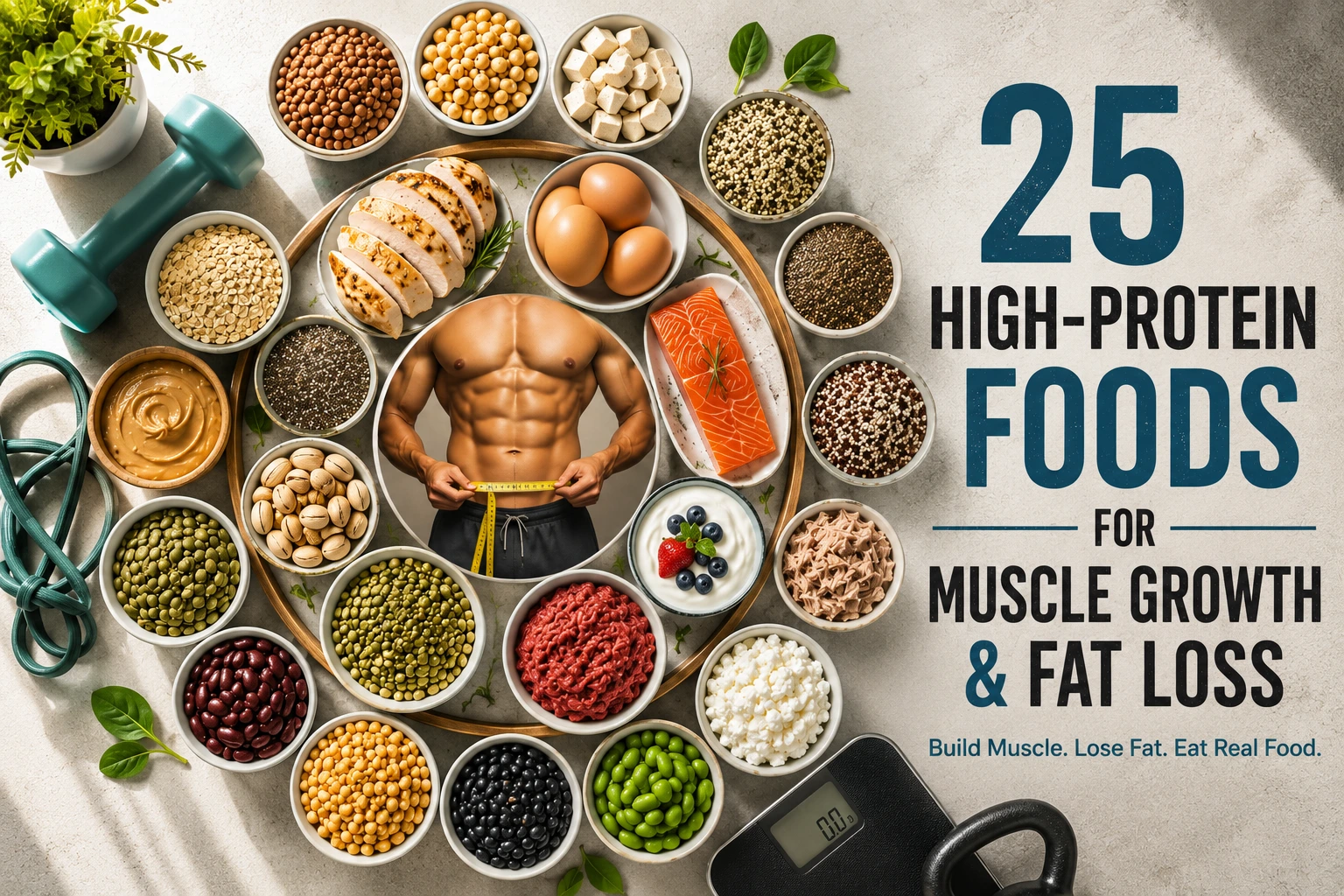
25 High-Protein Foods for Muscle Growth & Fat Loss | Guide
You’ve been hitting the gym consistently, yet your physique isn’t changing the way you hoped. Your trainer keeps saying “you need more protein,” but you’re already eating chicken every day and you’re tired of it. Sound familiar?
The truth is, most fitness enthusiasts don’t actually know which high-protein foods deliver the best results, let alone how to strategically use them for simultaneous muscle gain and fat loss. They’re either overspending on supplements they don’t need, or they’re choosing protein sources that work against their goals.
I’ve spent over fifteen years helping clients transform their bodies through nutrition, and I can tell you this: the difference between someone who builds impressive muscle while staying lean versus someone who constantly spins their wheels often comes down to one thing—knowing exactly which high-protein foods to prioritize and how to eat them strategically.
This guide gives you 25 of the absolute best high-protein foods for building muscle and losing fat, organized by type, with practical tips you can implement today. Whether you’re working with a tight budget, dietary restrictions, or just tired of eating the same thing, you’ll find options that actually work.
Understanding Protein: Why It Matters More Than You Think
Before we dive into the foods themselves, let’s clarify something that confuses a lot of people: not all protein is created equal.
Your body doesn’t just use protein for building muscle. It uses amino acids (protein’s building blocks) for everything—hormone production, immune function, enzyme creation, and tissue repair. When it comes to muscle growth specifically, your body needs all nine essential amino acids, and it needs them in the right proportions.
This matters because a food can have lots of protein but still not be ideal for muscle building. For example, gelatin has protein, but it lacks critical amino acids your muscles actually need for growth. This is why we categorize proteins as “complete” (containing all nine essential amino acids) or “incomplete” (missing one or more).
The practical takeaway: Complete proteins from animal sources are absorbed more efficiently and contain better amino acid ratios for muscle building. But the best plant-based proteins, when combined properly, work nearly as well. The key is understanding which ones and how to use them.
Here’s something else most people get wrong: you need more protein when you’re trying to lose fat while maintaining muscle. When you’re in a calorie deficit, your body loves to cannibalize muscle tissue for energy. Higher protein intake—around 0.8 to 1 gram per pound of body weight—is your insurance policy against losing the muscle you’ve worked to build.
Part 1: The Animal-Based Heavy Hitters for Muscle Growth(13 Best Sources)
1. Chicken Breast
Per 100g: 31g protein, 165 calories
Chicken breast is the workhorse protein for a reason. It’s lean, affordable, and versatile. The beauty of chicken is its consistency—you know exactly what you’re getting. Cook it in bulk, season it differently throughout the week, and you’ve got a foundation for dozens of meals.
The slight drawback? Skinless chicken breast can be dry if you’re not careful with cooking. Pro tip: poach it gently instead of blasting it at high heat, or buy bone-in, skin-on breasts and remove the skin after cooking to keep it moist. You’ll use the leftover bones for broth—more on that later.
2. Lean Ground Beef (90% lean)
Per 100g: 24g protein, 180 calories
Ground beef gets a bad reputation, but 90% lean ground beef is one of your best friends for muscle building. It’s packed with creatine, iron, B12, and carnitine—all critical for muscle performance and metabolism.
Ground beef also has more satiety factor than chicken breast, meaning you feel fuller longer. This matters when you’re trying to stick to a calorie deficit. Mix it with vegetables, use it in bolognese sauces, or form patties—it’s endlessly flexible.
3. Salmon
Per 100g: 25g protein, 206 calories
Salmon isn’t just protein—it’s an omega-3 powerhouse. These healthy fats reduce inflammation, support cardiovascular health, and actually improve your body’s ability to build muscle and lose fat simultaneously.
The reason salmon works so well is the combination: complete protein + healthy fats + vitamin D + selenium. You’re not just feeding your muscles; you’re optimizing your entire hormonal environment for body composition changes.
4. Eggs
Per 100g: 13g protein (whole egg), 155 calories
Eggs are nutritionally complete. One large egg has all nine essential amino acids and contains choline, which supports muscle function and brain health. The yolk contains lutein for eye health and provides fat-soluble vitamins that help absorb other nutrients.
Contrary to outdated advice, eating whole eggs doesn’t elevate cholesterol in most people. In fact, studies show whole eggs are superior for muscle protein synthesis compared to egg whites alone. Eat 2-3 whole eggs, and you’re looking at solid protein with legitimate health benefits.
5. Greek Yogurt
Per 100g: 10g protein, 59 calories
Greek yogurt is strained to remove whey, concentrating the protein. It’s higher in protein than regular yogurt, lower in sugar if you choose plain versions, and contains probiotics that support digestive health.
The casein protein in yogurt digests slowly, making it perfect before bed or between meals. Mix plain Greek yogurt with berries, nuts, and a bit of honey for a complete snack that tastes like dessert but fuels recovery.
6. Cottage Cheese
Per 100g: 11g protein, 98 calories
Cottage cheese is criminally underrated. It’s cheap, shelf-stable, and absolutely packed with casein protein. The slow-digesting protein makes it ideal for preventing muscle breakdown during sleep or fasting periods.
It’s also incredibly versatile. Use it in smoothies, mix it with fruit, or eat it straight. Low-fat cottage cheese keeps calories down while maintaining the protein benefits.
7. Turkey
Per 100g: 29g protein, 135 calories
Turkey breast is leaner than chicken—less fat, more protein per calorie. It’s also slightly higher in selenium and B vitamins. Many people overlook turkey because they only think of holiday meals, but ground turkey and turkey breast are excellent year-round options.
Turkey also contains L-tryptophan, which supports serotonin production. This matters more than you’d think when you’re in a deficit—maintaining mood is half the battle of sticking to your plan.
8. Lean Pork Tenderloin
Per 100g: 27g protein, 143 calories
Pork tenderloin is one of the leanest cuts available. It’s more flavorful than chicken breast and contains thiamine (B1), which supports energy metabolism and muscle function.
Pork is also an excellent source of selenium and niacin. If you’ve only eaten pork in processed forms, try pork tenderloin roasted whole or sliced thin for stir-fries. It’s genuinely delicious.
9. Canned Tuna (in water)
Per 100g: 26g protein, 92 calories
Canned tuna is a convenience weapon. It requires zero cooking, travels well, and costs almost nothing. It’s packed with omega-3 fatty acids and selenium.
The only consideration: canned tuna can be high in sodium. Drain the liquid and rinse if sodium is a concern. Mix it with Greek yogurt instead of mayo for a high-protein, lower-calorie tuna salad.
10. Shrimp
Per 100g: 24g protein, 99 calories
Shrimp is lean, cooks in minutes, and contains astaxanthin—an antioxidant that gives it the pink color and supports muscle recovery. It’s also rich in iodine, which supports thyroid function (critical for metabolism).
The only drawback is cost, but shrimp cooks so quickly that you can prepare a complete meal in under ten minutes. Stir-fry with vegetables or grill with minimal effort.
11. Bison
Per 100g: 24g protein, 143 calories
Bison is leaner than beef with higher omega-3 content. It tastes more flavorful than standard beef with less fat. If you can find it locally, bison supports small farms and tastes genuinely better than commodity beef.
It cooks like beef but stays more tender due to lower marbling. Use it anywhere you’d use ground beef.
12. Duck Breast
Per 100g: 23g protein, 128 calories (skin removed)
Duck breast is underutilized in fitness nutrition. It’s more protein-dense than chicken, contains more iron, and has a depth of flavor that makes meals feel less like “diet food.”
Score the skin before cooking and render it in a pan. Remove the skin for the final product, and you’ve got incredibly lean, flavorful protein.
13. Whey Protein Powder
Per scoop: 25g protein, 110 calories (varies by brand)
Whey protein isn’t a “real food,” but it deserves inclusion. It’s the fastest-absorbing complete protein available, making it ideal post-workout when your muscles are primed to accept nutrients.
Whey is also convenient, cost-effective, and easy to consume when whole foods aren’t practical. Choose isolate if you’re lactose sensitive.
Part 2: Plant-Based Powerhouses (12 Best Sources)
14. Lentils
Per 100g (cooked): 9g protein, 116 calories
Lentils are the foundation of plant-based protein. They’re complete proteins that contain all essential amino acids, plus fiber that supports digestion and stable blood sugar.
Cook a batch Sunday and use throughout the week in salads, curries, or as a side dish. The fiber also increases satiety, helping with hunger management during a deficit.
15. Chickpeas
Per 100g (cooked): 8g protein, 134 calories
Chickpeas are versatile—roast them as snacks, blend them into hummus, or use in curries. They contain iron, magnesium, and manganese, which support muscle function and recovery.
Their carbohydrate profile is favorable for pre-workout meals, providing sustained energy without blood sugar crashes.
16. Black Beans
Per 100g (cooked): 9g protein, 132 calories
Black beans are fiber-rich (8g per serving) and contain anthocyanins, powerful antioxidants that reduce inflammation. They’re affordable, filling, and pair well with countless cuisines.
The combination of protein, carbs, and fiber makes black beans ideal for muscle-building meal bases.
17. Peanut Butter
Per 100g: 25g protein, 594 calories
Peanut butter is protein-dense but calorie-dense. Use it strategically—a tablespoon with apple slices or mixed into oats provides protein plus healthy fats that slow digestion and improve hormone production.
The key is portion control. Two tablespoons provides legitimate nutrition without derailing your calorie target.
18. Tofu
Per 100g: 8g protein, 76 calories
Tofu is a complete protein with all nine essential amino acids. It’s versatile—press it and stir-fry for a chewy texture, or blend it into smoothies. Silken tofu works best for smoothies; firm tofu for cooking.
The mild flavor means you’re not locked into specific cuisines. Season it however you want.
19. Tempeh
Per 100g: 19g protein, 193 calories
Tempeh is made from fermented soybeans, making it more digestible than tofu and higher in protein. It has a firmer texture and more complex flavor than tofu.
Slice it thin and fry it for a meat-like texture, or crumble it for tacos. It’s particularly good marinated.
20. Hemp Seeds
Per 100g: 10g protein, 553 calories
Hemp seeds contain all nine essential amino acids and are packed with omega-3 and omega-6 fatty acids in an ideal ratio. Sprinkle them on salads, blend into smoothies, or eat by the handful as a snack.
Their complete amino acid profile makes them one of the best plant-based protein sources available, though the calorie density requires portion awareness.
21. Spirulina
Per 100g: 57g protein, 290 calories
Spirulina is a nutrient-dense algae with remarkable protein content. A tablespoon in your smoothie adds significant protein, iron, B12, and antioxidants without affecting taste much.
The challenge is cost and palatability—it has a strong flavor. Use sparingly in flavored smoothies rather than alone.
22. Quinoa
Per 100g (cooked): 4g protein, 120 calories
Quinoa is one of few plant foods containing complete protein with all nine essential amino acids. It also contains all three macronutrients—protein, carbs, and fat.
Use it as a grain base for meals, replacing rice. It’s particularly good in salads.
23. Pumpkin Seeds
Per 100g: 9g protein, 446 calories
Pumpkin seeds are protein-rich and packed with magnesium, zinc, and manganese—all critical for muscle function and testosterone production. They’re also rich in omega-3 fatty acids.
Use them in salads, roast them as snacks, or blend into smoothies. A quarter cup provides solid protein with minimal effort.
24. Nutritional Yeast
Per 100g: 8g protein, 335 calories
Nutritional yeast is deactivated yeast with a cheesy, umami flavor. It’s complete protein and fortified with B vitamins including B12 (rare in plant foods).
Sprinkle it on popcorn, salads, or pasta for a protein boost with a savory taste that makes regular food taste better.
25. Soy Milk (unsweetened)
Per 200ml: 7g protein, 80 calories
Soy milk is one of the few plant-based milks with substantial protein. It contains all nine essential amino acids and is fortified with calcium and vitamin D.
Use it in smoothies or oatmeal for a protein boost without the calorie density of full-fat dairy or coconut milk.
Strategic Implementation: Building Your High-Protein Plan
Now you’ve got 25 sources. The question is: how do you actually use these?
The Foundation Approach: Choose 4-5 proteins you genuinely enjoy and master them. Rotating between chicken, ground beef, eggs, salmon, and Greek yogurt gives you complete variety while staying practical. Cook these in bulk on Sunday, and you’ve got your entire week planned.
The Combination Strategy: Plant-based proteins become more complete when combined. Lentils + rice provides all amino acids together. Chickpeas + whole grain pita is a complete protein meal. Peanut butter + whole wheat bread is complete protein. This matters if you’re vegetarian or want variety.
The Budget Hack: Eggs, canned tuna, ground beef, lentils, and beans are the cheapest sources. You can hit your protein targets for under $2 per day using only these five foods.
The Convenience Edge: Whey powder, canned tuna, Greek yogurt, cottage cheese, and rotisserie chicken require zero cooking. When life gets chaotic, these keep you consistent.
Daily Implementation: Most people need 120-180g of protein daily (0.8-1g per pound of body weight if you’re trying to lose fat). Distribute this across meals:
- Breakfast: 30g (eggs + Greek yogurt)
- Snack: 20g (protein shake or cottage cheese)
- Lunch: 40g (chicken + beans)
- Snack: 20g (nuts + protein)
- Dinner: 50g (fish + vegetables + rice)
This makes you full constantly, prevents muscle loss during a deficit, and keeps energy stable.
Expert Optimization: Taking Results Further
Timing Isn’t Magic, But It Matters: Consume 20-40g protein post-workout when your muscles are most receptive. This accelerates recovery. The 30-minute window is overstated—24 hours matters more—but post-workout is legitimately ideal.
Protein + Training Synergy: Protein only builds muscle with adequate training stimulus. You can’t out-protein bad training. Lift heavy things 3-5 days weekly, progressively overload, and eat enough protein. That combination is unstoppable.
Combine Complete + Incomplete: If eating lentil pasta, add ground turkey. If making stir-fried tofu, add cashews. This ensures all amino acids are present.
The Digestion Factor: Processed meats (hot dogs, deli meats) are protein sources, but they’re inflammatory. Choose whole food proteins 80% of the time and save processed options for convenience when necessary.
Leucine Threshold: Leucine is an amino acid that triggers muscle protein synthesis. You need roughly 3g of leucine per meal for maximum muscle building. Most of the proteins listed hit this when eaten in substantial portions—this is another reason whole foods beat supplements.
Common Mistakes You’re Probably Making
Mistake #1: Choosing Low-Protein Carbs Instead of Protein Sources
You eat rice cakes instead of cottage cheese, or “high-protein” granola that’s mostly sugar. Check the label. Real protein comes from the foods we listed, not from marketing.
Mistake #2: Overdoing Liquid Calories
Protein shakes are convenient but they don’t provide satiety like whole foods. If you’re hungry constantly on a diet, drink your calories less and eat them more.
Mistake #3: Assuming You Need Expensive Supplements
You don’t. The protein you need is cheaper and more effective from whole foods. Whey powder is supplementary, not primary. If you’re spending $200 monthly on supplements while eating cheap processed food, you’ve got your priorities backwards.
Mistake #4: Not Counting Protein Accurately
You “eat lots of protein” but haven’t tracked it. You’re probably eating 80g when you need 160g. Download a tracking app for two weeks and see reality. Most people are shocked how much they’re underconsuming.
Mistake #5: Cooking Proteins Into Dryness
Overcooked chicken is unpleasant. Poach, steam, or bake at lower temperatures. Use marinades with vinegar or lemon juice—the acid breaks down proteins, making them more tender while improving absorption.
FAQ: Your Burning Questions Answered
Q: How much protein do I actually need to build muscle while losing fat?
A: 0.8-1g per pound of body weight daily. If you weigh 180 pounds, aim for 144-180g. This is higher than general recommendations (0.8g per kilogram) because you’re in a deficit. The higher intake preserves muscle when calories are restricted.
Q: Can I build muscle and lose fat simultaneously?
A: Yes, with conditions: You need progressive training, adequate protein, enough calories to recover (but a small deficit), and ideally you’re relatively new to training or returning after a break. If you’re advanced, expect slower fat loss while maintaining muscle. It’s possible but slower than doing one at a time.
Q: What’s the best time to eat protein?
A: Post-workout (within a few hours) is genuinely optimal. But honestly, total daily intake matters most. If you eat 150g spread throughout the day, meal timing is secondary. Don’t stress over a post-workout window if it disrupts your routine.
Q: Are plant-based proteins as effective as animal proteins for muscle building?
A: Nearly as effective when consumed strategically. Animal proteins have better amino acid ratios and are absorbed more efficiently. Plant proteins require larger quantities or strategic combining. But athletes building impressive muscle on plant-based diets prove it’s absolutely doable.
Q: Which protein is cheapest?
A: Eggs and beans. Chicken in bulk is also cheap. Buy frozen chicken breasts—same nutrition, lower cost, excellent for bulk cooking.
Q: How do I stay consistent with high-protein eating?
A: Eat foods you actually enjoy. If you hate tuna, don’t force it. Choose from our 25 options and rotate between favorites. Consistency comes from habit, not willpower.
Q: Does protein damage kidneys?
A: No. This is an old myth. Studies show protein is safe even at 2g per pound of body weight in healthy individuals. Only people with existing kidney disease need restriction. Everyone else is fine.
Q: Should I count grams from vegetables?
A: No. A cup of broccoli has 4g protein—it’s negligible. Count protein from dedicated protein sources and treat vegetables as carbs/fiber. This keeps math simple.
Q: Is casein or whey better?
A: Both have roles. Whey is fast-absorbing (good post-workout). Casein is slow-absorbing (good before bed). For simplicity, whey is fine year-round.
Q: Do I need to drink protein shakes?
A: No. They’re convenient but not necessary. If you enjoy them, use them. If not, eat whole foods instead.
Conclusion:
You now have 25 proven high-protein foods, the science behind why they work, and exactly how to use them for muscle growth and fat loss. The missing link between where you are and where you want to be isn’t information—it’s implementation.
Pick five proteins you’ll actually eat consistently. Calculate your daily requirement. Track for two weeks to know where you actually stand. Then adjust. That’s it. That’s the system.
The fitness industry wants you to believe protein is complicated. It’s not. It’s the most straightforward lever you control. Calories determine fat loss. Protein determines how much of that loss is muscle versus fat. Training determines what muscle you build.
You’ve got the protein piece figured out. Now go execute it.
KEY TAKEAWAYS
- Consume 0.8-1g protein per pound of body weight daily when building muscle and losing fat simultaneously
- Complete proteins (all 9 amino acids) are superior for muscle building—choose from animal sources or combine plant sources
- Eggs, chicken, ground beef, and fish form the foundation for most effective, affordable meal plans
- Plant-based proteins work but require strategic combining or larger quantities to hit amino acid targets
- Convenience proteins (canned tuna, Greek yogurt, cottage cheese, whey powder) prevent consistency derailment
- Post-workout protein (20-40g) accelerates recovery, though total daily intake matters most
- Protein ≠ muscle building—adequate training stimulus is equally critical
- Food quality and preparation (proper cooking, not adding excess calories) matters as much as protein quantity
- Budget-friendly options (eggs, beans, lentils, ground beef) deliver results without expensive supplements
- Consistent moderate intake beats perfect periodic intake—build a system you’ll follow for months, not days