Secrets Of Sleep Time you Need to Know: 10 Powerful Truths for Better Rest and Health
Sleep is one of the most powerful tools for maintaining good health, yet many people ignore its timing. The Secrets Of sleep time you need to know are not only about how many hours you sleep but also when you sleep. Your body follows a natural internal clock called the circadian rhythm. This clock controls when you feel sleepy, when your body repairs itself, and when your brain works best.
When you sleep at the wrong time, you may feel tired, stressed, or mentally foggy even after getting enough hours of rest. On the other hand, sleeping at the right time can boost energy, improve mood, support metabolism, and strengthen the immune system.
Scientists and sleep experts explain that different sleep times influence hormone production, brain recovery, and emotional balance. In this article, we will explore the Secrets Of sleep time you need to know, including how various sleeping hours affect your body and which sleep schedule may work best for you.
Understanding the Body’s Natural Sleep Clock
Our body operates on a biological rhythm known as the circadian rhythm. This internal clock runs on a 24-hour cycle and is mainly controlled by light and darkness.
When the sun sets, your body releases melatonin, the hormone responsible for sleep. This hormone signals the brain that it is time to relax and prepare for rest. If you stay awake too late or sleep during unusual hours, this rhythm becomes disturbed.
Key factors affecting your sleep clock include:
- Exposure to sunlight
- Screen time before bed
- Stress levels
- Work schedules
- Eating habits
Maintaining a consistent sleep schedule helps your body regulate hormones such as melatonin and cortisol. When these hormones stay balanced, sleep quality improves significantly.
According to sleep experts from the Sleep Foundation, maintaining a consistent sleep schedule is one of the most effective ways to improve sleep quality. External resource: https://www.sleepfoundation.org
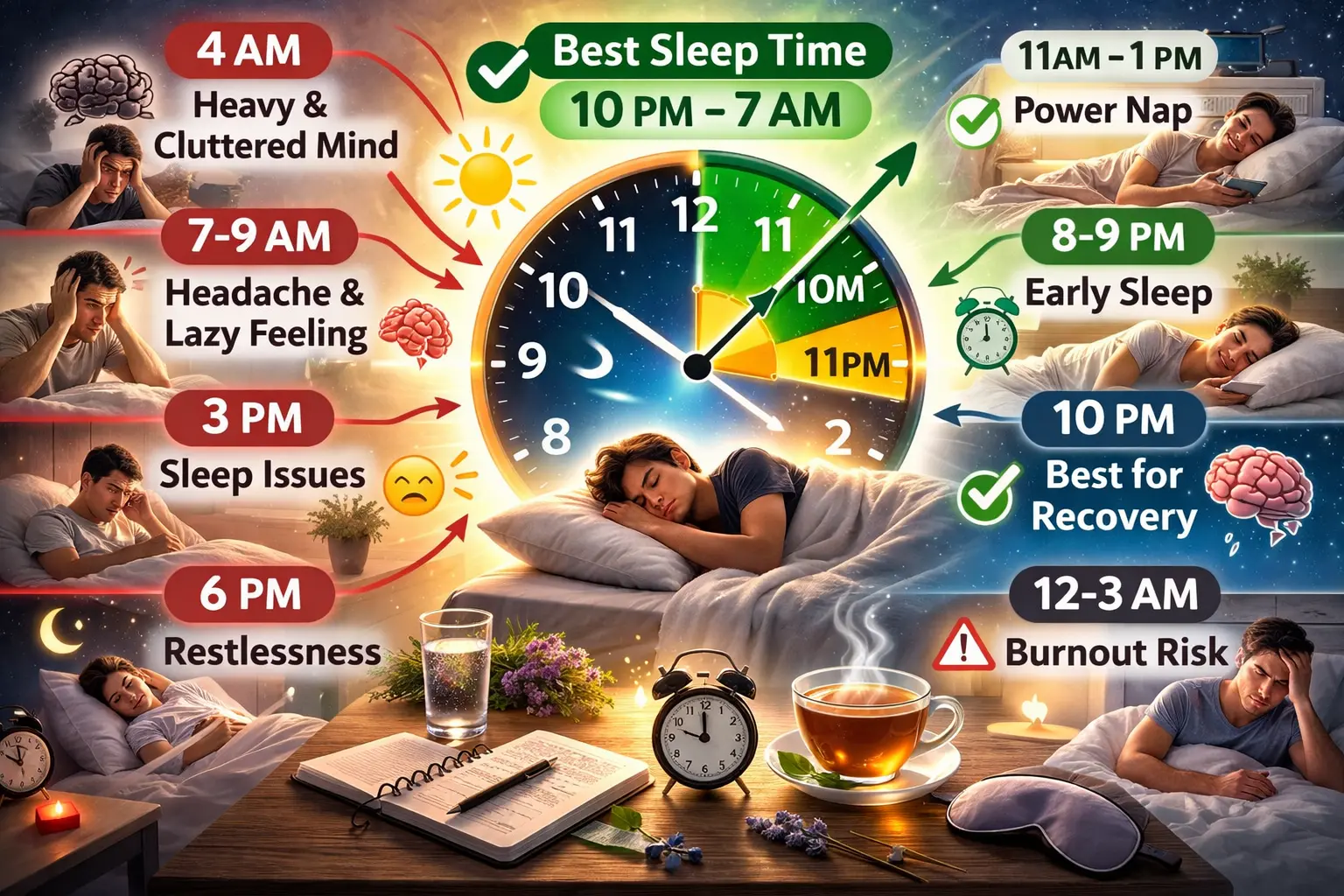
Sleeping at 4 AM – Heavy Body and Cluttered Mind
Sleeping at 4 AM is often associated with extreme sleep deprivation or irregular routines. When you fall asleep at this hour, your body misses the early nighttime stages of deep sleep.
Effects of Sleeping at 4 AM
- Physical heaviness Your muscles remain tense and your body struggles to recover fully.
- Mental clutter Brain detoxification processes slow down, leading to poor concentration.
- Hormonal imbalance Late sleeping interferes with melatonin release and increases cortisol.
- Poor productivity Many people who sleep this late wake up feeling sluggish and unfocused.
In short, sleeping at 4 AM disrupts the natural cycle of sleep and recovery.
Sleeping Between 7–9 AM – Headaches and Lazy Feeling
Sleeping during the morning hours, especially between 7 AM and 9 AM, usually occurs when someone stays awake all night.
Why This Timing Causes Problems
- The body expects to be awake during daylight.
- Cortisol levels are naturally rising at this time.
- Sunlight signals the brain to stay alert.
Because of this conflict, sleeping during this period can lead to:
- Headaches
- Grogginess
- Lack of motivation
- Low energy throughout the day
People who regularly sleep during these hours often struggle with maintaining a stable daily routine.
Sleeping Between 11 AM–1 PM – Ideal Time for a Power Nap
One of the surprising Secrets Of sleep time you need to know is that sleeping between 11 AM and 1 PM can actually benefit the brain when it is a short nap.
This period aligns with a natural dip in alertness that occurs in many people after late morning.
Benefits of a Midday Nap
A short nap during this window can:
- Recharge the brain
- Improve memory
- Boost creativity
- Reduce stress
- Increase productivity
However, the nap should be 20–30 minutes, not several hours. Long daytime sleep may disrupt nighttime sleep.
Sleeping at 3 PM – Messy Nighttime Sleep Patterns
Taking a nap around 3 PM may seem harmless, but it can interfere with your night sleep schedule.
Negative Effects
- Reduced sleep pressure The body builds a natural desire for sleep throughout the day. Late naps weaken this pressure.
- Difficulty falling asleep at night
- Mood swings
- Irregular circadian rhythm
For most people, sleep experts recommend avoiding naps after mid-afternoon.
Sleeping at 6 PM – Restlessness at Night
Sleeping at 6 PM might feel like a quick break after work or school, but it often leads to problems later at night.
Why This Happens
When you sleep this early, your body may treat it as the beginning of nighttime sleep. If you wake up after one or two hours, your body may become confused about whether it should stay awake or return to sleep.
Common results include:
- Restlessness
- Difficulty sleeping later
- Interrupted sleep cycles
Sleeping at 7 PM – Too Early for Most People
Going to bed at 7 PM can work for people with extremely early schedules, such as farmers or workers who wake before sunrise.
However, for many individuals, sleeping this early can cause them to wake up in the middle of the night.
Possible Outcomes
- Waking up at 2–3 AM
- Difficulty returning to sleep
- Reduced sleep quality
- Daytime fatigue
Unless your routine requires it, this time may be too early for healthy sleep.
Sleeping Between 8–9 PM – Great for Early Risers
Sleeping between 8 PM and 9 PM is often recommended for individuals who need to wake up early.
Advantages
- Supports early morning productivity
- Allows full sleep cycles before sunrise
- Improves energy levels in the morning
- Helps maintain a consistent routine
Children and athletes especially benefit from sleeping during this window because their bodies require more recovery time.
Sleeping at 10 PM – The Most Appropriate Time for Recovery
Many sleep experts consider 10 PM the best bedtime for most adults.
During the hours between 10 PM and 2 AM, the body performs major restoration processes such as:
- Brain detoxification
- Tissue repair
- Hormone balancing
- Immune system strengthening
Sleeping at this time aligns perfectly with the body’s natural circadian rhythm.
Benefits of a 10 PM Sleep Schedule
- Better mental clarity
- Improved metabolism
- Stronger immune system
- Balanced mood
- Higher daytime productivity
This is one of the most important Secrets Of sleep time you need to know.
Sleeping at 11 PM – Reduced Cell Regeneration
Sleeping at 11 PM is still relatively normal, but it slightly reduces the time your body spends in deep restorative sleep.
What Happens When You Sleep at 11 PM
- Shorter deep sleep cycles
- Slightly slower cell repair
- Waking up feeling heavier
For many people, this time is still acceptable, but earlier sleep generally improves recovery.
Sleeping Between 12–3 AM – Mood and Metabolism Problems
Going to bed between midnight and 3 AM can seriously disrupt physical and mental health.
Major Consequences
- Mood instability Sleep deprivation increases irritability and stress.
- Higher risk of burnout
- Metabolism disruption Late sleep can affect insulin sensitivity and weight control.
- Poor focus and memory
Over time, chronic late-night sleeping can contribute to fatigue, anxiety, and reduced performance.
How Sleep Timing Affects Your Brain
Sleep does more than provide rest. During deep sleep, the brain performs important tasks:
- Removing toxins
- Processing memories
- Strengthening learning
- Regulating emotions
Poor sleep timing disrupts these functions, leading to:
- Brain fog
- Slow thinking
- Difficulty concentrating
This is why following the Secrets Of sleep time you need to know can dramatically improve mental performance.
Tips for Creating a Healthy Sleep Schedule
If your sleep schedule is irregular, you can gradually fix it with simple habits.
1. Maintain a Fixed Bedtime
Go to sleep and wake up at the same time daily.
2. Reduce Screen Time
Avoid phones and computers at least one hour before bedtime.
3. Get Morning Sunlight
Natural light helps reset your circadian rhythm.
4. Avoid Late Caffeine
Coffee after afternoon hours may delay sleep.
5. Exercise Regularly
Physical activity promotes deeper sleep.
Small changes can lead to powerful improvements in sleep quality.
Frequently Asked Questions (FAQs)
1. What is the best time to sleep for adults?
Most sleep experts recommend sleeping between 9 PM and 10 PM for optimal recovery and energy.
2. Why do I feel tired even after sleeping late?
Sleeping late disrupts the circadian rhythm and reduces deep restorative sleep cycles.
3. Are daytime naps healthy?
Yes, short naps of 20–30 minutes between late morning and early afternoon can boost energy and brain function.
4. Is sleeping at midnight bad?
Occasionally sleeping at midnight is fine, but regular late sleeping can affect metabolism, mood, and productivity.
5. How many hours of sleep do adults need?
Most adults require 7–9 hours of sleep each night for proper health and mental function.
6. Can changing sleep time improve mental health?
Yes. A consistent sleep schedule can reduce stress, improve mood, and enhance cognitive performance.
Conclusion
Understanding the Secrets Of sleep time you need to know can transform your health and daily performance. Sleep timing plays a major role in energy levels, brain function, emotional stability, and physical recovery.
While everyone’s lifestyle is different, sleep experts widely agree that going to bed between 9 PM and 10 PM offers the greatest benefits for most people. Avoiding extremely late sleep and maintaining a consistent routine helps your body stay aligned with its natural circadian rhythm.
Small changes—like reducing screen time, following a consistent bedtime, and taking short naps—can greatly improve sleep quality. When you respect your body’s natural sleep clock, you wake up feeling refreshed, focused, and ready to face the day.


![Understanding Calorie Deficit for Sustainable Weight Loss [Science-Based]](https://sleepingtime.online/wp-content/uploads/2026/06/Calorie-Deficit-for-Sustainable-Weight-Loss-768x512.webp)